
- $147 trillion: The global equity market Hotstuff is targeting with its 24/7 tokenized stock trading.
- $1 billion: Trading volume Hotstuff has already processed in just three months since its mainnet launch.
- 100+: U.S. stocks and ETFs initially available for tokenized trading on the platform.
Experts view Hotstuff's 24/7 tokenized stock trading as a bold but complex attempt to merge traditional finance with DeFi, with success hinging on regulatory compliance and liquidity solutions.
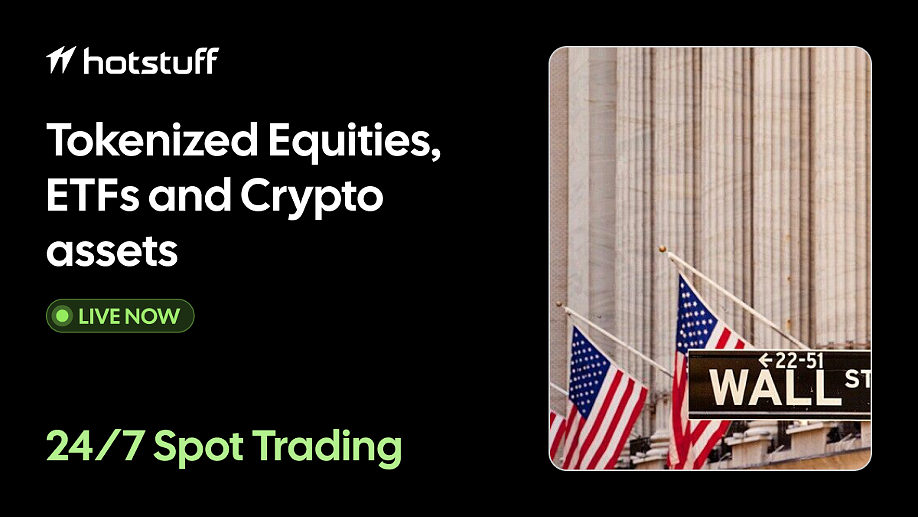
Hotstuff Unlocks 24/7 Stock Trading, Challenging Wall Street Rules
SINGAPORE – May 13, 2026
The once-impenetrable walls between Wall Street and the world of decentralized finance (DeFi) are showing significant cracks. Hotstuff Labs, the developer behind the Hotstuff Layer 1 blockchain, today launched 24/7 spot trading for tokenized U.S. equities and ETFs, a bold move aimed directly at the $147 trillion global equity market. The launch marks a significant expansion for the platform, which has already surpassed $1 billion in derivative trading volumes since its mainnet went live just three months ago.
By offering round-the-clock access to assets like stocks and ETFs on a decentralized platform, Hotstuff is betting it can solve long-standing problems of accessibility, liquidity, and operational hours that constrain traditional finance. The initiative represents one of the most ambitious attempts yet to merge the legacy financial system with the nascent, high-speed world of blockchain, but it also brings a host of complex technological and regulatory challenges to the forefront.
The Mechanics of On-Chain Equities
At the heart of Hotstuff's new offering is the concept of tokenization—representing real-world assets (RWAs) as digital tokens on a blockchain. The platform's initial lineup includes over 100 U.S. stocks and ETFs, each represented by a token that is fully backed 1:1 by the actual underlying share.
This process is powered by a partnership with xStocks, a protocol specializing in RWA tokenization, and Alpaca's Instant Tokenisation Network. When a user purchases a tokenized stock on Hotstuff, the underlying share is held in custody by regulated financial institutions. This structure is designed to assure users that every token corresponds to a real-world asset.
However, the nature of this ownership is a critical distinction. The disclaimer from Hotstuff clarifies that holding these tokens provides on-chain price exposure to the underlying asset, but it is not the same as direct ownership of the security. Token holders do not receive traditional shareholder rights, such as the ability to vote in corporate elections or receive dividends directly. This model of "economic exposure" is common in the current tokenized asset landscape, designed to provide market access while navigating a complex legal environment. Alpaca's network, for instance, is structured to allow non-U.S. entities to mint and redeem these tokenized assets, highlighting the cross-border focus of the initiative.
A Strategic Pivot to Real-World Assets
Hotstuff's foray into spot equities is not a sudden pivot but the culmination of a deliberate strategy. Since its mainnet launch on February 6, 2026, the platform has rapidly climbed the ranks to become a top 25 DeFi protocol, with a particular strength in RWA futures trading. According to the company, a recent trading competition saw volume for RWA-based products outpace crypto-native products by nearly three to one, signaling a powerful and growing appetite for traditional assets within the DeFi ecosystem.
This move from derivatives to spot markets is a logical next step. With over 3,000 active traders and more than $1 billion in volume already processed, Hotstuff has demonstrated it can build a liquid and active trading environment. The company is further incentivizing growth through a nine-week points program, which is set to conclude in the third quarter of 2026. This program is a precursor to an anticipated token generation event (TGE) in the fourth quarter, a common strategy in DeFi to foster community ownership and bootstrap network growth. By adding tokenized equities, Hotstuff is not just expanding its product list; it's building a comprehensive "financial OS" intended to serve a global retail user base for trading, borrowing, and earning yield across asset classes.
Navigating a Global Regulatory Minefield
While the technological vision is ambitious, the regulatory path is fraught with complexity. Hotstuff's disclaimer explicitly states its tokenized equities are not offered to U.S. persons, a clear move to sidestep the stringent jurisdiction of the U.S. Securities and Exchange Commission (SEC). The SEC has consistently maintained that the legal nature of a security is unchanged by its tokenized format, meaning such assets fall under existing federal securities laws that require registration or a valid exemption.
Recent developments, such as Nasdaq's proposal to trade tokenized stocks and a pilot program from the Depository Trust Company (DTCC), suggest a slow but steady move toward integrating this technology within regulated U.S. frameworks. However, these initiatives emphasize that tokenized shares must carry identical rights to their traditional counterparts—a standard that many current DeFi offerings, including Hotstuff's, do not yet meet.
In contrast, other jurisdictions like Singapore are taking a more progressive, "technology-neutral" stance. The Monetary Authority of Singapore (MAS), through initiatives like Project Guardian, is actively fostering an environment for tokenization, operating on the principle of "same activity, same risk, same regulatory outcome." This approach allows for innovation while ensuring that tokenized products are governed by the same rules as their non-tokenized equivalents. Hotstuff's operation from Singapore likely benefits from this more accommodating, yet still rigorous, regulatory climate. The platform's global ambition will depend on its ability to navigate this patchwork of international laws, where compliance in one region does not guarantee access to another.
The Quest for Deep Liquidity
A primary hurdle for past attempts at tokenized equities has been a lack of liquidity. Fragmented infrastructure and shallow order books have often resulted in wide spreads and poor execution for traders. Hotstuff aims to solve this with a hybrid liquidity model. It combines a native on-chain order book with a Request for Quote (RFQ) system that taps into deep, off-chain liquidity pools.
Bebop, the platform's first RFQ partner, plays a crucial role in this strategy. By routing quote requests to off-chain market makers, the system can offer traders tighter spreads than might be available solely from on-chain participants. “Bringing real-world assets like stocks or commodities on-chain goes beyond turning the underlying asset into a token,” said Katia Banina, CEO of Bebop, in a statement. “It’s also bringing the price discovery of the most liquid world venues into the DeFi ecosystem. Hotstuff understands that universal access to financial assets shouldn’t come at a cost of poor execution.”
This hybrid approach, supported by the platform's underlying DracoBFT consensus mechanism—which boasts sub-second finality and high throughput—is designed to create a trading experience that rivals traditional exchanges in performance. By directly addressing the liquidity problem, Hotstuff hopes to attract both retail and institutional players who have been hesitant to enter the on-chain equity market, positioning itself against other growing RWA platforms like Ondo Finance and Securitize. The success of this 24/7 market will ultimately hinge not just on its technology, but on its ability to prove it can provide a truly liquid and efficient venue for trading the world’s most established assets.