
- 290% increase in sleep test capacity
- Wait times reduced from two months to less than a week
- 95% correlation between at-home tests and in-lab polysomnography
Experts agree that decentralized, direct-to-patient diagnostic models significantly improve efficiency, accessibility, and patient outcomes in sleep apnea testing.
Hospital Slashes Sleep Test Wait Times by 290% With Direct-to-Patient Model
SOMERSET, N.J. – March 18, 2026 – A New Jersey hospital has dramatically increased its capacity for sleep apnea testing by 290%, eliminating a months-long patient backlog and reducing diagnostic turnaround times from two months to less than a week. The transformation at Robert Wood Johnson University Hospital (RWJUH) Somerset was achieved not by building new facilities or hiring more staff, but by adopting an innovative direct-to-patient technology platform from Wesper.
The partnership, detailed in a newly released whitepaper, highlights a significant shift in how healthcare providers can tackle operational bottlenecks and improve patient access. By overhauling its logistics for home sleep apnea tests (HSATs), the hospital has created a scalable model that could serve as a blueprint for other diagnostic services struggling with similar capacity constraints.
The Diagnostic Bottleneck
Prior to the change, RWJUH Somerset faced a growing demand for sleep apnea diagnostics that far outstripped its capacity. The hospital’s sleep program was constrained by a small fleet of just eight reusable HSAT devices. This physical limitation created a complex and inefficient logistical cycle: patients had to schedule appointments to pick up a device, use it at home, and then return it to the hospital. Only then could technicians clean, reset, and prepare the device for the next person on a waiting list that stretched to nearly two months.
This system created a hard ceiling of approximately 30 patients per month. Any delay in the return of a single device had a cascading effect, further reducing the program’s already limited throughput. The focus of the hospital's trained technicians was consumed by device management rather than patient care.
"If one or two devices were delayed, effective capacity dropped immediately," said Samer Gerges of RWJUH Somerset in a statement. "The device, not the clinician, was dictating throughput."
A Revolution in Logistics
The solution came from shifting the entire distribution model. Instead of relying on a limited, circulating pool of hospital-owned devices, RWJUH Somerset partnered with Wesper to implement its dropship service. Wesper, a company specializing in an FDA-cleared at-home sleep testing platform, ships its testing kits directly to patients' homes.
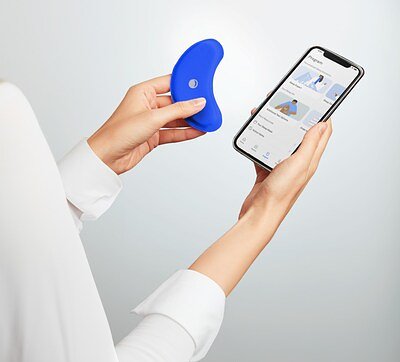
The Wesper test uses easy-to-place sensor patches and a wrist-worn pulse oximeter to capture critical sleep data, including airflow, body position, and blood oxygen levels, with a reported 95% correlation to in-lab polysomnography (PSG). Once the test is complete, the patient simply mails the device back, and the data is uploaded for clinical review.
This simple change in logistics had an immediate and profound impact. Within the first month, RWJUH Somerset’s monthly patient volume skyrocketed by 290%. The two-month backlog was completely eliminated, and the time from referral to diagnosis was slashed to one week or less. Technicians, freed from the burden of managing hardware, could now dedicate their time to clinical review and direct patient care.
"It was a huge difference when we first switched over," Gerges noted. "Wesper moves fast and takes feedback seriously. When we say something, Wesper listens and implements quickly."
Expanding Clinical Capabilities and Patient Access
The benefits extended far beyond operational efficiency. With the scarcity of devices no longer a limiting factor, the hospital unlocked new clinical capabilities that were previously impractical. Clinicians can now routinely order multi-night diagnostic studies, providing a more comprehensive and accurate picture of a patient's sleep patterns, which can help avoid misdiagnoses that sometimes occur with single-night studies.
Furthermore, the program can now support at-home CPAP titration, a process of adjusting treatment pressures that traditionally required an in-lab stay. This shift not only improves clinical flexibility but also enhances patient comfort.
The direct-to-patient model also broke down geographical barriers. Patients living hours away, who previously had to make two separate trips to the hospital just to pick up and return equipment, can now complete the entire testing process from home. This dramatically improves access for rural and mobility-challenged populations, aligning the hospital’s services with patient needs rather than geographic convenience.
A Glimpse into the Future of Diagnostics
The success at RWJUH Somerset is a powerful case study for a much broader trend in healthcare: the shift toward decentralized, remote diagnostics. The home sleep apnea test market is already a multi-billion dollar industry, projected to grow significantly in the coming years. Companies like Itamar Medical with its WatchPAT device and ResMed with its NightOwl system are major players, but Wesper's focus on a seamless, provider-integrated logistics model appears to be a key differentiator.
This move towards home-based care, accelerated by the COVID-19 pandemic, is driven by demands for greater convenience, accessibility, and cost-effectiveness. For hospitals, models like Wesper's offer a path to scale services, reduce operational burdens, and reallocate valuable staff resources to higher-value clinical tasks. For patients, it means faster access to diagnoses, less travel, and the ability to receive care in the comfort of their own homes.
What began as a workflow optimization at one New Jersey hospital has become a structural transformation. It demonstrates that by leveraging technology and rethinking traditional logistics, healthcare systems can move from being capacity-constrained to becoming scalable engines of patient access and care, potentially reshaping how we approach diagnostics across many fields of medicine.