
- 100+ cats rescued: Over 100 cats were rescued from severe neglect in Delmar, MD.
- Severe conditions: Animals suffered from starvation, illness, and exposure to frigid temperatures.
- Multi-agency effort: The rescue involved collaboration between law enforcement and animal welfare organizations.
Experts emphasize the critical role of inter-agency cooperation and strong legislation in combating large-scale animal cruelty cases, highlighting the importance of community vigilance and timely intervention.
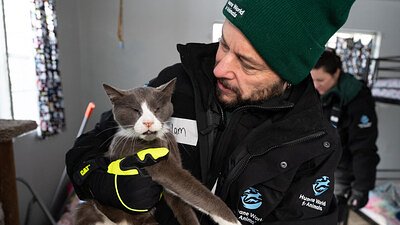
Horror in Delmar: Over 100 Cats Rescued from Icy Neglect
DELMAR, MD – February 26, 2026 – A grim scene unfolded in the early morning hours Wednesday as law enforcement and animal rescuers descended on a residential property, uncovering an alleged large-scale cruelty case involving more than 100 cats. Braving inches of snow and frigid temperatures, responders discovered animals suffering from severe neglect, starvation, and illness, some left to fend for themselves in the harsh winter conditions while others were confined to squalid outbuildings.
The operation, which began around 7 a.m. with the execution of a search and seizure warrant by the Wicomico County Sheriff's Office, has brought a story of profound suffering into the light. Humane World for Animals, a national organization formerly known as the Humane Society of the United States, is leading the rescue efforts, providing critical expertise in animal handling, veterinary care, and evidence collection. The collaborative effort also includes the Humane Society of Wicomico County, Wicomico County Animal Control, and an officer from the Salisbury Police Department, highlighting a unified front against animal cruelty in the region.
A Scene of Desperation and Resilience
Upon entering the property, rescuers were met with heartbreaking sights. Cats were found huddled together outdoors, their bodies exposed to the biting cold of a recent snowstorm. Others were located inside hazardous and unsanitary sheds, living in filth. The scope of the tragedy deepened with the discovery of several deceased cats and skeletal remains scattered across the grounds, a silent testament to the prolonged suffering that had occurred.
The living animals were in dire condition. Responders observed a very thin grey cat limping terribly across the ice, unable to bear weight on its hind leg. Many of the felines were visibly emaciated, their vertebrae protruding through thin coats of fur. The tell-tale signs of sickness were rampant; cats were wheezing, their breaths labored, with crusty discharge matting the fur around their eyes and noses—symptoms of severe upper respiratory infections left untreated.
"It's sad beyond words to see so many sick, desperate cats in the cold, especially knowing they just endured a snowstorm in such poor health," said Shalimar Oliver, an animal crimes case manager for Humane World for Animals, who was on the scene. Despite the grim circumstances, she found a glimmer of hope. "Their survival is testament to their resilience, which gives me hope as we help them begin a long road to recovery. We are deeply grateful to the Wicomico County Sheriff's Office for inviting us to work alongside them in getting these cats the care and treatment they deserve."
A Coordinated, Multi-Agency Effort
The complexity and scale of the Delmar rescue necessitated a significant, coordinated response. Lieutenant Burley Williams of the Wicomico County Sheriff's Office described the operation as a challenging one, complicated by the large number of animals and severe weather. He emphasized the critical role played by their animal welfare partners.
"The Wicomico County Sheriff's Office remains committed to thoroughly investigating allegations of animal cruelty and ensuring the safety and well-being of animals in our community," Lieutenant Williams stated. "We are grateful for the expertise and resources provided by Humane World for Animals and the Wicomico County Humane Society, as well as the assistance of Wicomico County Animal Control and Salisbury Animal Control. Their support with scene documentation, specialized animal handling, and immediate veterinary care has been critical to ensuring these cats receive the treatment they urgently need."
The joint operation underscores a growing trend in animal welfare investigations, where law enforcement relies on the specialized skills of non-profit organizations to manage complex crime scenes involving animals. Stacey Volodin, the Maryland state director for Humane World for Animals, praised the seamless cooperation. "Today's rescue of over 100 cats in Maryland is what's possible when partners across agencies work swiftly and in unison," she said. "I'd like to thank the Wicomico County Sheriff's Office, the Maryland Department of Agriculture and all the agencies involved in ensuring this seizure could move forward safely, effectively and with the animals' well-being at the center of every decision."
The Law That Made It Possible
Underpinning the entire operation is a crucial piece of state legislation: Maryland's cost-of-care law. Passed in 2022 with leadership from Del. David Moon and Senator Jeff Waldstreicher, the law was championed by Humane World for Animals to remove a major financial barrier in animal cruelty prosecutions. The statute allows courts to order the owner of seized animals to pay for their care during the often-lengthy legal proceedings. If the owner is unwilling or unable to pay, they may be required to forfeit ownership, allowing the animals to be adopted into new homes more quickly.
Before this law, local governments and non-profit shelters were often saddled with prohibitive costs, sometimes for months or even years, while animals were held as evidence. This financial strain could deter agencies from pursuing large-scale cases. Lieutenant Williams specifically acknowledged the law's importance, noting it "helps alleviate the financial burden associated with long-term animal seizures and allows for more timely placement when appropriate."
This case serves as a powerful example of the law's intended impact, enabling a swift and decisive intervention that might have been financially unfeasible in the past. It provides a model for other states, as advocates continue to push for similar legislation nationwide to strengthen the enforcement of animal protection laws.
The Long Road to Recovery
With the rescue phase complete, the long journey of healing now begins for the more than 100 survivors. The cats have been transported by Humane World for Animals to a safe, undisclosed emergency shelter. There, a team of veterinarians, staff, and volunteers will provide comprehensive medical treatment, nutritional support, and the gentle care needed to help them recover from both physical and psychological trauma. Volunteers from RedRover Responders, a national animal welfare non-profit, are also on-site assisting with the immense task of daily care.
This case is a stark illustration of the complex issue of animal hoarding, a recognized mental health problem where individuals accumulate a large number of animals but fail to provide for their basic needs. Such situations often go unnoticed behind closed doors, leaving animals to suffer in silence. The Delmar rescue highlights the critical importance of community vigilance in reporting suspected neglect and the necessity of strong inter-agency partnerships to intervene effectively.
As the investigation continues and the cats begin their recovery, the case stands as a sobering reminder of the dark reality of animal cruelty and the collective responsibility to prevent it. The resilience of these feline survivors, who endured unimaginable hardship, now fuels the dedicated effort to provide them with the second chance they so desperately deserve.