
- $17,000,000,000: Estimated value of tokenized consumer assets discussed at the summit.
- 50+: Companies involved in the Consumer RWA Alliance.
- 2028: Target year for mainstream adoption of Consumer RWA in Hong Kong.
Experts view Hong Kong's structured approach to Consumer RWA as a pragmatic step toward Web3 integration, though significant regulatory and adoption hurdles remain.
Hong Kong's Gambit: Is Consumer RWA the Key to Web3's Real-World Future?
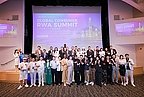
HONG KONG – June 17, 2026 – While the financial world has been fixated on tokenizing major assets like real estate and private credit, a quieter, potentially more transformative current is gaining momentum. Last week, at the GLOBAL CONSUMER RWA SUMMIT 2026 held in the city's Science Park, a coalition of tech firms, financiers, and brand representatives gathered not just to talk, but to lay the groundwork for what they believe is the next evolutionary step: Consumer Real-World Assets (RWA).
This isn't about creating another speculative cryptocurrency. The vision articulated in Hong Kong is far more integrated into the fabric of daily life. It’s about converting the value embedded in our brand loyalty, our healthcare choices, and our consumption habits into verifiable, tradable digital assets on a blockchain. The summit, co-hosted by firms like RWA.LTD and blockchain platform EOS, was less a product launch and more a statement of intent—a strategic move to build the infrastructure for an economy where your morning coffee's loyalty points could have verifiable, liquid value beyond the cafe's walls.
Beyond Digital Gold: Tokenizing the Consumer Experience
For years, the promise of blockchain has been to bridge the digital and physical worlds. RWA is the latest, most promising iteration of this effort, representing tangible assets on a digital ledger. But Consumer RWA narrows the focus from billion-dollar buildings to the micro-transactions and relationships that define the modern economy.
Think of it as the ultimate evolution of the loyalty program. Instead of siloed points that expire or brand memberships with limited utility, Consumer RWA proposes a world where these rights are tokenized. They become assets that can be held, traded, or even used as collateral in a decentralized financial ecosystem. The summit provided a concrete example with the official launch of 'Health Token,' a project designed to connect healthcare services, consumer rights, and digital platforms. In theory, such a token could represent a pre-paid right to a wellness consultation, a discount on health products, or even a share in a community-owned health data cooperative.
This moves value from a closed-loop system, controlled entirely by a single corporation, into a more open and interoperable market. The strategic rationale is clear: for brands, it offers a powerful new tool for user engagement and value creation. For consumers, it offers the potential for true ownership of the value they generate through their consumption and data. However, the path is fraught with complexity, particularly in a sector as heavily regulated and sensitive as healthcare. The success of initiatives like Health Token will depend entirely on building trust and navigating a labyrinth of data privacy laws and healthcare regulations.
A Calculated Play for Web3 Dominance
The summit's location in Hong Kong is no coincidence. The city is in the midst of a determined campaign to establish itself as the world's preeminent, and most importantly, compliant, hub for Web3 innovation. While other regions have offered ambiguous or shifting regulatory sands, Hong Kong's Securities and Futures Commission (SFC) and Monetary Authority (HKMA) have been methodically building a framework for virtual assets. This event, with its heavy emphasis on structure and governance, is a perfect showcase for that strategy.
The establishment of a GLOBAL CONSUMER RWA SUMMIT 2026 Presidium and a Consumer RWA Alliance are key moves. These are not the freewheeling, decentralized autonomous organizations (DAOs) of crypto's wild west. They are structured bodies with representatives from public affairs, finance, and traditional industry, tasked with creating standards, researching compliance, and guiding implementation. This is a deliberate effort to build institutional legitimacy from the ground up.
By fostering a controlled, collaborative environment, Hong Kong is signaling to global capital and talent that it is the jurisdiction where real business can be done on the blockchain. The initiatives announced are designed to be the rails upon which this new sector runs, aligning perfectly with the city's broader strategy of responsible innovation and its ambition to serve as the key digital asset bridge between China and the rest of the world.
De-Risking the Future: Inside the Consumer RWA Sandbox
Perhaps the most telling announcement was the concept of a 'Consumer RWA Sandbox.' Acknowledging the immense risks and uncertainties, the organizers are creating a controlled pilot environment. Based on the principles of "compliance first, scenario-based validation, redeemable rights and controllable risks," the sandbox allows projects to test their models before a full-scale market deployment.
This is a profoundly pragmatic step. It allows a project tokenizing, for example, brand membership rights or supply chain assets to validate its redemption process, test its compliance framework, and refine the user experience in a contained setting. "You have to prove that the on-chain right can be reliably redeemed for the off-chain good or service, every single time," noted one financial technology analyst. "The sandbox is where that promise is stress-tested before consumers are put at risk."
This approach directly addresses the core challenge that has plagued Web3: moving from compelling whitepapers to functional, reliable applications that solve real problems. RWA.LTD's Founder and CEO, Tony Fu, underscored this point in his keynote, stating that Consumer RWA must be "built on real consumer demand and redeemable rights, forming a sustainable, verifiable and implementable value loop." The sandbox is the mechanism designed to enforce that discipline.
The Sobering Hurdles on the Path to Mass Adoption
Despite the structured approach and optimistic vision, the chasm between this summit and mainstream adoption remains vast. The challenges are not just technological but deeply legal and behavioral. How is the on-chain ownership of a tokenized right legally enforced if the underlying company goes bankrupt? What protects a consumer who buys a token representing a future service that is never delivered?
Furthermore, the user experience remains a significant barrier. "If it's more complicated than tapping a credit card or scanning a QR code, mass-market consumers will not adopt it, no matter how revolutionary the underlying technology is," commented a consumer tech expert. The industry must solve for scalability, transaction costs, and interface design to make these systems invisible and seamless.
Skepticism also persists about whether tokenizing everything truly adds value or simply introduces a layer of speculative volatility and complexity into everyday life. The organizers in Hong Kong seem acutely aware of these critiques. Their focus on "verifiable assets" and "redeemable rights" is a direct answer to the charge that much of crypto is built on speculation alone. By tethering digital assets to real-world utility, they are making a calculated bet that they can build a more sustainable and resilient digital economy, one consumer at a time.