
- World's No. 2 TV brand (2022-2024): Hisense dominated TV shipments, positioning it for smart home expansion.
- Matter protocol adoption: Integration with Google's Home APIs by Fall 2025 to unify third-party smart devices.
- AI-driven ecosystem: Future updates promise task-specific AI agents for automated home routines.
Experts would likely conclude that Hisense's strategic use of AI and the World Cup sponsorship positions it as a formidable challenger in the connected home market, though long-term success hinges on hardware reliability and data privacy assurances.
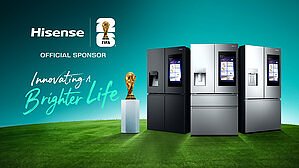
Hisense Bets on AI and the World Cup to Conquer the Connected Home
QINGDAO, China – June 17, 2026
As the world gears up for the FIFA World Cup 2026™, Hisense is making a strategic play that extends far beyond the pitch-side advertising boards. The global electronics giant is using the massive cultural event as a launchpad for its most ambitious push yet into the smart home market, aiming to convince consumers that the future of home life isn't just about a bigger TV screen, but a fully integrated, AI-driven ecosystem. The company's latest press release frames this as helping families enjoy the tournament “beyond the screen,” a subtle but significant signal of its core strategy: to embed Hisense not just in the living room, but in the very fabric of the home.
This isn't merely about selling more refrigerators and air conditioners. It's a calculated move to challenge established leaders like Samsung and LG in the battle for the connected home. By promoting its “Hisense Suite” as a “Unified AI Home Ecosystem,” the company is betting that a seamless, interconnected experience, powered by artificial intelligence and offered at its characteristically competitive price point, is the key to winning over the modern consumer.
The Architecture of a Unified Home
At the heart of Hisense's strategy is the ConnectLife platform, the digital nervous system designed to unify its growing family of smart appliances. This is the company's answer to the fragmented and often frustrating experience of early smart home adoption. The vision is one of seamless interoperability, where the refrigerator communicates with the oven and the TV can manage the air conditioner. The PureFlat Smart Series Refrigerator, with its large touchscreen display, is positioned as the command center for this “social kitchen.” It’s designed to be a hub for managing recipes, creating shopping lists, and even streaming entertainment, turning a utilitarian appliance into an interactive focal point.
To make this unified vision a reality, Hisense is making crucial technological commitments. Its adoption of the Matter protocol, an industry-wide standard backed by Apple, Google, and Amazon, is a critical step toward breaking down the walled gardens that have defined the smart home market. More significantly, the planned integration of Google's new Home APIs into the ConnectLife app by Fall 2025 promises to vastly expand the ecosystem. This will allow users to control a wide array of third-party devices—from smart lighting to security cameras—directly from the Hisense platform, transforming ConnectLife from a branded app into a genuine home control center. This open approach could be a powerful differentiator in a market where consumers are wary of being locked into a single brand.
Beyond connectivity, the company is embedding AI more deeply into its products. Future updates promise task-specific AI agents that learn user habits to automate routines, from adjusting the Air Master Air Conditioner based on room occupancy to a “ProChef@Home” concept that turns TV cooking shows into actionable recipes sent directly to a connected oven. While some of these features remain conceptual, they point to a clear trajectory: moving from reactive remote control to proactive, intelligent assistance.
A Strategic Play in a Crowded Field
Hisense is no stranger to competing in crowded markets. The company has successfully carved out a significant global footprint, becoming the world's No. 2 brand in TV shipments from 2022 to 2024, according to Omdia, and dominating the niche but growing market for 100-inch-plus screens. Its strategy has consistently been to offer premium features—like the RGB MiniLED technology it pioneered—at price points that undercut the market leaders. It now appears to be applying this same playbook to the broader smart appliance market.
Independent reviews often validate this value proposition. Hisense refrigerators have been praised for stable temperature control and ample storage at a lower cost than competitors, while its air conditioners are noted for energy efficiency and robust smart features. However, this aggressive pricing is not without its trade-offs. Some user feedback points to concerns about the long-term durability of components and challenges in securing parts and support compared to more established premium brands. This is the central tension in Hisense’s market position: can it deliver a reliable, high-end ecosystem experience while maintaining its competitive price edge? The success of its unified ecosystem will depend not just on clever software, but on the perceived quality and longevity of the hardware itself.
Beyond the Pitch: The Power of Global Sponsorship
The FIFA World Cup sponsorship is the marketing engine intended to drive this entire strategy forward. For a brand looking to elevate its perception from a budget-friendly option to a technological innovator, there are few platforms more powerful. The global viewership, which numbers in the billions, provides an unparalleled opportunity to build brand recognition and associate Hisense with the excitement and community of world-class sport. The advertising message—“Hisense Fridge, Smart Cooling, Fresh Living”—is a deliberate attempt to link the passion of football with the everyday moments of family life at home.
This is a well-worn path for consumer electronics brands, but Hisense is using it to promote a concept rather than just a product. It’s selling the idea that its appliances are essential components of celebration and comfort, whether hosting a match-day party or simply enjoying a quiet family evening. By framing its ecosystem around these shared experiences, the company hopes to create an emotional connection that transcends technical specifications and price tags. The goal is to ensure that when consumers think about upgrading their homes, they think not just of individual appliances, but of the integrated lifestyle Hisense promises to deliver.
The Data Dilemma in the Connected Home
Underpinning the entire vision of a unified AI home is data. For the Hisense Suite to learn habits, automate routines, and provide personalized suggestions, it must collect and process vast amounts of information about user behavior—what you cook, when you do laundry, how you cool your home. This raises inevitable questions about data privacy and security, a growing concern for consumers in an increasingly connected world.
By aligning with standards like Matter and integrating with Google's ecosystem, Hisense is leveraging established security frameworks. However, the responsibility for transparency and data protection ultimately lies with the company. Consumers will need clear assurances about how their data is being used, stored, and protected from unauthorized access. As the smart home becomes more intelligent and integrated, the trust between the consumer and the technology provider becomes the most valuable asset of all. The long-term adoption of the Hisense Suite will hinge as much on the strength of its privacy policies as on the intelligence of its AI agents, as consumers weigh the undeniable convenience of a connected life against the inherent vulnerabilities that come with it.