
- $112 billion: Projected size of the global wearable health market by 2033
- Class IIa medical device: Hilo is CE-marked and FDA-cleared for cuffless, continuous blood pressure monitoring
- 4-day calibration: New users undergo a four-day process with traditional cuff measurements to ensure accuracy
Experts would likely conclude that Hilo's integration of continuous blood pressure monitoring with activity and sleep data represents a significant advancement in cardiovascular health tracking, offering clinically validated insights that bridge the gap between wellness and medical-grade monitoring.
Hilo Fuses Vitals: A New Era for Cardiovascular Wearables
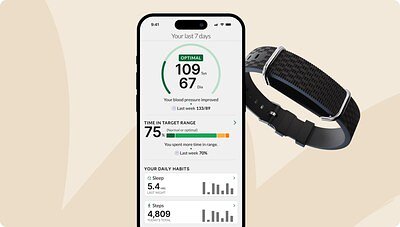
NEUCHÂTEL, Switzerland – February 13, 2026 – In a significant move to deepen the understanding of cardiovascular health, Aktiia today announced a major update to its Hilo platform. The company, known for creating the world's first clinically validated, cuffless blood pressure monitor for consumers, is now integrating passive step tracking and sleep monitoring directly into its Hilo app, powered by its wrist-worn band.
This update moves beyond isolated metrics, weaving continuous, medical-grade blood pressure data with daily activity and sleep patterns. The goal is to provide users with a comprehensive, contextualized narrative of their heart health, marking a pivotal evolution from simple data collection to intelligent, actionable health insights.
A More Complete Picture of Heart Health
For years, wearable technology has tracked steps and sleep, while medical devices have monitored blood pressure. The Hilo update breaks down these silos, operating on the principle that cardiovascular health is an interconnected system. By layering daily movement and sleep patterns on top of continuous blood pressure trends, the platform aims to help users understand the 'why' behind their numbers.
Blood pressure remains one of the most powerful predictors of cardiovascular risk, yet it is notoriously difficult to measure accurately and is often misunderstood. Traditional cuff measurements provide only a brief snapshot, susceptible to stress, caffeine, and time of day. Hilo's continuous monitoring already addresses this by capturing thousands of data points, and this update adds crucial context.
"Blood pressure is profoundly influenced by how we live: how we sleep, how we move, how we recover," said Stefan Petzinger, CEO of Aktiia, in today's announcement. "With this update, we're giving our users a richer, more connected understanding of their health, built on clinically validated blood pressure data."
Scientific research supports this integrated approach. Studies have consistently shown that higher daily step counts are associated with lower blood pressure, while disrupted or insufficient sleep can contribute to higher systolic pressure and poorer long-term outcomes. The updated Hilo app presents this lifestyle data not as targets to chase, but as contextual signals. This allows a user to see, for example, how a series of poor nights' sleep might correlate with a rise in their average blood pressure, creating what the company calls a "meaningful feedback loop."
"Blood pressure doesn't exist in isolation," added Josep Solà, Co-Founder and Chief Technology Officer of Aktiia. "When we combine continuous blood pressure data with movement and sleep, we begin to see how everyday life shapes cardiovascular health."
Navigating a Crowded Wearable Market
The launch positions Hilo in an increasingly competitive but differentiated space within the global wearable health market, which is projected to surpass $112 billion by 2033. While giants like Apple, Google (via Fitbit), and Samsung dominate the consumer wellness space, Hilo's unique selling proposition is its medical-grade validation.
The Apple Watch, for instance, can now provide FDA-cleared hypertension alerts, prompting users to verify with a traditional cuff, but it does not provide continuous numerical readings. Other popular devices like the WHOOP band offer blood pressure estimations as a wellness feature, explicitly stating it is not a medical device. Hilo, by contrast, is a CE-marked and FDA-cleared Class IIa medical device specifically for cuffless, continuous blood pressure monitoring.
This distinction is critical. Hilo is not just a fitness tracker with an added health feature; it is a clinical tool designed for consumers. This focus on medically robust insights is aimed at a user base that prioritizes accuracy and clinical credibility for managing serious health conditions like hypertension, often called the 'silent killer'. The integration of sleep and step data is a strategic enhancement to this core medical function, not a pivot towards the general wellness market.
The Shift to Subscriptions and Sustained Care
Alongside the feature update, Aktiia announced a strategic transition to a subscription-based model. This move reflects a broader industry trend, where companies aim to build long-term relationships with users rather than focusing on a one-time device sale. It positions the Hilo band not as a standalone product, but as the gateway to a continuously evolving health service.
For users, this model promises ongoing innovation, new features, and sustained support. For Aktiia, it provides a predictable revenue stream to fund further research and development. However, the success of such models hinges on delivering undeniable, long-term value. In the health sector, this value is measured in better outcomes and sustained user engagement, a challenge that has seen nearly half of all wearable purchasers abandon their devices within months.
By framing the subscription as a commitment to being a "lifelong cardiovascular companion," Aktiia is betting that users managing a chronic condition will see clear value in a service that evolves with their health journey and the latest medical science.
The Clinical Backbone: Validation and Accuracy
Underpinning the entire Hilo ecosystem is a foundation of scientific rigor. The device's accuracy is validated against the ISO-81060-2 standard, and its data is exportable for sharing with clinicians to support diagnosis and medication management. The new update reinforces this commitment to accuracy with an enhanced onboarding process.
New users will now undergo a four-day calibration period, taking measurements with a traditional cuff on four separate days. This allows Hilo's algorithms to learn an individual's unique blood pressure patterns across different contexts, resulting in more stable and reliable long-term readings. After this initial setup, a monthly calibration is required to maintain accuracy.
This meticulous process stands in stark contrast to the plug-and-play nature of many wellness trackers. It underscores the fundamental difference between providing general wellness guidance and delivering data that can inform clinical decisions. As medicine increasingly embraces continuous, real-world data for preventive care, the distinction between validated medical devices and wellness gadgets becomes ever more important. Aktiia's latest update solidifies its position on the medical side of that line, offering a glimpse into a future where managing chronic disease is a continuous and collaborative process between the patient, their technology, and their doctor.