
- Storage cost reduction: Up to 50% reduction in storage costs with Guanlan Encoding
- Storage savings: 49% in fluctuating canteen environments, 42% at busy office park entrances
- Market potential: AI in video surveillance projected to reach $28 billion by 2030
Experts recognize Hikvision's AI-powered Guanlan Encoding as a significant technological advancement in video surveillance cost efficiency, but caution that geopolitical tensions and ethical concerns may limit its global adoption.
Hikvision's AI Slashes Surveillance Costs, But Geopolitical Clouds Remain
HANGZHOU, China – May 21, 2026 – By Alexander Harris
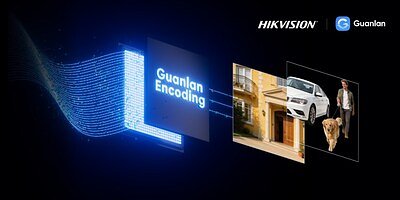
Hikvision, a dominant force in the global video surveillance market, has unveiled a new AI-powered video compression technology, Guanlan Encoding, that promises to cut storage costs by up to 50% without sacrificing image quality. The announcement marks a significant technical step in addressing one of the biggest financial burdens in modern security: the ever-growing mountain of video data. However, the innovation arrives amidst a complex backdrop of geopolitical tensions and ethical scrutiny that continues to shadow the company's global operations.
The new technology, announced today, integrates the firm's Guanlan Large-Scale AI Model directly into the video encoding pipeline. It aims to solve a persistent dilemma for security operators. As camera resolutions climb to 4K and beyond and data retention periods lengthen, the cost of storing video footage has skyrocketed, often eclipsing the cost of the cameras themselves. Guanlan Encoding tackles this by fundamentally changing how video is compressed.
The Economics of Intelligent Compression
For years, the video security industry has grappled with an unavoidable trade-off: higher quality footage meant exponentially larger files. Conventional codecs compress video by treating every pixel more or less equally, forcing users to choose between crisp images and manageable storage bills. Hikvision claims Guanlan Encoding eliminates this compromise.
By leveraging AI, the system intelligently differentiates between critical information and redundant background data. It identifies key objects, such as people and vehicles, through a process called Region of Interest (ROI) segmentation. These important elements are preserved in full clarity, while the static or irrelevant parts of the scene—like a blank wall or an empty sky—are subjected to ultra-high compression. The company calls this a shift from compression by pixel to "compression by meaning."
"Storage efficiency has almost always come at the cost of quality – until now," said Jason Yang, Vice President of Hikvision International Business Center, in a statement. "Guanlan Encoding looks at the picture first – then decides what's worth keeping in full clarity."
The financial implications are substantial. By potentially halving the number of hard drives required, the technology promises to slash not only hardware procurement costs but also the associated expenses for rack space, power consumption, and cooling in data centers. Hikvision's internal tests report impressive results, citing storage savings of 49% in a fluctuating canteen environment over 24 hours and 42% at a busy office park entrance during peak traffic. For large-scale deployments in enterprise campuses, retail chains, or smart city projects, such efficiencies can translate into millions of dollars in reduced Total Cost of Ownership (TCO) over a system's lifecycle.
A Crowded Field of Smart Codecs
Hikvision is not alone in the race to make video storage smarter. The move toward AI-driven compression is an industry-wide trend, with major competitors rolling out similar solutions. Dahua Technology, another Chinese surveillance giant, promotes its "AI Coding" technology, which also focuses on identifying humans and vehicles to optimize bitrate, claiming savings of up to 50% over the standard H.265 codec.
Meanwhile, Sweden-based Axis Communications is embedding advanced AI capabilities into its camera chipsets, supporting not only object detection but also the next-generation AV1 video standard, an open-source codec designed for highly efficient streaming. The market is clearly responding to customer demand for relief from the data deluge, with analysts forecasting the AI in video surveillance market to grow exponentially, potentially reaching over $28 billion by 2030.
What sets Hikvision's offering apart is its seamless integration with existing infrastructure. Because Guanlan Encoding is built upon the widely adopted H.265 standard, it is backward compatible with existing decoders and video management systems, both from Hikvision and third parties. This approach is designed to eliminate migration headaches and make the technology an easy upgrade for both new and existing projects, a crucial factor for encouraging adoption.
Innovation in a Geopolitical Shadow
Despite the clear technological and financial merits of Guanlan Encoding, its adoption, particularly in Western markets, is far from guaranteed. The launch comes as Hikvision continues to navigate a storm of international controversy and government restrictions. The company's close ties to the Chinese state have led to significant national security concerns in the United States, United Kingdom, Australia, and Canada.
Citing risks of espionage and data harvesting, these nations have banned or severely restricted the use of Hikvision equipment in government facilities and critical infrastructure. Just this year, Canada ordered the company to cease its operations in the country entirely. These actions are fueled by persistent worries that the company's products could contain backdoors accessible to foreign intelligence, a charge Hikvision has repeatedly denied.
Furthermore, the company's reputation has been tarnished by allegations of its involvement in human rights abuses, specifically the mass surveillance of Uyghur minorities in China's Xinjiang region. While Hikvision has stated it terminated contracts related to public security projects there, the association has had a lasting impact on its brand and has been a key factor in government sanctions.
The very AI that makes Guanlan Encoding so powerful—its ability to intelligently identify and categorize objects and people—is also at the heart of the ethical debate surrounding modern surveillance. For privacy advocates and civil liberties groups, this capability raises alarms about the potential for misuse, mission creep, and the creation of vast, searchable databases of public life.
This complex reality creates a difficult choice for potential customers. On one hand, Guanlan Encoding presents a compelling solution to a pressing operational and financial problem. On the other, adopting the technology means partnering with a company mired in geopolitical conflict and ethical debate. For many organizations, especially those in government, critical infrastructure, or publicly accountable sectors, the reputational and security risks may outweigh the promised efficiencies, regardless of how advanced the technology is.