
- 70% of electrical fatalities occurred in non-electrical occupations between 2011 and 2024.
- 49% of electrical deaths were caused by contact with overhead power lines.
- 0.09 fatalities per 100,000 workers in 2024, the lowest rate since 2020.
Experts emphasize that the high rate of electrical fatalities among non-electrical workers highlights a critical need for expanded safety training and hazard awareness across all industries, particularly in high-risk sectors like construction and utilities.
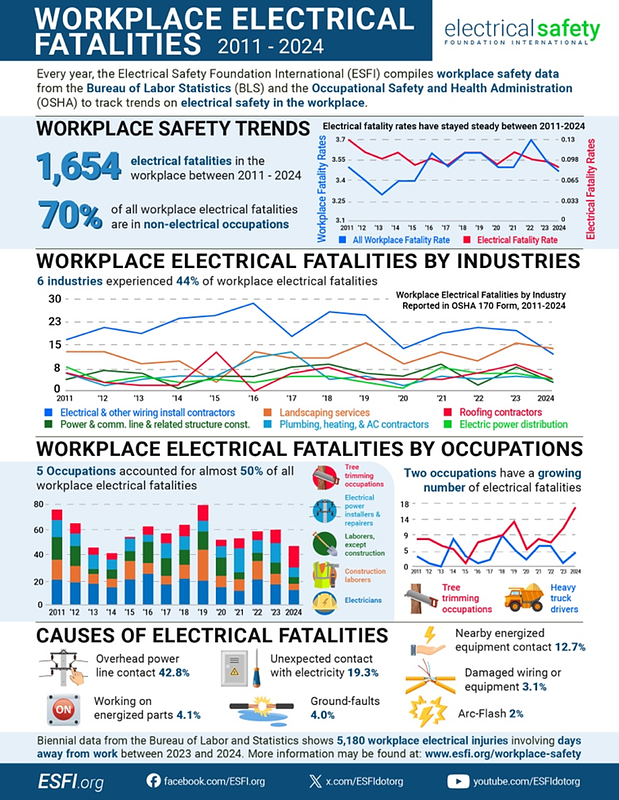
Hidden Shock: 70% of Electrical Deaths Hit Non-Electrical Workers
ARLINGTON, VA – March 17, 2026 – A startling new report reveals a hidden epidemic in American workplaces: the vast majority of workers killed by electricity are not electricians. According to newly analyzed data from the Electrical Safety Foundation International (ESFI), a staggering 70% of the 2,070 electrical fatalities recorded between 2011 and 2024 occurred in non-electrically related occupations.
The findings paint a grim picture of a pervasive and often-overlooked hazard. While electrical work is inherently dangerous, the data suggests that the greatest risk lies with those who may not even realize they are in harm's way—landscapers, truck drivers, construction laborers, and others who accidentally come into contact with energized equipment.
“Most of the electrical fatalities that occurred in the workplace were from accidental contact with overhead power lines,” said Daniel Majano, ESFI Program Director, who compiled the data. “It is important to always be aware of your surroundings when at a job site.”
A Persistent and Deadly Hazard
The comprehensive analysis, which synthesizes data from the U.S. Bureau of Labor Statistics (BLS) and the Occupational Safety and Health Administration (OSHA), underscores that contact with electricity remains a leading cause of workplace death. The 14-year period saw an average of nearly 150 workers lose their lives to electrical hazards annually.
While 2024 marked a relative bright spot with the lowest rate of electrical fatalities since 2020—at 0.09 per 100,000 workers—the overall numbers remain a cause for serious concern. The data highlights a long-term, stubborn problem that safety initiatives have yet to fully solve.
The most common cause of these tragedies is contact with overhead power lines, responsible for a staggering 49% of all electrical deaths. This is followed by unexpected contact with electricity (20%) and accidental contact with nearby energized equipment (12%). These statistics reveal that the most frequent fatal incidents are not complex electrical tasks gone wrong, but rather unforeseen encounters with live power sources.
“ESFI’s analysis of this data illustrates the occupations most at risk from electrical injury and death and identifies the main causes,” said ESFI Executive Director Jennifer LeFevre. “As leaders in electrical safety, ESFI is the sole organization that compiles and analyzes this data, which is crucial for guiding safety messaging.”
The Unsuspecting Victims
The report’s most jarring revelation is the vulnerability of workers outside the electrical trades. The data points to a systemic failure in safety training and hazard awareness that extends far beyond specialized roles. Occupations such as tree trimming and heavy truck driving are seeing an increasing rate of electrical fatalities, reinforcing the danger of incidental contact with power infrastructure.
“Always know when to say when and make sure you’re trained and aware of any electrical hazards,” Majano warned. “Over 70% of the workplace electrical fatalities that occurred between 2011 and 2024 were in non-electrical occupations that may not have received electrical safety training.”
This gap in training is a critical issue. While electricians and utility linemen undergo rigorous safety protocols, a construction worker operating a crane, a painter using a metal ladder, or a farmhand moving irrigation pipes may receive little to no specific instruction on identifying and avoiding electrical hazards. Their fatal mistake is often simply not knowing the danger was there. This reality has prompted organizations like OSHA to launch initiatives such as the "Electrical Roll Up Initiative," aimed at embedding basic electrical safety awareness across the entire construction industry.
High-Risk Industries Under Scrutiny
The construction and utility industries continue to be the epicenters of electrical risk. The construction industry recorded the highest absolute number of electrical fatalities between 2011 and 2024, while the utility industry had the highest rate of electrical deaths, at 0.75 fatalities per 100,000 workers.
In response, both sectors have implemented targeted safety programs. The Electrical Transmission & Distribution (ET&D) OSHA Strategic Partnership, a collaboration between OSHA, industry groups like the Edison Electric Institute (EEI), and labor unions like the International Brotherhood of Electrical Workers (IBEW), focuses on analyzing incident data and developing best practices for high-voltage work. These efforts emphasize job briefings, proper use of insulating equipment, and adherence to strict safety codes like the National Electrical Safety Code (NESC).
For construction, OSHA mandates specific standards under 29 CFR 1926 Subpart K, covering everything from wiring design to lockout/tagout procedures. The use of Ground-Fault Circuit Interrupters (GFCIs) is required on job sites to protect workers from shock, especially in wet conditions. Industry bodies like the National Electrical Contractors Association (NECA) also push for integrating safety into project pre-planning, arguing that safety cannot be an afterthought.
The Unequal Burden and Economic Toll
Beyond the industry-level statistics, the data reveals a troubling social disparity. Latino workers are disproportionately affected, accounting for 29% of all electrical fatalities over the 14-year period, despite representing only about 19% of the U.S. workforce. This overrepresentation points to deeper systemic issues, potentially including language barriers to effective safety training and a higher concentration of Latino workers in high-risk, non-electrical roles within industries like construction and agriculture.
The impact of these incidents extends beyond fatalities. For the two-year period of 2023-2024, there were 5,180 non-fatal electrical injuries that resulted in days away from work. The median time lost was 10 days, a significant period of lost wages for workers and lost productivity for employers. The research also shows that 62% of these injuries happened to employees who had been with their company for more than a year, dispelling the myth that only new or inexperienced workers are at risk.
The economic consequences are substantial. While workers' compensation may cover some direct costs, businesses face a cascade of hidden expenses, including property damage, production delays, and the cost of recruiting and training replacement staff. Broader economic studies estimate the national cost of all occupational injuries and illnesses in the hundreds of billions of dollars annually, underscoring the financial imperative for investing in robust safety programs.
Forging a Culture of Prevention
Experts agree that tackling this persistent threat requires a multi-faceted approach centered on creating a pervasive culture of safety. The foundation of prevention lies in a simple but non-negotiable principle: de-energizing equipment before work begins and using strict lockout/tagout (LOTO) procedures to ensure it cannot be accidentally re-energized.
For situations where de-energization is not feasible, a combination of engineering controls, administrative procedures, and personal protective equipment (PPE) is essential. This includes providing and mandating the use of insulated tools, rubber gloves, and protective eyewear. Furthermore, all employees who may be exposed to electrical hazards—not just electricians—must receive comprehensive training on hazard recognition, safe work practices, and emergency response.
Regular inspections of electrical systems, cords, and equipment by qualified personnel are critical for identifying and correcting hazards before they cause an incident. Simple measures like ensuring proper grounding and using GFCIs can be life-saving. Ultimately, prevention relies on fostering a workplace where every employee, from the CEO to the frontline laborer, is empowered to identify risks and is supported in taking the necessary steps to mitigate them, ensuring that a day's work doesn't end in a preventable tragedy.