
- 14 million women affected by postpartum hemorrhage annually, resulting in 70,000 deaths (WHO).
- U.S. maternal mortality rate: 21.1 deaths per 100,000 live births (nearly double the OECD average).
- Quantra® System provides coagulation results in under 15 minutes at the point of care.
Experts agree that HemoSonics' Quantra® Hemostasis System represents a critical advancement in managing postpartum hemorrhage, offering rapid, personalized coagulation data that could significantly reduce preventable maternal deaths.
HemoSonics' Device Wins Award for Tackling Maternal Mortality Crisis
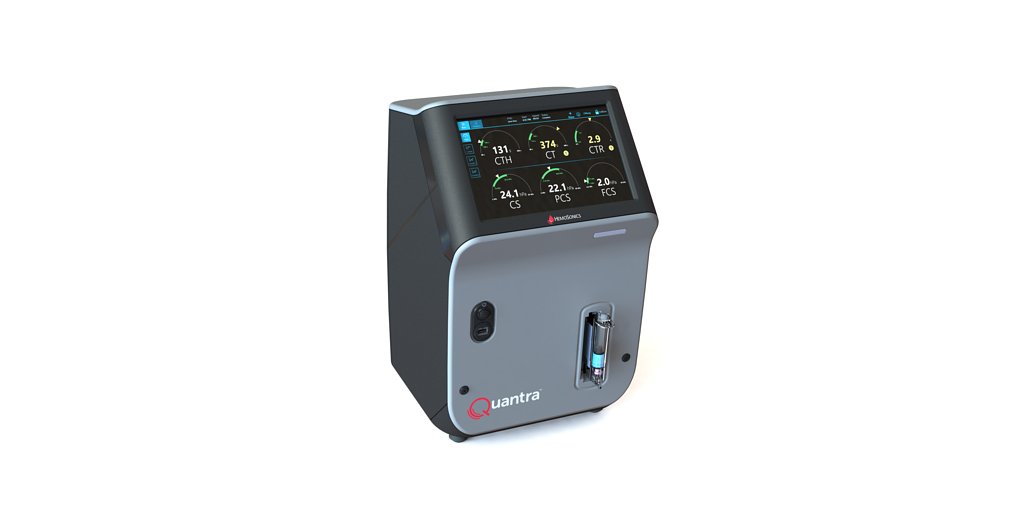
DURHAM, NC – May 05, 2026 – HemoSonics, a medical device company focused on acute bleeding management, has earned a prestigious Silver 2026 Edison Award for a technology designed to combat one of the most persistent and tragic challenges in modern medicine: maternal mortality from postpartum hemorrhage. The company’s Quantra® Hemostasis System for Obstetric Procedures, the first and only device of its kind cleared by the U.S. Food and Drug Administration (FDA) for obstetric bleeding, was recognized in the Women’s Health and Reproductive Innovations category.
The award highlights a significant advancement in a field where progress has been critically needed. By providing clinicians with rapid, real-time data on a patient’s blood clotting ability at the point of care, the system offers a powerful new tool to manage severe bleeding after childbirth, a condition that remains a leading cause of maternal death globally.
The Unseen Crisis of Postpartum Hemorrhage
While childbirth is often celebrated as a joyous event, the risk of severe complications remains a stark reality. Postpartum hemorrhage (PPH), defined as excessive bleeding after delivery, is the single largest cause of maternal mortality worldwide. According to the World Health Organization, PPH affects more than 14 million women annually and results in approximately 70,000 deaths.
The United States, despite its advanced healthcare system, faces a particularly troubling maternal mortality crisis. The nation's rate of 21.1 deaths per 100,000 live births is nearly double the average for other high-income countries in the Organization for Economic Co-operation and Development (OECD). Bleeding complications account for more than 10% of these deaths. Compounding the tragedy is the consensus among public health experts that a majority of these deaths are preventable. For decades, the rate of hemorrhage-related maternal deaths in the U.S. has remained stubbornly high, signaling a clear need for innovative solutions that can be deployed quickly and effectively in high-stakes delivery room environments.
“HemoSonics is committed to fighting maternal mortality caused by severe bleeding, which is why we are particularly proud to receive the Silver award at the 2026 Edison Awards in the Women’s Health and Reproductive Innovations category,” said Francesco Viola, Founder and Chief Scientific Officer, HemoSonics, in a statement.
A Technological Leap in Blood Coagulation Analysis
The Quantra Hemostasis System represents a paradigm shift in managing PPH. It is a viscoelastic testing (VET) platform, a category of diagnostic tools that assess the entire process of blood clot formation, strengthening, and breakdown. What sets the Quantra System apart is its proprietary SEER Sonorheometry (Sonic Estimation of Elasticity via Resonance) technology. This innovative ultrasound-based method measures the stiffness and stability of a whole blood sample, providing a comprehensive picture of a patient's coagulation status.
The system’s true innovation lies in its speed and accessibility. Using a simple, cartridge-based system, a clinician can get actionable results in less than 15 minutes directly in the labor and delivery suite or operating room. This rapid turnaround is critical during a hemorrhage, where every minute counts. The system provides key parameters, including how long it takes for a clot to form and the relative contributions of platelets and the clotting protein fibrinogen to its strength.
This capability is enabled by the QStat Cartridge, which received expanded FDA 510(k) clearance for peripartum obstetric procedures in August 2025. This clearance made the Quantra System the first and only VET platform specifically approved for this critical application, a key differentiator from competitors like Thromboelastography (TEG) and Rotational Thromboelastometry (ROTEM), which have been used off-label in obstetrics but lack this specific FDA validation and indication.
Redefining the Standard of Care in Obstetrics
The availability of rapid, reliable, and FDA-cleared coagulation data at the bedside has the potential to fundamentally change how clinicians manage PPH. Traditionally, doctors have relied on standard laboratory tests that can take an hour or more to return results, a delay that is untenable during an active hemorrhage. This often forces clinicians to make transfusion decisions based on generalized protocols rather than the specific needs of the patient.
The Quantra System allows for a more personalized and targeted approach. By quickly identifying the specific deficiency in the coagulation process—whether it’s a lack of clotting factors, low fibrinogen, or poor platelet function—doctors can administer the right blood products in the right amounts at the right time. This not only improves the chances of stopping the bleeding quickly but also helps avoid the risks and costs associated with unnecessary transfusions. Furthermore, the system presents results against OB-specific reference ranges, accounting for the unique physiological changes that occur during pregnancy.
A retrospective study published in the International Journal of Obstetric Anesthesia has already demonstrated the technology's promise, showing that the Quantra QStat Cartridge could rapidly and reliably detect clotting disorders in 130 patients experiencing PPH. This data-driven approach empowers clinical teams to move beyond guesswork and intervene with precision, improving patient safety and optimizing the use of precious hospital resources.
Innovation, Recognition, and Global Reach
Winning an Edison Award is a significant milestone for any company. Named after the prolific American inventor Thomas Edison, the awards recognize excellence in new product development, human-centered design, and innovation. Winners are chosen by an independent panel of senior scientists, engineers, and industry leaders from thousands of global submissions. For HemoSonics, this 2026 Silver award—its second in three years, following a Silver win in 2024—serves as powerful validation of its technology and its mission.
The recognition underscores the growing importance of the women's health technology market and the urgent need for solutions that address long-standing gaps in care. The company’s success is bolstered by its position within the Stago Group, a leading global in-vitro diagnostics company that acquired HemoSonics in 2017. This affiliation provides the North Carolina-based firm with the resources and international footprint necessary to bring its life-saving technology to hospitals and birthing centers around the world.
As Francesco Viola noted, “a growing number of top hospitals in the U.S. are using our technology to help women have safe and healthy deliveries, by empowering clinicians with actionable data when and where it’s needed.” With this prestigious award, the Quantra Hemostasis System is poised to become a new standard of care, offering a beacon of hope in the global fight against preventable maternal mortality.