
- 340MW Battery Portfolio: HDRE and Tokyo Gas are developing a 340-megawatt battery energy storage system (BESS) portfolio across multiple Japanese prefectures.
- 400MW Secured: HDRE has secured approximately 400MW under Japan's Long-Term Decarbonization Auction (LTDA) scheme over the past two years.
- 20-Year Offtake Agreements: Approximately 190MW of the BESS projects will operate under long-term offtake agreements, providing HDRE with stable revenue for two decades.
Experts view this collaboration as a strategic milestone in Japan's energy transition, highlighting the critical role of large-scale battery storage in achieving grid stability and carbon neutrality by 2050.
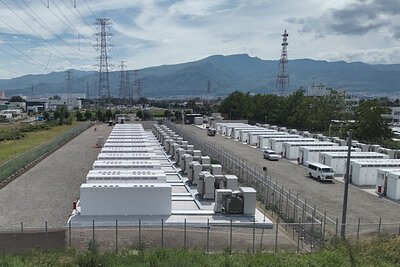
HDRE & Tokyo Gas Forge 340MW Battery Deal to Bolster Japan's Grid
TAIPEI, April 16, 2026 – In a significant move to advance Japan's energy transition, Taiwanese firm HD Renewable Energy (HDRE) has announced a major collaboration with Japanese utility giant Tokyo Gas to develop a 340-megawatt (MW) portfolio of battery energy storage system (BESS) projects. The multifaceted partnership marks a substantial expansion for HDRE in Japan and underscores the critical role large-scale energy storage will play in the nation's pursuit of a decarbonized and stable power grid.
The deal combines HDRE’s expertise in storage development with Tokyo Gas's vast experience in power market operations, creating a powerful alliance poised to navigate the complexities of Japan’s evolving energy landscape. The portfolio spans multiple prefectures and employs innovative financial structures designed to ensure long-term viability and scalability.
A Blueprint for BESS Deployment
The 340MW collaboration is structured around two distinct models, reflecting a sophisticated approach to financing and operating large-scale energy assets.
Approximately 149MW of the portfolio, located in Aomori Prefecture, will be developed under operational service agreements. These projects were successfully awarded capacity under Japan's highly competitive Long-Term Decarbonization Auction (LTDA) scheme. Under this framework, HDRE will manage the development and construction, with commercial operations scheduled to begin in fiscal year 2029. Upon commissioning, Tokyo Gas will take over operational responsibilities, leveraging its market expertise to optimize asset performance through power trading and participation in capacity markets.
The second component of the partnership consists of long-term offtake agreements covering approximately 190MW of BESS projects across the prefectures of Miyazaki, Iwate, Miyagi, and Fukushima. In this arrangement, Tokyo Gas will acquire operational usage rights to the batteries for a period of about 20 years, paying usage fees to HDRE. This structure provides HDRE with a predictable, long-term revenue stream, enhancing the financial stability and asset value of the projects. For Tokyo Gas, it secures long-term access to dispatchable capacity, a crucial tool for managing its energy supply in a market with increasing levels of intermittent renewable power.
Powering Japan's Decarbonization Drive
This partnership arrives at a pivotal moment for Japan. With a national goal of achieving carbon neutrality by 2050, the country is rapidly expanding its solar and wind power capacity. However, the intermittent nature of these renewable sources poses significant challenges to grid stability. Battery energy storage systems are widely seen as the key enabling technology to solve this issue, acting as giant rechargeable batteries that can absorb excess energy when supply is high and release it during peak demand or when renewable generation dips.
The Japanese government has actively encouraged BESS development through policies like the LTDA scheme. By providing a 20-year fixed revenue stream for successful bidders, the LTDA de-risks major capital investments and provides the financial certainty needed to get large-scale projects built. The BESS category in these auctions has been consistently oversubscribed, signaling intense developer interest. HDRE has been a notable beneficiary, securing approximately 400MW under the scheme over the past two years, demonstrating its proficiency in navigating the competitive bidding process.
Navigating a Booming but Complex Market
The Japanese BESS market is on the cusp of explosive growth, with some forecasts projecting a more than tenfold increase in capacity by 2040. This boom is fueled by clear policy directives and urgent market needs. However, developers face significant headwinds, including severe grid connection bottlenecks, high project costs that are often two to three times the global average, and a constantly evolving regulatory environment.
Recent reforms to the LTDA, for example, are set to increase the minimum discharge duration requirement from three to six hours in the next auction round. This change is designed to prioritize long-duration storage crucial for seasonal grid stability but raises the barrier to entry for many existing project designs. The success of the HDRE-Tokyo Gas collaboration in this challenging context highlights the value of strategic partnerships that combine international development expertise with local market incumbency.
A Strategic Win for Growth and Green Transformation
For HDRE, this 340MW portfolio is a cornerstone of its ambitious Japanese expansion strategy. The company is advancing a development pipeline of approximately 3GW in the country, building on the success of its operational 50MW Helios BESS project in Hokkaido. The partnership with a premier utility like Tokyo Gas not only validates HDRE's business model but also solidifies its position as a leading international energy player in the competitive Japanese market.
For Tokyo Gas, the collaboration is a direct implementation of its Green Transformation (GX) business model and its 'Compass 2030' vision. The company has committed to investing approximately 2 trillion yen in growth areas, including decarbonization, and securing long-term access to flexible BESS assets is essential to achieving its net-zero emissions goal. By integrating these batteries into its portfolio, Tokyo Gas can enhance power supply stability, optimize its participation in electricity markets, and effectively manage the integration of more renewable energy sources into its system.
The partnership serves as a powerful template for future energy projects, demonstrating how specialized developers and established utilities can join forces to accelerate the transition to a sustainable energy future.