
- 300,000+ families served by Haivivi in China
- $3.5 billion estimated value of China’s AI toy market in 2025
- BubblePal sold over 300,000 units globally
Experts are divided, with some praising the emotional engagement potential of AI toys while others warn about privacy risks and developmental concerns, emphasizing the need for further research on long-term impacts.
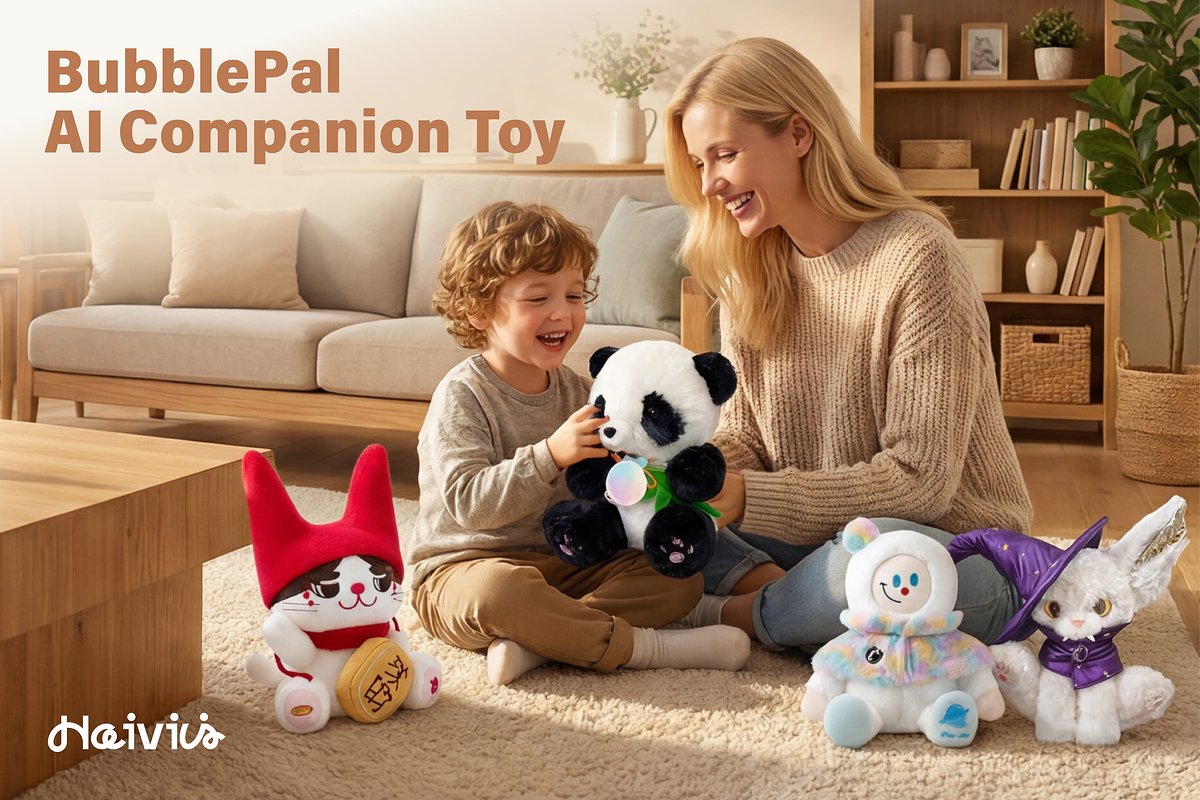
Haivivi's AI Toys Arrive in US, Sparking Awe and Alarm
NEW YORK, NY – April 23, 2026 – The toy box is getting an intelligence upgrade. Haivivi, a prominent Chinese AI toy company, has officially launched its line of AI-powered companion toys in the United States, promising to “breathe life” into ordinary dolls. The company’s flagship product, the BubblePal AI Interactive Charm, is a small, attachable device designed to turn any stuffed animal into a conversational friend that can speak, remember personal details, and even perceive a child's emotions.
This U.S. debut follows significant success in China, where Haivivi claims to be the “No.1 Online-Selling AI Toy Brand,” having served over 300,000 families. The global expansion brings a new generation of interactive play to Western markets, but it also lands squarely in the middle of a heated debate among parents, educators, and child development experts about the role of artificial intelligence in shaping modern childhood.
The Promise of an AI Best Friend
At the heart of Haivivi’s pitch is the idea of creating a deeper, more meaningful connection between a child and their toy. According to the company, its products are engineered for “genuine emotional connection.” The BubblePal charm, which has already sold over 300,000 units, utilizes a sophisticated dual AI architecture combining large and small language models. This, the company states, allows it to deliver more “human-like” responses that preserve the emotional nuances of a child’s voice.
The device boasts a “long-term bionic memory,” enabling it to recall a child’s name, favorite things, and past conversations, creating a personalized experience that “knows you better with every chat.” Beyond simple conversation, it acts as a “super encyclopedia” to answer questions, co-creates interactive stories, and can even adopt the voice and personality of licensed characters, allowing children to talk with their favorite cartoon heroes.
Safety and parental oversight are key selling points. Haivivi emphasizes that the BubblePal is made from FDA-certified food-grade silicone and ABS materials, with a cornerless design to prevent injuries. Through a companion app, parents can access “emotional weather charts” and growth reports, which are intended to help them monitor their child’s mood and development in real time. This feature, Haivivi suggests, helps realize its vision of “Warm Companionship, Visible Growth.”
A New Front in the Global Toy Wars
Haivivi's move into the U.S. is more than just a product launch; it’s a significant strategic push by a leading Chinese tech firm into the lucrative American toy market. The company, also known as Yueran Innovation, is a product of China’s booming domestic AI toy industry, a market estimated to be worth over $3.5 billion in 2025 and projected to grow exponentially. This rapid expansion has fostered intense competition and innovation, with over 1,500 AI toy companies reportedly operating in China.
By entering the U.S. market via direct-to-consumer channels like Amazon and its official website, Haivivi is challenging a host of established players. The competitive landscape includes toy giants like Mattel and Lego, which are actively exploring AI integration, as well as specialized tech companies. Brands like Sphero have long dominated the educational robotics space, while the legacy of Anki’s beloved AI robots, Cozmo and Vector, demonstrates a clear consumer appetite for robotic companions with personality.
Haivivi's competitive edge lies in its specific focus on infusing emotional intelligence into traditional plush toys, a category with deep cultural resonance. Its approach of selling a universal AI charm that can animate any existing toy is a novel strategy that could disrupt the market by separating the “brain” from the “body.”
The 'AI Nanny' Debate: Companionship or Control?
While the technology is impressive, its arrival has amplified concerns among child development experts. The prospect of an AI that remembers a child’s secrets and tracks their emotional state raises profound questions about privacy, development, and the very nature of play. Advocacy groups like Fairplay have long warned that AI toys can “invade family privacy by collecting a lot of sensitive data,” which can then be used for commercial purposes.
A review of Haivivi’s privacy policy reveals that the company collects user-inputted content, including voice data, and reserves the right to use anonymized data for commercial purposes. While the policy states the services are not intended for children and that parents can request data deletion, the reality of a child being the primary user creates a gray area that concerns privacy advocates.
Beyond data, experts question the developmental impact. A University of Cambridge study found that AI-enabled toys can be ineffective at supporting critical developmental play and may respond inappropriately to a child’s emotional cues. Some psychologists worry that these devices, offering what one expert called “canned comfort,” could undermine a child’s ability to build real-world social skills and navigate complex human relationships. The Canadian Paediatric Society has advised against AI toys, recommending instead those that encourage active, imaginative play.
“An AI can mimic a trusted friend, but it doesn’t have the child’s best interests at heart,” a child psychologist noted anonymously. “It’s running on an algorithm. We are introducing a powerful, persuasive, and non-human element into a child's most formative years, and we simply don’t know the long-term consequences.”
The Reality of the User Experience
For now, early adopters and reviewers paint a picture of a promising but imperfect product. The BubblePal is widely described as compact, safe, and surprisingly engaging. Parents have praised its enthusiastic voice and its ability to encourage back-and-forth conversation, helping children practice social skills without the pressure of a formal lesson. The push-to-talk button is intuitive for young children, and the ability for parents to customize AI prompts through the app is a welcome feature.
However, the experience is not without its flaws. Some users have reported occasional translation errors in non-English languages and note that the AI can struggle with complex questions. The battery life, at around four hours of active use, is functional but not exceptional. A few reviewers also pointed out a slight disconnect in the user experience: while the charm is meant to bring a stuffed animal to life, the child must interact directly with the button on the device, making the attached plush toy feel somewhat secondary to the interaction.
As Haivivi’s AI companions find their way into more homes, families will have to weigh the novelty and educational potential against these emerging concerns. The technology offers a tantalizing glimpse into a future where every toy can be a friend, but it also serves as a critical test case for how society will manage the growing integration of artificial intelligence into the lives of children.