
- $1.2 billion: Proposed public listing via merger with GigCapital7 SPAC
- 10 MW: Power output of Hadron’s Halo Micro-Modular Reactor (MMR)
- 3.6 GW: Signed customer agreements for Hadron’s technology
Experts would likely conclude that Hadron Energy’s strategic board and proven reactor technology position it as a strong contender in the nuclear sector, though the company faces significant regulatory and commercial challenges in scaling its solution for AI’s energy demands.
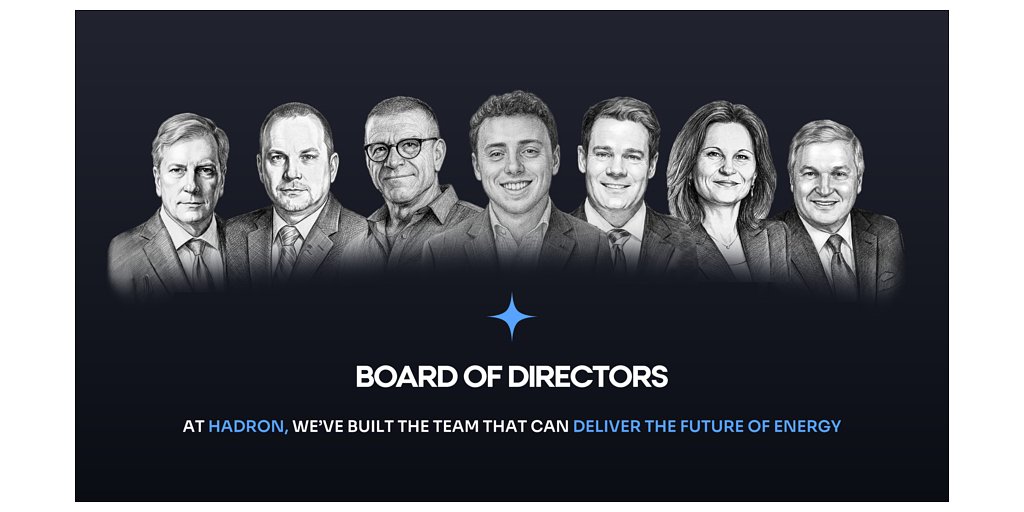
Hadron’s Nuclear Dream Team Takes Aim at the AI Energy Crisis
NEW YORK, NY – December 01, 2025 – In a strategic move that signals a new level of maturity for the advanced nuclear sector, Hadron Energy has unveiled the leadership team it believes can navigate one of the most complex industrial undertakings of our time: deploying a new generation of nuclear reactors. The company announced its designated seven-member Board of Directors ahead of a proposed $1.2 billion public listing via a merger with GigCapital7, a special purpose acquisition company (SPAC). This isn't just a corporate formality; it's a meticulously crafted statement of intent, aiming to reassure investors and regulators that Hadron has the strategic depth to power the future of artificial intelligence and critical infrastructure.
At the heart of this transaction is Hadron's Halo Micro-Modular Reactor (MMR), a 10-megawatt power plant designed to be small enough to fit in a standard shipping container. The company is positioning itself as the critical energy solution for a world grappling with the exponential power demands of AI data centers and the urgent need for grid resilience. By going public, Hadron is making a high-stakes bet that it can become the first publicly traded company focused on light-water MMRs, a move that could unlock significant capital but also invites intense public scrutiny.
A Board Built for a Nuclear Renaissance
The most telling aspect of Hadron's strategy is not its technology, but its people. The company has assembled a board that reads like a who's who of nuclear regulation, public company governance, and geopolitical strategy. This is a deliberate effort to pre-emptively answer the toughest questions facing any nuclear startup: Can you navigate the NRC? Can you manage a public company? And can you handle the global politics of nuclear energy?
The board will be led by Executive Chairman Dr. Avi Katz, the founder of GigCapital Global and a serial SPAC issuer with a deep background in scaling technology companies. His presence underscores the financial engineering behind the deal, bringing a veteran hand in public-company formation and capital markets to a notoriously capital-intensive industry. He is joined by Bryan Timm, former President and COO of Columbia Sportswear, who will chair the Audit Committee, bringing decades of operational and financial oversight from a major publicly traded corporation.
Crucially, the board includes two figures with unparalleled experience in the nuclear regulatory and policy landscape. Robert Lewis is a 32-year veteran of the U.S. Nuclear Regulatory Commission (NRC), having served as Deputy Executive Director for Operations. His intimate knowledge of the NRC's inner workings, from rulemaking to post-Fukushima reforms, provides Hadron with an invaluable internal compass for navigating the complex licensing process. Complementing this is Ambassador Adrian Zuckerman, the former U.S. Ambassador to Romania. During his tenure, Zuckerman was instrumental in advancing U.S. energy security interests, including negotiating an $8 billion nuclear plant refurbishment. His expertise in international energy policy and foreign investment will be vital as Hadron eyes a global market.
Rounding out this strategic assembly are Ralph Hunter, a 35-year nuclear industry executive with leadership roles at Constellation and Rolls-Royce SMR, and Dr. Raluca Dinu, a semiconductor executive and Managing Partner at GigCapital Global. Together, they form a leadership body designed not just to govern, but to actively clear the path for commercialization. “Our Board represents the strongest cross-section of relevant experiences for leading a company in the U.S. nuclear and clean-energy sector today,” said Samuel Gibson, Founder and Chief Executive Officer of Hadron, who will also serve on the board.
The Halo Reactor: A Pragmatic Bet on Proven Technology
While the board provides the strategic credibility, the market opportunity lies with Hadron's Halo MMR. The reactor is designed to deliver a constant 10 MW of electricity—enough to power a small town or a power-hungry data center—for up to 10 years without refueling. Its key differentiator is its reliance on proven Pressurized-Water Reactor (PWR) technology, the same fundamental design used in the majority of commercial nuclear plants worldwide.
This is a calculated, pragmatic choice. While some competitors are pursuing more experimental designs with novel coolants or fuels, Hadron is betting that sticking to a well-understood technology will de-risk its path to market. This approach could shorten licensing timelines, simplify supply chains, and lower costs by leveraging decades of existing safety data and operational experience. The design itself places all primary components within a single, transportable vessel, a feature intended to eliminate the risk of certain large-scale accidents and streamline factory production.
The timing is critical. The explosive growth of AI is creating an energy crisis for tech giants, with data center power consumption projected to skyrocket. Hadron is targeting this sector directly, alongside industrial facilities and national security installations. The company reports it already has 3.6 GW in signed customer agreements and is in letter-of-intent stages with over six potential customers, including a data center developer seeking 100 MW of power, which would require a multi-unit installation. This demand from the digital economy provides a powerful commercial driver for a technology that has historically been focused on government and utility applications.
The $1.2 Billion SPAC Gambit
The decision to merge with GigCapital7 is a classic deep-tech financing strategy. The $1.2 billion transaction is expected to provide Hadron with approximately $200 million in net proceeds, assuming no redemptions from the SPAC's trust. This capital is essential to fund the final stages of product development and navigate the expensive regulatory approval process ahead of commercial deployment.
SPACs have become a popular, if sometimes controversial, vehicle for bringing capital-intensive, pre-revenue companies to the public markets. For a venture like Hadron, which faces a long road to profitability, the SPAC route offers a faster path to public listing and access to a large pool of capital compared to a traditional IPO. The partnership with GigCapital, under its “Mentor-Investor™” model, provides not just cash but also the public-market expertise of Dr. Katz and his team, as evidenced by their prominent roles on the new board.
However, this path is not without risk. The ultimate success of the merger, expected to close in the first quarter of 2026, hinges on shareholder approval and market conditions. The combined company, set to trade under the ticker “HDRN,” will need to deliver on its ambitious milestones to maintain investor confidence in a market that has become more discerning about SPAC transactions.
The Long Road from Blueprint to Power Plant
Despite the impressive board and significant funding, Hadron Energy faces a formidable journey. The company has been in pre-application discussions with the NRC since July 2024 and plans to formally submit its Design Certification and Early Site Permit applications by the fourth quarter of 2026. While the NRC is working to create a more streamlined, risk-informed regulatory framework for microreactors, the path remains untested for a commercial, light-water MMR.
Hadron's timeline projects scaled manufacturing to begin in late 2028, with the first commercial deployment around 2030. This multi-year timeline highlights the immense challenge of bringing any new nuclear technology to market. Each step, from securing fuel supply to final site commissioning, represents a significant technical, financial, and regulatory hurdle. The successful execution of this plan will depend entirely on the very expertise this newly formed board was assembled to provide.