
- $3 billion investment in Guinea's LNG Project
- 1.8 GW gas-fired power plant, more than doubling Guinea's current on-grid capacity
- 45% of Guinea's population has access to electricity, with chronic power shortages in Conakry
Experts view the Guinea LNG Project as a strategic initiative that aligns energy infrastructure development with critical mineral supply chain security, fostering economic growth for Guinea while advancing U.S. geopolitical interests.
Guinea's $3B LNG Project: A New Era for Energy and Critical Minerals
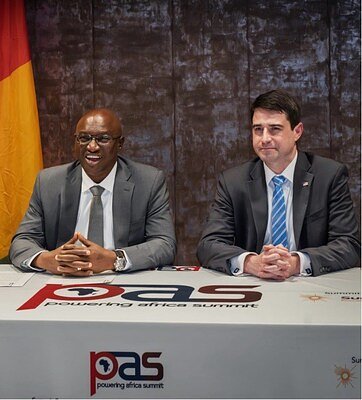
WASHINGTON, D.C. – April 07, 2026 – A landmark energy project in the Republic of Guinea is gaining significant momentum, promising to unlock the nation's vast mineral wealth and strategically realign global supply chains. At the Powering Africa Summit held in Washington, West Africa LNG Group (WALNG) highlighted major progress on its Guinea LNG Project, a multi-billion-dollar initiative poised to transform the West African nation's economic landscape through a partnership involving Guinean and United States government officials.
The project, which includes a large-scale liquefied natural gas (LNG) receiving terminal and a massive 1.8 Gigawatt (GW) gas-fired power plant, was the focus of high-level discussions between Guinea's Minister of Energy, Mr. Laye-Sékou Camara, and senior U.S. officials, including Acting Assistant Secretary of Energy Tommy Joyce. These engagements underscore a powerful convergence of interests: Guinea's urgent need for reliable energy to power its industrial ambitions and America's strategic push to secure access to critical minerals.
"Guinea is committed to building a modern energy system that can support our industrial growth and fully unlock the value of our natural resources," Minister Camara stated during the summit. He emphasized that ventures like the Guinea LNG Project are "central to delivering the reliable and scalable energy infrastructure required for the next phase of our economic development."
Powering a Nation's Industrial Ambitions
For Guinea, the project represents a potential solution to a crippling energy deficit that has long constrained its development. Despite being the world's second-largest producer of bauxite—the primary ore used to make aluminum—the nation has struggled to capitalize on its resources. With only about 45% of its population having access to electricity and an on-grid capacity of just over 1 GW, frequent power outages are a part of daily life, particularly in the capital, Conakry.
This energy poverty has severely hampered industrialization, forcing the country to export most of its high-grade bauxite as raw material rather than processing it into higher-value alumina. The process of refining bauxite is incredibly energy-intensive, and a feasibility study funded by the U.S. Trade and Development Agency (USTDA) identified a staggering power demand of over 2,000 MW from the bauxite industry alone.
The WALNG project is designed to meet this demand head-on. The planned 1.8 GW power plant, which would be the largest of its kind in sub-Saharan Africa, would more than double Guinea's current on-grid capacity. By providing a stable and abundant power source, the project aims to enable the construction and operation of alumina refineries, allowing Guinea to capture a far greater share of the aluminum value chain, create skilled jobs, and spur broad-based economic growth. Furthermore, a dedicated 150 MW of the plant's output is earmarked for Conakry, directly addressing the capital's chronic power shortages.
A Geopolitical Linchpin for Critical Minerals
Beyond its domestic impact, the Guinea LNG Project is a key piece in a larger geopolitical puzzle. The high-level U.S. involvement signals a strategic focus on diversifying and securing critical mineral supply chains. As global competition for resources intensifies, Washington is actively fostering partnerships that can provide stable and responsible sources of materials essential for modern industry and defense.
Bauxite is one such critical mineral, and Guinea holds the world's largest reserves. By supporting the energy infrastructure needed for in-country refining, the U.S. helps create a more resilient and geographically diverse supply chain for alumina, reducing dependence on other global producers. This strategic alignment was a central theme at the Powering Africa Summit.
"The United States is committed to working with partners like Guinea to advance energy infrastructure that supports responsible resource development and long-term economic growth," said Acting Assistant Secretary Joyce. He framed the initiative as a model for mutually beneficial partnerships, stating, "Projects like Guinea LNG demonstrate how energy and critical minerals can be developed together... creating lasting value for both countries."
The collaboration illustrates a sophisticated U.S. foreign policy approach that links energy investment directly to strategic resource security, fostering economic development in partner nations while simultaneously advancing its own national interests.
The Scale of a Transformative Investment
The sheer scale of the Guinea LNG Project, now estimated to be a $3 billion investment, reflects its transformative potential. The initial phase involves constructing a large-scale LNG receiving terminal near the Port of Kamsar, a strategic hub for the country's mining operations. This facility will import, store, and regasify LNG to fuel the adjacent power plant. A distribution network, using a "virtual pipeline" of cryogenic trucks, will also deliver gas directly to industrial customers, including mining companies and future refineries.
The project is advancing through key development stages with broad support. In April 2024, Guinea's interim parliament officially approved the development agreement, providing a critical green light. WALNG has also secured an initial equity financing round from a U.S.-based investor group to fund development activities and finalize offtake agreements with major mining companies.
"The Guinea LNG Project represents a foundational step in building the energy infrastructure required to support Guinea's long-term industrial development," said Patricia Moller, Chairman of West Africa LNG Group. "We are proud to be working alongside the Government of Guinea and U.S. partners to advance a solution that is both scalable and aligned with the strategic priorities of all stakeholders involved."
As WALNG continues its engagement with development finance institutions and private investors to finalize the comprehensive financing package, the project stands as a powerful symbol of a new chapter for Guinea—one powered by cleaner energy, driven by industrial ambition, and anchored by strategic international partnership.