
- Size: 9,500.878 square meters, certified as the world's largest fragrance museum by Guinness World Records
- Visitor Capacity: 55 million overnight tourists in Guangzhou (2023), with plans to expand cultural offerings fivefold by 2035
- Interactive Elements: 18 thematic zones, 300+ scent installations, and 400 unique fragrances
Experts view the Xuelei Fragrance Museum as a groundbreaking fusion of ancient Eastern aroma traditions and cutting-edge AI technology, setting a new standard for immersive, personalized cultural experiences in the fragrance industry.
Guangzhou's Scent of Success: World's Largest Fragrance Museum
GUANGZHOU, China – December 12, 2025 – The global map of cultural destinations has a new, fragrant landmark. In a move that solidifies Guangzhou's position as a hub for olfactory innovation, the Xuelei Fragrance Museum has been officially certified by Guinness World Records as the largest fragrance museum in the world. Spanning a colossal 9,500.878 square meters, this institution is far more than a collection of scents; it's an immersive, technology-driven odyssey that redefines the relationship between humans and fragrance.
The certification, awarded on November 27, 2025, marks a pivotal moment for both the city and the global perfume industry. By blending ancient Eastern aroma traditions with futuristic artificial intelligence, the museum is poised to become a pilgrimage destination for scent lovers, tech enthusiasts, and cultural tourists alike, offering a personalized experience previously unimaginable in a public space.
A New Landmark on the Global Scent Map
While cities like Grasse and Paris have long been considered the epicenters of perfumery, Guangzhou is now making a powerful claim for its place in the modern scent world. The Xuelei Fragrance Museum is a cornerstone of this ambition, situated in a metropolis that is already a powerhouse of tourism and cultural development. In 2023, Guangzhou attracted over 55 million overnight tourists, and the city has ambitious plans to significantly expand its cultural offerings, including a fivefold increase in museums by 2035.
The museum's scale and scope are designed to captivate this growing international audience. Unlike traditional perfume museums that often focus on historical artifacts and the heritage of Western perfumery, the Xuelei experience is dynamic and forward-looking. While venerated institutions like the Osmothèque in Versailles act as crucial archives preserving the past, and the International Perfume Museum in Grasse celebrates the history of raw materials, Xuelei's unique selling proposition is its fusion of education, entertainment, and radical personalization.
It positions itself not as a passive repository, but as an active laboratory for sensory discovery. With 18 thematic zones, over 300 interactive scent installations, and 400 unique fragrances, the museum invites visitors on a journey that is both deeply personal and universally appealing, bridging the gap between China's rich olfactory history and the global fragrance landscape.
The Architecture of Scent: An Immersive Journey
Entering the Xuelei Fragrance Museum is to step into a world where the invisible is made tangible. The architectural concept, described as part scent laboratory and part cultural sanctuary, immediately signals a departure from a conventional museum visit. The experience is designed to be multi-sensory, engaging visitors far beyond just their sense of smell.
The journey begins with a digital "Scent Card," a key that unlocks a personalized path through the museum's vast olfactory universe. At hundreds of scent points, visitors don't just sample fragrances; they are prompted to record their emotional responses—from the invigorating brightness of citrus to the comforting warmth of floral notes and the grounding depth of woods. This process transforms the subjective act of smelling into a tangible data profile, creating a unique sensory portrait for each guest.
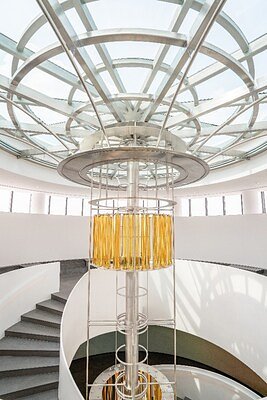
The museum's physical and emotional centerpiece is the world's largest AI fragrance-blending installation. This five-story architectural marvel features hundreds of crystal-clear essence vessels suspended in a radial constellation around a spiraling staircase. The effect is cinematic, creating the sensation of walking through a "nebula made of scent" as light refracts through the gleaming vials. This is more than just a visual spectacle; it is the engine of the museum's data-driven experience, symbolizing the convergence of art, science, and technology that defines the institution.
Cyber-Perfumery: AI Democratizes a Bespoke Art
The most revolutionary aspect of the Xuelei Fragrance Museum is its use of artificial intelligence to democratize the art of perfumery. This trend of "cyber-perfumery" is gaining traction globally, with startups and even other cultural institutions like Dubai's Museum of the Future exploring AI-driven scent creation. However, Xuelei has implemented it on an unprecedented scale, integrating it into the very fabric of the visitor experience.
After journeying through the thematic zones and building their profile with the Scent Card, visitors arrive at the fourth-floor "Time Machine of Scent." Here, the AI analyzes their collected emotional and preferential data to generate a personalized "Fragrance Travel Report"—a detailed summary of their unique olfactory personality.
The culmination of this journey occurs on the first floor, at a sleek AI-blending station. In what is described as "cyber perfumery magic," the visitor's fragrance profile is transformed into a bespoke, 30ml perfume in just three minutes. The AI formulates the scent, blends the essences, and bottles the final product on the spot. This process, once the exclusive domain of master perfumers and luxury clients, is now accessible to every museum guest, making a deeply personal luxury a tangible takeaway.
Reshaping an Industry from East to West
The museum is the masterwork of Guangzhou Xuelei Cosmetics Co., Ltd., a company with over 30 years of history that has grown to become one of China's largest and oldest fragrance manufacturers. This deep industry expertise is evident not only in the museum's content but also in its strategic vision. The grand opening was attended by executives from the world's leading fragrance houses, including Givaudan, IFF, and Symrise, many of whom contributed to the museum's development. This high-level collaboration signals a strong industry endorsement and positions the museum as a neutral ground for global innovation and dialogue.
By creating such a powerful experiential platform, the museum is poised to influence the broader perfume industry. It challenges the traditional retail model, which often relies on spray cards and abstract descriptions, by offering a deeply educational and emotionally resonant way for consumers to discover and connect with scents. This focus on hyper-personalization and immersive experience aligns perfectly with modern consumer demands for authenticity and customized products.
As it opens its doors to the world, the Xuelei Fragrance Museum does more than just showcase perfume; it offers a compelling vision for the future of cultural institutions. It stands as a testament to how ancient heritage can be revitalized through modern technology, creating a powerful, sensory statement that bridges cultures and inspires a new generation of fragrance lovers.