
- 13 billion barrels of recoverable oil estimated in the Jameson Land Basin, with broader assessments suggesting up to 40 billion barrels of oil equivalent.
- 2021 ban on new oil and gas exploration in Greenland, yet drilling proceeds under a legacy license.
- 2 exploration wells planned in the Arctic basin as part of a five-year drilling agreement.
Experts view this project as a high-stakes test of Greenland's commitment to climate goals versus economic potential, with significant environmental and political risks.
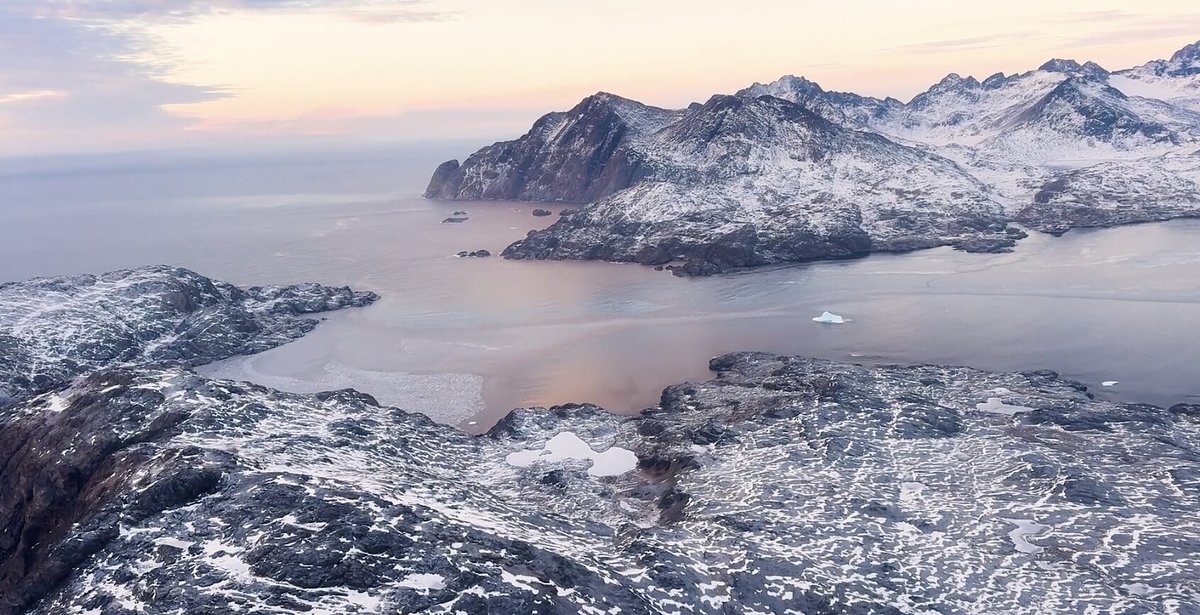
Greenland's Oil Paradox: Drilling to Begin on a Frozen Frontier
HOUSTON, TX – March 27, 2026 – In a move that pits vast economic potential against modern climate policy, the newly-formed Greenland Energy Company (NASDAQ: GLND) announced today it has secured a critical drilling contract to begin exploring for oil in Greenland’s Jameson Land Basin in 2026. The agreement with Canada's Stampede Drilling Inc. (TSX: SDI) provides the operational muscle to tap into one of the world's last major unexplored hydrocarbon frontiers.
However, the venture proceeds under a cloud of political and environmental controversy. The drilling campaign is made possible only by a legacy license that predates Greenland's landmark 2021 decision to ban all new oil and gas exploration, creating a high-stakes test of the island's commitment to its green future against legally binding contracts from its fossil fuel past.
Gearing Up for the Arctic
Greenland Energy Company, which just began trading on the Nasdaq this week following a business combination, is wasting no time in advancing its ambitious plans. The five-year strategic agreement with Stampede Drilling secures the use of Rig #12, a high-performance unit specifically equipped for the punishing conditions of the Arctic. The plan calls for drilling up to two exploration wells in the onshore basin.
This partnership is a cornerstone of the company's strategy, providing the technical expertise required for such a challenging endeavor. "Securing a reliable, high-caliber drilling partner is essential for success in advancing a project of this scale," said Robert Price, CEO of Greenland Energy Company, in a statement. He highlighted Stampede's "proven expertise in Arctic conditions and a track record of safety and efficiency" as key factors in the decision.
For Stampede Drilling, the project represents a significant expansion into a frontier region. The company's President and CEO, Lyle Whitmarsh, acknowledged the unique demands of the operation. "Delivering in extreme conditions demands precision and respect for the environment," Whitmarsh stated. "We're excited to partner with the Greenland Energy team on a program that has the potential to open one of the most exciting unexplored basins in the world."
The Billion-Barrel Question
The prize that Greenland Energy and its investors are chasing is immense. The Jameson Land Basin, genetically linked to the prolific North Sea, has long captivated geologists. Independent resource estimates have suggested the basin could hold over 13 billion barrels of recoverable oil, with some broader assessments for the concession area projecting a staggering 40 billion barrels of oil equivalent. Decades ago, energy majors like ARCO invested in initial surveys, but the basin remains completely undrilled, a rare status in the modern energy landscape.
This geological promise is the primary driver for Greenland Energy Company, which aims to become a publicly traded platform for Arctic energy development. A successful discovery would not only be transformative for the company but could also dramatically alter Greenland's economic trajectory, offering a path to greater financial independence from Denmark. Yet, the path to unlocking this potential is fraught with geological uncertainty, volatile commodity prices, and the immense operational costs associated with working in such a remote and unforgiving environment.
A Nation Divided: Policy vs. Permits
The most significant hurdle for the project may not be underground, but in the political and social climate of Greenland itself. In July 2021, Greenland's left-leaning government made international headlines by halting all new oil and gas exploration. Citing the escalating climate crisis and the island's own vulnerability to melting ice, the government declared that "the future does not lie in oil." The policy was a clear pivot towards sustainable industries like fishing, tourism, and renewable energy.
This moratorium, however, did not invalidate pre-existing licenses. Greenland Energy's exploration rights in Jameson Land stem from just such a legacy permit, granted years before the policy shift. This creates a complex and tense situation where the government is legally obligated to honor an agreement that runs counter to its current environmental and political stance.
Environmental groups have long warned against any hydrocarbon development in the Arctic. They point to the region's fragile ecosystem, which is warming nearly four times faster than the global average. The risk of an oil spill in icy waters, where cleanup technology is often ineffective, poses a catastrophic threat to marine life and the indigenous communities that depend on it. The advancement of the Jameson Land project is expected to draw intense opposition from these groups, who see it as a dangerous step backward in the global fight against climate change.
The Engineering of an Arctic Endeavor
Operating in the Arctic is a monumental feat of logistics and engineering. The challenges go far beyond simple cold. They include managing permafrost, navigating sea ice, and building infrastructure from scratch in a region with limited support. Any drilling campaign requires specialized equipment designed to withstand extreme temperatures and powerful winds while minimizing environmental impact.
The selection of Stampede's Rig #12 underscores this reality. Such rigs are winterized and often feature advanced safety and containment systems to mitigate the heightened risks of Arctic operations. The entire supply chain, from mobilizing crews to transporting equipment and supplies, demands meticulous planning and a deep understanding of the local environment.
As Greenland Energy Company moves forward, every operational decision will be under a microscope. The company must not only navigate the technical complexities of drilling in the Jameson Land Basin but also satisfy the stringent environmental impact assessments and social reviews required by Greenlandic regulators. For a project proceeding under a legacy license in a nation that has publicly disavowed oil, demonstrating flawless operational and environmental performance will be paramount to its survival. The world will be watching to see if this high-risk, high-reward venture can succeed where others have not, and at what cost.
Topics & Related
Oil & Gas
Related Company Pulse