
- 144 hospitals and 1,200 life science companies in Massachusetts can now adopt the new waste disposal technology.
- The GENERATIONS® system can reduce transport-related carbon emissions by up to 94%.
- The technology has been successfully piloted by Northwell Health, treating 500,000+ pounds of medical waste annually.
Experts agree that this approval marks a significant step toward sustainable medical waste management, offering a cleaner, more efficient, and economically viable alternative to traditional incineration and autoclaving.
Green Light for Green Med-Waste: MA Approves Revolutionary Disposal Tech
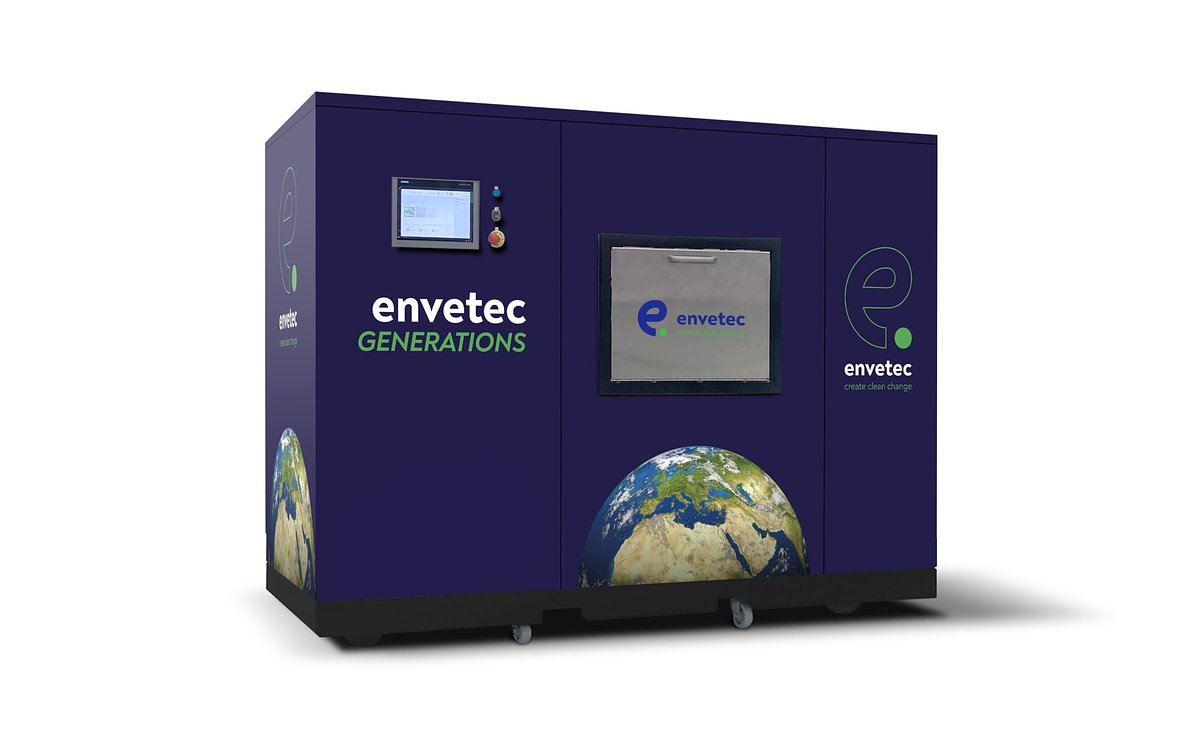
BIRDHILL, IRELAND – May 20, 2026 – In a landmark decision poised to reshape medical waste management, the Massachusetts Department of Public Health has officially approved a pioneering technology that allows hospitals and labs to treat hazardous biological waste on-site, converting it from a liability into a recyclable resource. The approval gives Irish cleantech firm Envetec Sustainable Technologies the green light to deploy its GENERATIONS® system across the Commonwealth, offering a sustainable alternative to the decades-old methods of incineration and off-site hauling.
This regulatory milestone positions Massachusetts, a global hub for healthcare and life sciences, at the forefront of a major shift in how the industry handles its environmental footprint. For the state's 144 hospitals and over 1,200 life science companies, the decision opens the door to a new model of waste management—one that promises to be cleaner, more efficient, and economically advantageous.
The patented GENERATIONS technology is a self-contained, non-thermal system that both shreds and disinfects regulated medical waste, such as used lab plastics, sharps containers, and other biohazardous materials. By treating waste at the point of generation, it sidesteps the carbon-intensive process of trucking materials to centralized facilities for incineration or autoclaving, a practice that has long dominated the industry.
A New Regulatory Path for Sustainability
The approval was granted under a specific provision in Massachusetts law, 105 CMR 480.550, which allows the Department of Public Health to authorize alternative treatment methods that meet stringent safety standards. Envetec’s technology was validated to meet the highest level of microbial inactivation, known as STAATT IV, ensuring that all treated material is completely sterile and safe to handle.
“Massachusetts approval confirms that GENERATIONS meets stringent regulatory requirements for the safe and effective on-site treatment of regulated medical and biological waste,” said Malcolm Bell, CEO of Envetec, in a statement. “Based on our scientific and operational data, GENERATIONS can help customers meet their sustainability goals, including CO2 reduction, landfill avoidance, and recycling of waste streams that incumbent thermal processes such as autoclaving and incineration cannot achieve.”
This regulatory clarity is critical for large healthcare networks and biopharmaceutical manufacturers that operate across multiple jurisdictions and seek standardized, sustainable solutions. With prior approvals in New York and Texas, the addition of Massachusetts significantly expands Envetec’s U.S. footprint and signals growing regulatory acceptance of innovative, on-site solutions.
Challenging the Incinerator and Autoclave
For decades, the medical waste industry has relied on two primary disposal methods: incineration and steam autoclaving. Incineration, while effective at volume reduction, is a thermal process that releases greenhouse gases and other pollutants, leading the World Health Organization to recommend prioritizing non-incineration technologies. Autoclaving uses high-pressure steam to sterilize waste, but the resulting material is typically shredded and sent to a landfill, representing a missed opportunity for resource recovery.
Envetec’s GENERATIONS system breaks this paradigm. It uses a proprietary, biodegradable chemical agent—based on peracetic acid—to achieve sterilization without the high heat or energy consumption of traditional methods. The process is remarkably efficient, using minimal water and power. Once disinfected, the waste, which has been shredded into small fragments, emerges as a clean, dry, and odor-free polymer flake.
This final output is the technology's most revolutionary feature. Unlike the ash from an incinerator or the landfilled mass from an autoclave, the treated material is a homogenous, high-quality plastic resource ready for recycling. This creates the potential for a closed-loop, circular economy within the healthcare sector itself, a concept that was previously unattainable for regulated medical waste.
The Massachusetts Opportunity: A Hub Primed for Innovation
Nowhere is the potential impact of this technology greater than in Massachusetts. The state’s dense concentration of world-class hospitals, research laboratories, and biopharmaceutical giants generates a massive volume of single-use plastic and biohazardous waste. With over 35 million square feet of biopharma lab space, the life sciences sector alone is a significant contributor.
These institutions are also under increasing pressure from investors, regulators, and the public to improve their environmental performance and meet ambitious sustainability goals. The GENERATIONS system provides a direct pathway to achieving significant reductions in Scope 3 emissions—the indirect emissions that occur in a company's value chain—by eliminating waste transportation and diverting material from landfills.
An independent Life Cycle Analysis has already validated these claims, showing that the on-site system can reduce transport-related carbon emissions by as much as 94% while transforming a costly waste stream into a potential value stream.
From Waste Stream to Value Stream
The viability of this new model is already being proven in other markets. Northwell Health, one of the largest healthcare providers in the United States, has successfully implemented the GENERATIONS system at its core laboratory in New York. The installation is projected to sustainably treat over 500,000 pounds of medical waste annually, slashing the facility's reliance on off-site disposal.
Furthermore, a pilot program between Envetec and medical technology leader BD (Becton, Dickinson and Company) demonstrated the tangible reality of a circular economy. In the pilot, laboratory plastics were processed by the GENERATIONS system, and the resulting clean polymer flakes were successfully molded into new prototype Petri dishes. This proof-of-concept showcases a future where the plastic waste generated by a lab could be used to create new lab supplies, drastically reducing the need for virgin plastics.
For facilities in Massachusetts, the economic case is just as compelling as the environmental one. By treating waste on-site, hospitals and labs can eliminate escalating hauling fees and disposal costs charged by third-party contractors. The operational efficiency of a self-contained, automated system also reduces labor and administrative burdens associated with managing waste pickups.
As healthcare and life science organizations continue to navigate the dual challenges of operational excellence and environmental stewardship, the approval of technologies like GENERATIONS in key markets like Massachusetts marks a critical turning point. It signals a move away from the linear 'take-make-dispose' model and toward a smarter, more sustainable future for the entire industry.