
- $28.6 billion: Global retail sales for plant-based alternatives in 2024
- 8% reduction: Green Boy Group's global carbon footprint reduction in 2024
- 60+ suppliers: Across 35+ countries, supporting the company's global operations
Experts would likely conclude that Green Boy Group has successfully positioned itself as a leader in the plant-based food revolution, leveraging strategic growth, innovation, and sustainability to drive the global shift toward plant-based alternatives.
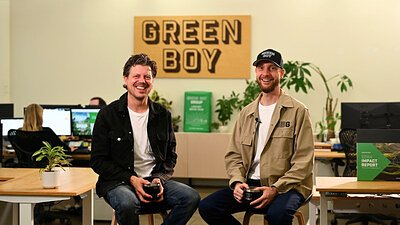
Green Boy Group: 10 Years Fueling the Plant-Based Food Revolution
LOS ANGELES, CA – January 13, 2026 – A decade after its founding, Green Boy Group is celebrating its 10th anniversary, marking a significant milestone for a company that has evolved from a niche startup into a pivotal force in the global food industry. What began on August 25, 2016, as a bold vision by founders Frederik Otten and Peter van Dijken to supply exclusively non-GMO, organic, and plant-based ingredients, has grown into a multinational operation that is fundamental to the "Plant-Based Food Reformation" it champions. The company's journey reflects the meteoric rise of plant-based eating, a consumer-driven shift that has reshaped supermarket aisles and manufacturing priorities worldwide.
A Decade of Strategic Growth
Green Boy’s story is one of calculated expansion and market foresight. Launching simultaneously in Amsterdam and Los Angeles, the founders established an immediate international footprint, positioning the company to bridge supply and demand across continents. This initial setup was a precursor to a decade of aggressive, strategic growth. By 2018, an office in Hong Kong was established to oversee quality control and streamline imports from Southeast Asia. In 2021, the company expanded to Sydney, Australia, tapping into a burgeoning market with a sharp focus on plant-based proteins. A Chicago office followed in 2023, further solidifying its presence in the critical U.S. market.
This geographic expansion was complemented by strategic acquisitions and product innovation. In January 2020, Green Boy acquired Sweet Nature Inc., a distributor of non-GMO and organic syrups, broadening its ingredient portfolio. More significantly, the company invested heavily in research and development, launching a series of proprietary protein lines tailored to specific food applications. These include Plant-Meat Protein™, Plant-Dairy Protein™, and Plant-Drink Protein™, functional ingredients designed to help manufacturers create superior meat, dairy, and beverage alternatives. The opening of a dedicated Food Lab in Los Angeles in 2022 further underscored its commitment to formulation support and innovation.
"Ten years ago, we were one of the first that were solely plant-based and exclusively non-GMO and organic," says Frederik Otten, Co-Founder of Green Boy. "Now, 10 years later, we are recognized as one of the market leaders in the plant-based space across the US, Europe, Southeast Asia, and Australia." This journey from pioneer to leader illustrates a keen understanding of where the food industry was headed.
Powering the Plant-Based Boom
Green Boy's success did not happen in a vacuum. It is intrinsically linked to the explosive growth of the plant-based food sector. Global retail sales for plant-based alternatives reached $28.6 billion in 2024, with projections suggesting the market could triple by 2035. While the U.S. market saw a minor contraction in 2024 after a post-pandemic peak, its overall value of $8.1 billion is more than double what it was seven years prior, and key segments like plant-based milk, creamer, and eggs continue to show robust growth.
Consumer attitudes have also evolved. Early barriers to adoption, such as taste and texture, are diminishing as product quality improves. Industry data shows consumer concerns about taste dropped from 41% to 27% in just over a year. The market is now witnessing a shift towards what some analysts call "Authentic Plant-based" products—foods that are celebrated for their natural ingredients and nutritional benefits rather than merely mimicking animal products. This trend plays directly to Green Boy’s founding ethos of providing clean-label, non-GMO, and organic ingredients. The growing consumer awareness of "ultra-processed" foods has further amplified the demand for the minimally processed, nutrient-dense ingredients that form the company's core offering, with ingredients like pea protein becoming a "workhorse" for the industry.
The Engine Room: A Global Full-Service Model
At the heart of Green Boy's influence is its sophisticated full-service operational model. The company manages a complex global supply chain that offers food manufacturers a seamless, end-to-end solution. This integrated service includes sourcing ingredients directly from origin, overseeing product processing, managing a global network of warehouses, coordinating intricate logistics, and providing crucial formulation support. For its clients, which range from emerging startups to established multinational food corporations, this model removes significant operational hurdles.
With a network of over 60 suppliers across more than 35 countries and 25+ warehouses, Green Boy ensures a reliable and efficient supply of essential ingredients like starches, syrups, fibers, and its specialized proteins. This vast infrastructure allows the company to store products close to customer manufacturing sites, minimizing lead times and logistical friction. It’s this operational backbone that enables the company to fulfill its mission on a global scale.
"As a member of the larger supply chain of the whole food industry, Green Boy offering plant-based ingredients to food manufacturers so they can build food products that are either hybrid or completely plant-based is how we are leading the Plant-Based Food Reformation day after day," adds Co-Founder Peter van Dijken. "We are providing consumers everywhere with a viable alternative offer that helps both people and planet."
Cultivating a Sustainable Future
The term "Plant-Based Food Reformation" is more than a marketing slogan for Green Boy; it is a guiding principle embedded in its corporate strategy. The company's mission is to actively facilitate the global food system's transition away from animal-derived ingredients toward a more sustainable and equitable model. This commitment is quantified and tracked in its annual Impact & Sustainability Reports.
The 2024 report, for example, detailed an 8% reduction in the company's global carbon footprint compared to the previous year. This was not achieved simply through purchasing offsets—a practice the company is moving away from—but through direct emission reductions and efficiency gains. By utilizing established methodologies like the GHG Protocol and CarbonCloud, Green Boy meticulously maps emissions across its entire supply chain. The reported carbon efficiency improvement was largely driven by increased sales of lower-footprint ingredients like starches and syrups, demonstrating how business growth can be aligned with environmental goals.
This corporate mission dovetails with extensive scientific research confirming the environmental benefits of plant-centric diets. Studies have shown that shifting away from high-meat consumption can result in up to 75% less climate-heating emissions, water pollution, and land use. As Green Boy enters its second decade, its focus remains firmly on accelerating this transition, leveraging its global reach and operational expertise to support a food system that is healthier for both people and the planet.