
- National Expansion: Google and HouseCanary's partnership expands nationwide after a successful 2025 pilot in 8 markets.
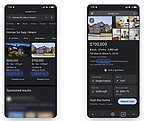
- MLS Integration: Listings from participating MLSs will appear prominently in Google's Local Services Ads on mobile search.
- Industry Impact: The deal contributed to a significant drop in Zillow's stock price during the pilot phase.
Experts view this partnership as a strategic escalation by Google, potentially reshaping the residential real estate search landscape by leveraging MLS data and challenging existing portal dominance.
Google's Real Estate Play: HouseCanary Deal Reshapes Home Search Market
SAN FRANCISCO, CA – June 11, 2026 – The digital landscape of residential real estate is undergoing a seismic shift. HouseCanary, a real estate data and software firm, today announced the national expansion of its partnership with Google. This move will pipe home listings from participating Multiple Listing Services (MLSs) directly into Google's ubiquitous mobile search results, fundamentally altering how millions of Americans discover properties for sale.
Building on a successful pilot program that has been running in eight markets since 2025, the nationwide rollout marks a significant milestone in the commercialization of a new real estate search model. The collaboration promises to enhance listing visibility for brokers and provide a streamlined, trusted search experience for homebuyers, all powered by Google's massive reach and data from the industry's most reliable source: the local MLS.
The Broker's New Digital Storefront
For countless real estate agents and brokers, competing for visibility in a market dominated by multi-billion dollar portals has been an uphill battle. This partnership aims to level the playing field. The program allows listings from participating MLS members to appear prominently within Google's Local Services Ads unit on mobile search, complete with enhanced branding for the brokerage and direct click-to-contact functionality for the listing agent—all at no additional cost.
This is a direct answer to a long-standing industry frustration. "As real estate marketplaces face unprecedented fragmentation, this program gives brokers and agents a simple, easy way to ensure more buyers can discover their listings from the industry's most validated, comprehensive source: the MLS," said HouseCanary Chief Revenue Officer Chris Rediger in the announcement.
By placing the agent and their branding front and center, the model contrasts sharply with the lead-generation tactics of some major portals, which often sell agent placement next to listings that are not their own. Here, the attribution is direct, reinforcing the listing agent's value and connection to the property. This shift from a fragmented, often costly, lead-buy system to a more direct, brand-centric display could empower local professionals and reshape their marketing budgets and strategies.
Google's Strategic Escalation in Real Estate
While Google is the starting point for nearly every consumer journey, its role in real estate has historically been as a traffic conduit, directing users to established players like Zillow and Realtor.com. This national expansion signals a definitive change in strategy. According to industry analysts, this move represents an "escalation in Google's role," one that could trigger a "structural change in residential real estate search."
Google's long-term intention appears to be mirroring its success in other verticals like travel and shopping: owning the experience itself. By integrating detailed property data, images, and pricing directly into its search results, the tech giant is working to keep users within its ecosystem, capturing valuable high-intent data and streamlining the path from search to action. This is a far more sophisticated and integrated approach than its past forays into the sector, such as the now-defunct Google Base and Google Maps Real Estate features from the late 2000s.
The difference this time is the strategic partnership model. Rather than attempting to build a comprehensive listing database from scratch, Google is leveraging HouseCanary's ComeHome platform to tap into the authoritative data feeds of MLSs. The potential disruption was not lost on the market; when the initial pilot was announced in December 2025, it sent ripples through the industry and was cited as a factor in a significant drop in Zillow's stock price. Analysts are now watching closely, with some predicting the dawn of new "portal wars" as Google moves from being a referee to a player on the field.
The MLS Takes Center Stage
At the heart of this entire initiative is the Multiple Listing Service. For decades, the MLS has been the foundational, member-owned cooperative ensuring the accuracy and timely distribution of property information. In an online world awash with outdated or inaccurate data scraped from various sources, this partnership explicitly validates the MLS as the single source of truth.
The program's design—sourcing listings exclusively from participating MLSs—is a strategic choice that prioritizes data integrity. This ensures that homebuyers interacting with listings on Google are seeing information that is compliant with industry rules and vetted by real estate professionals. It's a powerful endorsement that elevates the role of local and regional MLS organizations in the national technology conversation.
HouseCanary acts as the crucial intermediary, using its ComeHome marketplace technology to manage the data flow and relationships with each participating MLS. However, the model is not without its critics. Some industry consultants argue this redefines data display rules by effectively turning MLS data feeds into ad inventory for Google's Local Services Ads, raising complex questions about data ownership, consent, and the downstream commercialization of broker-generated information. As the program expands, the dialogue between MLSs, brokers, and technology partners about data governance will become more critical than ever.
The Commercialization Pathway
From a small pilot in eight markets to a national powerhouse, the HouseCanary-Google partnership is a case study in modern platform commercialization. It leverages the core assets of each partner: HouseCanary's data infrastructure and industry relationships, and Google's unparalleled user base and search dominance. The result is a product that offers a clear value proposition to its target users—brokers and homebuyers—while creating a new revenue stream within Google's advertising ecosystem.
While the program is presented as free for agents, its placement within Local Services Ads suggests a sophisticated monetization strategy is at play between the partners. This venture transforms raw MLS data into a premium, interactive search experience, effectively creating a new, high-value digital asset. For investors and industry leaders, the key question is how this asset will be leveraged over the long term. The initiative not only challenges the business models of existing real estate portals but also sets a new precedent for how foundational industry data can be packaged and delivered to consumers, potentially reshaping the flow of billions in real estate advertising dollars for years to come.