
- $40M–$60M: Construction costs for traditional golf entertainment venues. - $200K–$2M: Estimated startup costs for indoor golf franchises. - 120+ locations: Existing presence of competitor X-Golf in the indoor simulator market.
Experts view GolfSuites' pivot to scalable, tech-driven indoor simulator lounges as a strategic response to market limitations, leveraging lower costs and broader accessibility to redefine the golf entertainment industry.
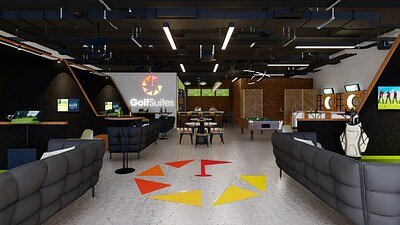
Golf's Big Pivot: Inside the Shift to Scalable, Tech-Driven Social Hubs
BRANDON, Fla. – November 24, 2025 – In a move signaling a significant tremor in the entertainment and leisure landscape, GolfSuites has announced a strategic pivot away from the sprawling, multi-story driving ranges that have come to define modern golf entertainment. The company is now betting its future on a more compact, scalable, and weather-proof model: the indoor simulator lounge. While on the surface a business decision for a single company, this shift offers a compelling case study in how technology and evolving market pressures are forcing industries to unbundle their offerings, creating new ecosystems for investment, entrepreneurship, and consumer access.
Deconstructing the Destination Model
For years, the golf entertainment sector has been dominated by a single, capital-intensive blueprint. Companies like Topgolf, and indeed GolfSuites itself with its existing locations in Texas and Louisiana, built massive, multi-level complexes that are as much about dining and spectacle as they are about golf. These venues are destinations, requiring vast parcels of land, tens of millions in construction costs, and favorable climates to maximize operational uptime. Research into commercial construction costs for similar large-scale entertainment venues reveals budgets that can soar from $40 million to well over $60 million, with per-square-foot costs sometimes approaching $800.
This "bigger is better" approach, while successful, inherently limits market penetration. Such facilities are only viable in major metropolitan areas with the right demographics and, crucially, weather that doesn't shut down the outdoor-dependent revenue stream for months at a time. GolfSuites' strategic pivot is a direct response to these limitations. By shifting focus to an indoor model, the company is effectively decoupling the social golf experience from the constraints of real estate and climate. The new format promises dramatically lower development expenses, faster build-out timelines, and the ability to operate 365 days a year, creating a more predictable financial model.
"This pivot reflects our commitment to delivering the strongest possible return for our investors and future franchise partners," said Gerald Ellenburg, Chairman of GolfSuites, in the company's announcement. "The Indoor Simulator Lounge combines the fun and social atmosphere guests love with economics that simply work better in today's market and it works everywhere." This move isn't an abandonment of their existing model—which will continue in a streamlined "Express" format in select markets—but a strategic multiplication of opportunity.
A New Ecosystem for Growth: The Franchise Flywheel
The most profound aspect of GolfSuites' new strategy lies not just in the venue's size, but in its delivery model: franchising. By designing a concept with a significantly lower cost of entry—estimated to be a fraction of the cost of an outdoor venue, based on competitor data—the company is unlocking a new tier of investment and entrepreneurship. This shift from a corporate-owned, capital-heavy growth strategy to a franchise-led expansion mirrors successful models in industries from fast food to fitness.
The startup costs for competing indoor golf franchises range from as low as $200,000 for smaller concepts to nearly $2 million for established brands like X-Golf. Even at the high end, this is a far more accessible investment than the tens of millions required for an outdoor complex. This approach allows for rapid, nationwide scaling by empowering local business owners to bring the concept to their own communities. These smaller-footprint lounges can be placed in suburban strip malls, dense urban centers, and northern cities where a traditional driving range would be unthinkable—markets previously ignored by the destination model.
Bolstering the credibility of this franchise push is a management team seemingly purpose-built for the task. The company's roster includes Kevin Harrington, an original investor from ABC's Shark Tank known for scaling businesses, and Scott McCurry, a former Topgolf executive who was instrumental in opening its first 18 locations. This blend of franchise expertise and direct industry experience suggests a well-considered plan to not only develop a franchise but to support it effectively, a critical factor for any new ecosystem's long-term health.
Technology and the Democratization of an Experience
At the heart of the indoor model is the technology itself. Advanced golf simulators, once the exclusive domain of professional training centers, have become sophisticated entertainment engines. Using high-speed cameras and radar systems, simulators from companies like TrackMan can precisely replicate ball flight, offering a remarkably realistic experience. But their true impact lies in accessibility.
These systems transform a sport often perceived as difficult, expensive, and time-consuming into an approachable social activity. Game modes can be tailored for all skill levels, from serious golfers wanting to play a virtual round at Pebble Beach to families looking for a fun, competitive alternative to bowling. This technological layer removes the intimidation factor and broadens the addressable market exponentially beyond core golfers.
In a parallel to how telehealth has democratized access to healthcare specialists, simulator technology democratizes access to a premium recreational experience. It removes barriers of weather, time commitment, and skill, reframing the activity as a consistent, repeatable, and community-centric form of social wellness. The consumer experience shifts from a rare, large-scale outing to a more regular, neighborhood-based social hub for leagues, private parties, or a casual weeknight gathering.
Navigating a Crowded Indoor Fairway
GolfSuites is not swinging into an empty field. The indoor golf simulator space is a burgeoning market with several established franchise players. Competitors like X-Golf have already built a significant presence of over 120 locations by focusing on a community-centric, league-driven atmosphere. On the more premium end, Five Iron Golf, backed by Callaway and hospitality giant Danny Meyer, targets urban markets with a high-end social experience, complete with robust food and beverage programs.
This existing competition is both a challenge and a validation. It proves the market demand for tech-driven indoor golf is real and growing. GolfSuites' success will depend on its ability to carve out a distinct identity within this ecosystem. Will it compete on price, leveraging its experience from operating value-oriented outdoor venues? Or will it leverage its "scratch kitchen" and hospitality background to create a premium-but-accessible niche?
The company's decision to shift from a direct competitor to Topgolf into a franchisee-focused innovator highlights a critical lesson in modern business strategy. Rather than continuing a capital-intensive war of attrition, GolfSuites is choosing to redefine the battlefield. This pivot is an acknowledgment that in today's dynamic market, agility, scalability, and accessibility can be more powerful assets than sheer size. The adoption of this new model will be a closely watched indicator of how legacy entertainment concepts can re-engineer themselves for a more distributed and tech-enabled future.