
- 8 years: Sonia Baxendale's tenure as CEO of the Global Risk Institute (GRI).
- 50+ organizations: Current membership of GRI, spanning banking, insurance, pensions, and government.
- 2011: Year GRI was founded as a non-profit, public-private partnership.
Experts emphasize the critical role of GRI in navigating a 'polycrisis' of interconnected global risks, requiring the next CEO to balance institutional continuity with innovative thinking to address emerging threats like AI governance, cyber resilience, and climate-related financial risks.
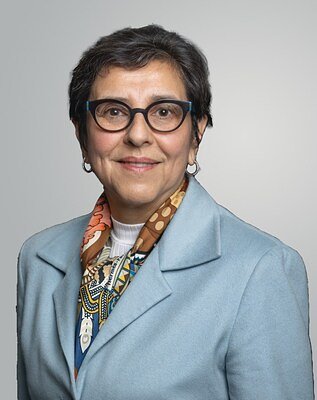
Global Risk Institute Seeks New CEO as Sonia Baxendale Steps Down
TORONTO, ON – April 14, 2026 – The Global Risk Institute (GRI) announced today that Sonia Baxendale, its President and Chief Executive Officer for nearly eight years, intends to step down later this year. The announcement marks the end of a significant era for Canada's premier financial risk think tank, prompting a search for a new leader to navigate an increasingly complex global landscape.
Baxendale will remain in her role until a successor is appointed, a move designed to ensure a seamless leadership transition for the influential organization. The Board of Directors has already initiated an external search to find the next individual to helm the institute, which serves as a critical bridge between industry, government, and academia on matters of financial stability.
A Legacy of Expanded Influence
During her tenure, Sonia Baxendale oversaw a period of substantial growth and transformation at the Global Risk Institute. Under her leadership, the organization solidified its reputation as an indispensable, independent voice on emerging and systemic risks, moving far beyond its initial post-financial crisis mandate.
"Sonia has led GRI with clarity of purpose, integrity, and a deep commitment to advancing risk understanding within Canada's financial system," stated William Bonnell, Chair of the GRI Board of Directors. "Under her leadership, GRI strengthened its reputation as a trusted, independent forum for senior financial leaders, policymakers, and regulators."
Baxendale's strategic direction broadened GRI's focus to encompass the most pressing challenges of the modern financial era. The institute's research and convening power were sharpened to address critical areas such as climate and catastrophe risk, geopolitical shocks, and the profound impact of technology. A key highlight of this evolution has been GRI's pioneering work in the field of Artificial Intelligence. In partnership with the Office of the Superintendent of Financial Institutions (OSFI), GRI launched the Financial Industry Forum on Artificial Intelligence (FIFAI), which produced foundational frameworks like the "EDGE" (Explainability, Data, Governance, and Ethics) principles and the more recent "AGILE" (Awareness, Guardrails, Innovation, Learning, and Evolution) framework. These initiatives provide crucial guidance for financial institutions grappling with the rapid integration of AI.
This forward-looking agenda expanded the institute's national relevance and deepened engagement with its membership, which now includes over 50 organizations from banking, insurance, pensions, and government.
Navigating the Next Wave of Risk
The search for Baxendale's successor comes at a pivotal moment. The next leader will inherit a strong organization but will be tasked with guiding it through what many experts term a "polycrisis"—an environment where multiple global systemic stresses interact and amplify one another. The challenges are formidable, ranging from technological disruption and sophisticated cyber threats to climate-related financial risks and persistent geopolitical volatility.
Industry expectations for the new CEO will be high. The role demands not only a deep understanding of financial services and risk management but also the foresight to anticipate future threats. The new leader will need to build upon GRI's work in AI governance, cyber resilience, and third-party outsourcing risk—all top priorities identified in recent risk outlook surveys by Canadian Chief Risk Officers and financial regulators like OSFI.
The alignment between GRI's agenda and regulatory priorities underscores the institute's critical role. OSFI's strategic plan emphasizes the need for robust risk governance, operational resilience, and security in the face of these evolving threats. The next CEO of GRI will be expected to continue fostering the close, collaborative relationship with regulators and policymakers, ensuring that the institute's research translates into practical strategies that bolster the resilience of Canada's entire financial sector. The ideal candidate will likely be a seasoned executive capable of balancing institutional continuity with the innovative thinking required to keep pace with a rapidly changing world.
An Institution Built for Stability
Despite the leadership transition, the message from GRI's board and outgoing CEO is one of unwavering stability and continuity. The institute's unique structure as a non-profit, public-private partnership is a core source of its strength and endurance. Founded in 2011 with support from major financial institutions and both the federal and Ontario governments, GRI was designed to be a durable entity dedicated to a clear mission.
"GRI is a strong and stable organization, with a clear mission, a committed membership, and excellent momentum," Baxendale said in the announcement. "The organization is well positioned with a clear strategy and strong team, making this the right time for a thoughtful leadership transition and for me personally to step down."
This institutional resilience ensures that GRI's strategic priorities, research programs, and stakeholder engagement will proceed without interruption during the transition period. Its function as a neutral convener—bringing diverse voices to the table to tackle shared challenges—is more vital than ever. The institute complements the work of regulators by providing a space for proactive, forward-looking dialogue and capacity building, helping to identify vulnerabilities before they escalate into systemic events.
As the board conducts its search, the financial community will be watching closely. The appointment of a new CEO will signal the future direction for an organization that has become central to safeguarding Canada's financial ecosystem. The challenge for the next leader will be to honor the powerful legacy left by Sonia Baxendale while forging a new path to navigate the uncharted risks of tomorrow.