
- 40 labor ministers from G20 nations and five continents agreed on a six-point plan for the future of work.
- Saudi Arabia's unemployment rate for citizens has fallen to 7%, nearing its Vision 2030 target.
- Over 2.5 million young Saudis have entered the private sector since 2020.
Experts would likely conclude that this agreement represents a significant step toward creating a more resilient and equitable global labor market, with a strong emphasis on skills portability, responsible AI use, and adaptive social protection systems.
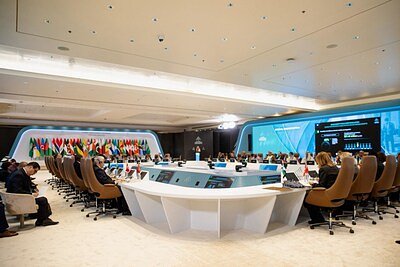
Global Leaders Forge Six-Point Plan for Future of Work in Riyadh
RIYADH, Saudi Arabia – January 26, 2026 – In a significant move to address the accelerating transformations in the global world of work, a high-level Ministerial Roundtable at the Global Labor Market Conference (GLMC) concluded today with a landmark agreement on six priority actions designed to build more resilient and equitable labor markets. The accord, reached by 40 labor ministers from G20 nations and countries across five continents, sets a coordinated course for navigating the challenges of artificial intelligence, workforce mobility, and economic disruption.
Chaired by His Excellency Eng. Ahmed bin Sulaiman Al Rajhi, Saudi Arabia's Minister of Human Resources and Social Development, the roundtable featured the participation of International Labour Organization (ILO) Director-General Gilbert F. Houngbo. In his opening remarks, Minister Al Rajhi emphasized the summit's role as a "cornerstone for strengthening international cooperation," aiming to translate dialogue into tangible outcomes. The agreement marks a critical step in creating a shared framework for the future of employment.
A New Global Playbook
The six agreed-upon priorities represent a comprehensive strategy for modernizing labor market governance. Far from being abstract goals, they address the most pressing issues facing workers and employers today, forming a practical playbook for governments worldwide.
First on the agenda is strengthening skills recognition and portability. This action aims to dismantle barriers that prevent qualifications from being recognized across sectors and international borders, a crucial step for enabling a more mobile and adaptable workforce. It builds on frameworks seen in regions like the European Union and initiatives promoted by the International Organization for Migration (IOM) to reduce skills mismatches.
Second, the ministers committed to guiding the responsible use of artificial intelligence. Acknowledging AI's dual potential to create and destroy jobs, the plan calls for transparent governance and human oversight. This echoes recent guidance from bodies like the U.S. Department of Labor, which stresses the need to mitigate algorithmic bias and protect worker rights in an increasingly automated workplace.
The third priority, adapting social protection systems, confronts the rise of non-standard work. The goal is to create safety nets—such as unemployment and health benefits—that are portable and move with workers as they transition between traditional jobs, freelance gigs, and entrepreneurial ventures. This concept of "Adaptive Social Protection" is gaining traction at institutions like the World Bank and OECD as a way to support career mobility without sacrificing security.
Rounding out the plan are three foundational pillars: strengthening the use of data and analytics for evidence-based policymaking; advancing workforce planning to anticipate and prepare for economic shocks and structural shifts; and improving pathways to first employment and re-entry into the labor market, with a particular focus on youth and other underrepresented groups.
Riyadh's Rising Influence on the Labor Agenda
Now in its third edition, the Global Labor Market Conference has cemented Riyadh's position as a central hub for international labor policy. The conference's ability to convene a powerful coalition of ministers, international organizations, and private sector leaders underscores Saudi Arabia's growing influence in shaping the global economic and social agenda. This leadership role is deeply intertwined with the nation's own ambitious domestic transformation under Vision 2030.
Saudi Arabia is using the GLMC as a platform to both share its reform experiences and learn from global best practices. The Kingdom's recent labor market achievements are significant. Minister Al Rajhi noted that over 2.5 million young Saudis have entered the private sector since 2020. The unemployment rate for Saudi citizens has fallen to 7%, nearing its Vision 2030 target, while female labor force participation has nearly doubled since 2017, a statistic praised by the IMF.
These results are driven by targeted initiatives like the Human Capital Development Program, which has established sectoral councils to align skills with industry needs, and the "WAAD" national training campaign, which aims to train over one million citizens by 2025. Furthermore, the establishment of the Future Work Company has successfully promoted freelancing and flexible work, registering over one million active freelancers. By chairing the GLMC, Saudi Arabia is not only showcasing its progress but is also actively steering the global conversation toward themes of human capital investment and proactive workforce planning that mirror its own national strategy.
What Global Actions Mean for the Worker of Tomorrow
Beyond the high-level policy discussions, the six-point agreement has profound implications for the daily lives and career trajectories of workers around the globe. The focus on skills portability promises a future where an individual's expertise is valued regardless of where it was acquired, making it easier to switch industries or pursue opportunities abroad.
The commitment to responsible AI governance directly addresses worker anxieties about automation. By prioritizing transparency and human oversight, the framework aims to ensure that AI is used as a tool for empowerment—assisting with tasks and creating new roles—rather than a mechanism for opaque, biased, or unfair management practices. This is a critical step toward building trust in workplace technologies.
Perhaps most transformative is the push for adaptive social protection. For a generation accustomed to career fluidity and the gig economy, the prospect of social safety nets that are not tied to a single employer could be a game-changer. It represents a fundamental rethinking of the social contract, designed to provide stability in an era of constant change.
Finally, the emphasis on improving employment pathways, particularly for youth, signals a concerted effort to tackle one of the world's most persistent challenges. This aligns with the work of partners like the World Bank, whose recent "What Works for Work" guidebook drew directly on findings from the 2025 GLMC, demonstrating a clear pipeline from conference dialogue to actionable solutions for connecting young people with meaningful opportunities.
A Coalition for Implementation
The weight of the agreement is significantly amplified by the powerful strategic partners backing the GLMC. The active participation of the ILO, World Bank, OECD, IOM, and UNDP, among others, suggests that these priorities will be integrated into the work programs of the world's leading development and labor organizations. This transforms the six actions from a simple declaration into a shared agenda with institutional backing.
The collaboration is already bearing fruit. The launch of the Labor Market Academy and GLMC Policy Labs in partnership with the World Bank at the 2025 conference provides a concrete mechanism for equipping policymakers with the tools needed to implement such reforms. The presence of ILO Director-General Houngbo, who has previously lauded Saudi Arabia’s role in shaping the global labor landscape, further cements the conference's credibility and the international consensus behind its outcomes.
The conference, running under the theme "Future in Progress," brings together over 10,000 participants and 200 speakers to debate these issues. The Ministerial Roundtable's accord provides a clear and unified direction for these discussions, establishing a roadmap that participating nations will now be tasked with navigating as they prepare their workforces for the complex challenges and opportunities that lie ahead.