
- 20-25% reduction in global energy supply projected
- Nearly 20% of the world's oil and LNG transits through the Strait of Hormuz
- AI-powered data centers could consume as much energy as entire nations within years
Experts agree that the current energy crisis demands urgent international cooperation, strategic partnerships, and technological innovation to ensure global stability and sustainability.
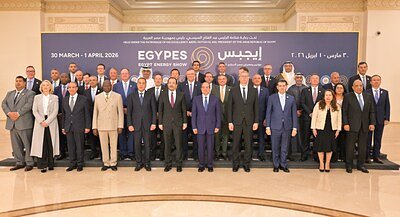
Global Leaders Forge Energy Pacts in Cairo Amid Deepening Crisis
CAIRO, EGYPT – March 30, 2026 – Global leaders convened in Cairo today for the opening of the Egypt Energy Show (EGYPES) 2026, issuing stark warnings and urgent calls for cooperation to navigate what many described as one of the most severe energy crises in modern history. The conference, opened by Egyptian President H.E. Abdel Fattah El Sisi, immediately underscored the gravity of the situation, transforming from a typical industry gathering into a critical summit for high-stakes energy diplomacy.
President El Sisi set a somber tone, calling on government and industry leaders to act decisively amid unprecedented international volatility. "The International Energy Agency has indicated that this may be one of the most severe energy crises in modern history," he stated, framing the challenge as a "double shock: a supply shock and a price shock." With global supply facing a potential reduction of 20 to 25 percent, he emphasized that "cooperation is the key to overcoming the current challenges."
A Crisis of Politics and Pipelines
The crisis atmosphere at EGYPES is fueled by more than just market fundamentals. It is deeply rooted in a volatile geopolitical landscape that has intertwined energy security with national survival. Cypriot President H.E. Nikos Christodoulides captured this sentiment, declaring, "It has become abundantly clear that energy security is no longer merely an economic concern - it is fundamentally a political imperative, intrinsically linked to regional and international stability."
His words resonate against a backdrop of escalating regional conflicts that threaten the world's most critical energy arteries. Ongoing instability involving Iran has raised fears over the security of the Strait of Hormuz, a chokepoint through which nearly a fifth of the world's oil and LNG transits. Recent disruptions have already halted some LNG exports from Qatar and Saudi Arabia, sending price shockwaves through global markets and highlighting the vulnerability of a system reliant on fragile supply chains.
Adding to the strain is a relentless surge in global energy demand. Beyond typical economic growth, the explosion of data centers required to power Artificial Intelligence is creating unprecedented electricity needs, with some forecasts suggesting they could consume as much energy as entire nations within years. This demand, coupled with the slow pace of grid modernization, puts immense pressure on existing infrastructure, making the system more susceptible to shocks.
Cairo's Rise as a Strategic Energy Gateway
Amidst the turmoil, Egypt is cementing its role as a stabilizing force and a strategic energy hub. The most tangible evidence of this came at the close of the opening ceremony with the signing of new landmark agreements between Egypt and Cyprus. These pacts will facilitate the transport of Cypriot natural gas to be processed and liquefied at Egypt's advanced LNG facilities before being re-exported.
This deal is a strategic masterstroke for all involved. For Cyprus, it provides a crucial, economically viable route to monetize its significant offshore gas reserves, particularly from the Aphrodite field. For Egypt, it maximizes the use of its existing, world-class LNG terminals at Idku and Damietta, boosts export revenues, and reinforces its status as a reliable energy partner. For Europe, it opens a new, dependable corridor for natural gas, aiding its long-term strategy of diversifying away from other volatile supply regions.
Egyptian Minister of Petroleum and Mineral Resources, H.E. Eng. Karim Badawi, emphasized this collaborative approach. "This year's conference carries exceptional significance, convening at a critical juncture marked by escalating challenges," he said. "In this context, effective partnerships are no longer an option, but an absolute necessity."
Balancing Regional Tensions and Global Ambitions
The conference also served as a platform for powerful regional blocs to articulate their positions. H.E. Jasem Mohamed AlBudaiwi, Secretary General of the Gulf Cooperation Council (GCC), delivered a forceful message, linking regional security directly to global energy stability. "Against the backdrop of Iranian aggression toward GCC states and the consequent threat to energy security in this vital region, this conference is taking place at a pivotal moment," he stated, reasserting the GCC's role in stabilizing markets through coordinated production policies.
From a European perspective, Ditte Juul Jørgensen, Director General of Energy for the European Commission, acknowledged the immense instability while reaffirming the EU's commitment to partnering with Egypt. She highlighted the dual challenge of ensuring immediate energy access while pursuing long-term decarbonization. "This situation has underscored the urgent need to transition to cleaner energy," Jørgensen noted, calling the partnership with Egypt an opportunity to build a shared future defined by "stability, resilience, sustainability, transparency, and integrity."
Innovating Through Instability
While high-level diplomacy dominated the opening day, EGYPES 2026 also looked toward the future with the launch of its Innovation & AI Hub. This new feature brings technology leaders and emerging ventures into the heart of the energy dialogue, recognizing that technological solutions are indispensable for navigating the current crisis.
The hub's focus is on leveraging AI and other breakthrough technologies to enhance efficiency, strengthen performance, and build more resilient energy systems. From AI-powered grid management that can handle the surge in electricity demand to predictive analytics for optimizing resource extraction, innovation is being positioned as a key tool for survival and growth. The day's Start-Up Pitch event gave early-stage companies a platform to present bold ideas with the potential to reshape the sector.
With over 50,000 participants, 300 speakers, and 500 exhibitors gathered for the three-day event, the conversations in Cairo are set to shape the global energy landscape for years to come. The message is clear: in an era of profound uncertainty, the path to a secure and sustainable energy future will be built on strategic partnerships, regional cooperation, and relentless innovation.