
- 100 million children: The initiative aims to provide daily meals to an additional 100 million children by 2030.
- $80 million: Initial funding committed by founding partners, with further support from France and the Global Partnership for Education.
- 466 million children: Currently receiving school meals globally, an increase of 80 million in just four years.
Experts view the School Meals Accelerator as a transformative initiative that leverages school meals to combat hunger, empower local economies, and promote sustainable food systems, marking a significant shift toward national ownership and long-term sustainability.
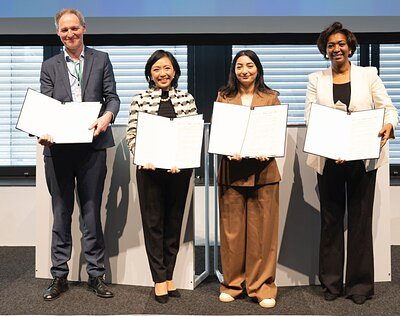
Global Accelerator Launched to Feed 100M Kids & Remake Food Systems
BERLIN, Germany – January 16, 2026 – A powerful coalition of government, philanthropic, and humanitarian organizations today launched the School Meals Accelerator, a landmark initiative aiming to provide daily meals to an additional 100 million children and transform the very fabric of local food systems by 2030.
The announcement, made at the Global Forum for Food and Agriculture in Berlin, brings together Germany's Federal Ministry for Economic Cooperation and Development (BMZ), the Novo Nordisk Foundation, The Rockefeller Foundation, and the World Food Programme (WFP). The founding partners have committed an initial US$80 million, with further support from France and the Global Partnership for Education, to supercharge national school feeding programs across Africa, Asia, and Latin America.
"School meals are more than just a plate of food. They are a significant game changer in our global fight for better education, empowerment, health and for a better future together," said Reem Alabali Radovan, Germany's Federal Minister for Economic Cooperation and Development. "Germany strongly supports this initiative, which combines innovation and partnership to fight hunger and poverty."
The Accelerator aims to move beyond traditional aid models by providing targeted technical assistance, helping countries build self-sufficient, sustainable programs that not only nourish children but also bolster local economies and promote climate-resilient agriculture.
A New Blueprint for a Growing Global Movement
The launch of the Accelerator does not happen in a vacuum. It builds upon the significant momentum of the School Meals Coalition, a global network of over 110 governments and 150 partners formed in 2021 to reverse the devastating impact of pandemic-related school closures, which cut off 370 million children from what was often their only reliable meal of the day.
In the years since, school meals have become a global policy priority. Data from the coalition shows that global funding has nearly doubled since 2020, soaring from $43 billion to $84 billion annually. Crucially, 99 percent of this funding now comes from domestic budgets, signaling a monumental shift toward national ownership and long-term sustainability. This investment has already yielded results, with at least 466 million children now receiving school meals—an increase of 80 million in just four years.
"Governments are leading an unprecedented transformation in school meal programmes," noted Rania Dagash-Kamara, Assistant Executive Director of the World Food Programme (WFP), which hosts the Coalition's Secretariat. "The Accelerator supports that ambition—working alongside WFP and other partners to help countries turn their commitments into sustainable systems that support children and communities."
Countries like Rwanda and Benin offer a glimpse of this transformation. Rwanda increased its school meal budget tenfold between 2020 and 2022, expanding coverage from 660,000 to 3.8 million students while sourcing food locally. Similarly, Benin has committed to a five-year, $240 million budget increase and boosted its local food procurement from 20% to 70%. These national efforts demonstrate a clear and growing demand for the kind of support the Accelerator is designed to provide.
Beyond the Cafeteria: A Catalyst for Sustainable Food Systems
A core innovation of the Accelerator is its vision of school meals as a powerful engine for systemic change, extending far beyond the schoolyard. The initiative places a strong emphasis on "home-grown" school feeding, linking public procurement directly to local farmers. This strategy creates a stable, predictable market for smallholder farmers, boosting their incomes and stimulating rural economies.
The Rockefeller Foundation, which is contributing to the initiative as part of a wider $100 million commitment to regenerative school meals, sees this as a critical lever for change. "School meals are one of the most powerful and underleveraged investments in development," said Elizabeth Yee, the foundation's Executive Vice President of Programs. The goal is to help countries "turn political commitment into sustainable systems that nourish children, support farmers, and strengthen food and nutrition security."
This approach directly connects humanitarian goals with environmental sustainability. By creating demand for regeneratively grown produce, the program incentivizes farming practices that restore soil health, enhance biodiversity, and build resilience to climate change. Brazil’s renowned national school feeding program serves as a powerful model, legally mandating that at least 30% of its budget be used to purchase food from smallholder family farms, creating a guaranteed market that has encouraged a transition to more sustainable, agroecological practices.
The Accelerator aims to replicate this "fork-to-farm" logic, where the nutritional needs of children drive innovation throughout the entire food supply chain. This not only improves the quality of the meals served but also creates an estimated 1,700 jobs for every 100,000 children fed, primarily benefiting local community members, especially women, who often work as school cooks and food preparers.
Bridging the Gap with Expertise and Innovation
While the increase in domestic funding is a major victory, money alone cannot solve the complex logistical and structural challenges of scaling national programs. This is where the Accelerator’s focus on technical assistance becomes paramount. The initiative will act as a hub, connecting governments with the expertise needed to design, implement, and monitor high-quality, efficient, and sustainable systems.
This support is demand-driven and tailored to each country's unique context. It can range from helping officials develop nutritionally optimized menus using local ingredients with digital planning tools, to creating robust long-term financing strategies that blend domestic budgets with other sources. For instance, Germany's BMZ is already funding a €22 million project through WFP to strengthen home-grown school feeding models and financing plans in Lao PDR and Sierra Leone.
Partners like the Global Partnership for Education (GPE) are providing critical support in this area, funding a technical assistance facility to help countries integrate school health and nutrition directly into their national education plans. This ensures that school meals are not treated as an isolated intervention but as a core component of a child's ability to learn and thrive. Research shows that school meals are among the most cost-effective investments in education, leading to measurable gains in attendance, cognitive skills, and literacy.
Ultimately, the School Meals Accelerator represents a sophisticated evolution in development strategy. It recognizes that a daily meal is the foundation for health, education, and opportunity, and that providing this meal can simultaneously build more resilient, equitable, and sustainable communities from the ground up. By pooling resources and expertise, the partners are betting that they can help countries unlock this immense potential, creating a virtuous cycle that feeds futures and fortifies the planet.
Topics & Related
Organic & Natural
Crop Science
Private Equity
Climate Risk
Biodiversity
Geopolitics & Trade
ESG
Circular Economy
Net Zero
Environmental Compliance
Corporate Finance
Inflation
Interest Rates
Related Company Pulse