
- $225 million: Giyani secured financing from the Export-Import Bank of the United States (EXIM) in June 2025.
- 60 days: Remaining testing period for Phase 2 of C4V’s qualification program.
- 6 months: Expected duration for Phase 3 testing of Giyani’s HPMO.
Experts would likely conclude that Giyani’s successful validation of its high-purity manganese oxide by C4V significantly de-risks the K.Hill project, strengthening its position as a reliable Western supplier for the EV battery market.
Giyani's Manganese Passes Key Test, Bolstering Western EV Battery Hopes
TORONTO, ON – May 05, 2026 – Giyani Metals Corp. has achieved a significant milestone in its quest to supply the burgeoning electric vehicle (EV) market, announcing that its high-purity manganese oxide (HPMO) has passed a critical validation phase with US battery technology leader Charge CCCV LLC (C4V). The successful interim results from Phase 2 of C4V’s rigorous qualification program represent a major step forward in establishing a secure, Western-based supply chain for critical battery materials.
The announcement confirms that HPMO produced at Giyani’s demonstration plant in South Africa meets the stringent quality and performance standards required for use in next-generation lithium-ion batteries. This independent validation from a respected American technology firm provides crucial de-risking for Giyani’s flagship K.Hill Battery-Grade Manganese Project in Botswana and signals growing momentum for diversifying a supply chain long dominated by Asian producers.
The C4V Qualification Gauntlet
Passing muster with C4V is no small feat. The Binghamton, New York-based company is a key player in battery innovation, holding patents for advanced, cobalt-free battery chemistries and designing end-to-end Gigafactory solutions. Its ‘Digital DNA Supply Chain Qualification Program’ is a multi-stage gauntlet designed to ensure that only the most reliable and high-performing materials make it into the battery ecosystem.
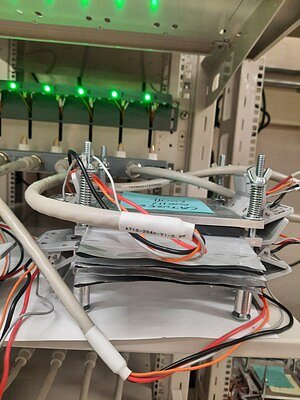
For Giyani, the journey began in October 2025 with the successful completion of Phase 1, which involved initial coin cell analysis to assess the material's fundamental electrochemical properties. The latest results come from Phase 2, a more demanding stage where Giyani’s HPMO was used to assemble single-layer pouch cells for extensive testing. Interim data confirms the material exhibits consistent cycling stability, comparable electrode density, and promising capacity retention—all critical metrics for battery performance and longevity.
“We are encouraged with the positive interim results from Phase 2 of our Digital DNA qualification program with Giyani Metals,” commented Baasit Ali, Vice President of Supply Chain at C4V. “Their HPMO product is showing promising performance during our internal evaluation and aligns well with our material and electrochemical standards.”
Phase 2 testing will continue for approximately 60 more days until the pouch cells reach 80% of their initial capacity, a standard industry benchmark for end-of-life testing. Following its completion, the material will advance to Phase 3, which involves even more complex multi-layer pouch cell testing and is expected to take an additional six months.
De-Risking the Path to Commercialization
The technical validation from C4V has profound implications for the commercial viability of the K.Hill project. By proving its product on a demonstration scale, Giyani has significantly reduced the technical and scale-up risks that often plague new mining and processing ventures. This progress is being directly integrated into the project's Definitive Feasibility Study (DFS), which the company confirmed remains on track for release this quarter.
This de-risking is crucial for securing the necessary financing to bring the full-scale commercial plant in Botswana to life. In June 2025, Giyani secured a significant vote of confidence with a letter of intent for up to US$225 million in financing from the Export-Import Bank of the United States (EXIM). The positive C4V results provide tangible proof of product quality that strengthens Giyani’s position in finalizing this and other financing and strategic partnership discussions.
Nigel Robinson, Interim Executive Chair of Giyani, highlighted the importance of this step. “Building on the success of Phase 1, the interim results from Phase 2 of C4V’s Qualification Program look promising... This is another step forward to securing independent third-party validation of the quality of our manganese product.”
Manganese: A Rising Star in Battery Technology
While lithium and cobalt have historically dominated headlines, manganese is rapidly emerging as a key element for the future of batteries. Automakers and battery manufacturers are increasingly turning to manganese-rich cathode chemistries, such as NMC (nickel-manganese-cobalt), to reduce costs and improve safety without sacrificing performance. The industry-wide push to lower or eliminate the use of cobalt, which is expensive and carries ethical sourcing concerns, has further accelerated the demand for high-purity manganese.
Giyani’s bespoke hydrometallurgical process is designed to meet this evolving market. The company has developed a flexible flowsheet at its demo plant capable of producing not only HPMO but also high-purity manganese sulphate monohydrate (HPMSM). This dual-product capability allows Giyani to cater to a wider range of battery chemistries, positioning it as an adaptable supplier for future technological shifts. The company has already shipped samples of both products to multiple potential offtake partners for their own qualification processes.
Forging a Western Supply Chain
The collaboration between Giyani, C4V, and the K.Hill project in Botswana exemplifies the global effort to build a more resilient and geographically diverse battery supply chain. For decades, the West has been heavily reliant on China, which controls the vast majority of processing for critical minerals like manganese, graphite, and cobalt. This concentration creates significant geopolitical and economic risks for North American and European automakers and governments.
Projects like K.Hill are therefore not just commercial ventures but strategic imperatives. By developing a source of low-carbon, high-purity manganese in a stable jurisdiction and having it validated by a leading US technology firm, Giyani is helping to lay the groundwork for regional energy independence. The successful qualification process provides the assurance that OEMs and Gigafactories need to commit to new sources, breaking the cycle of dependence and fostering a more secure and sustainable EV ecosystem.