
- 25 years: Infineon's presence in India, reflecting long-term commitment.
- 150+ employees: Current workforce at Infineon's Global Capability Centre in Gujarat's GIFT City.
- 2026: Completion year for Infineon's new high-tech campus in Bengaluru.
Experts view this partnership as a strategic milestone for India's semiconductor self-reliance, combining German industrial expertise with Indian educational scale to address critical talent shortages and bolster the country's global electronics manufacturing ambitions.
Germany Fuels India's Chip Dream With Major Skilling Partnership
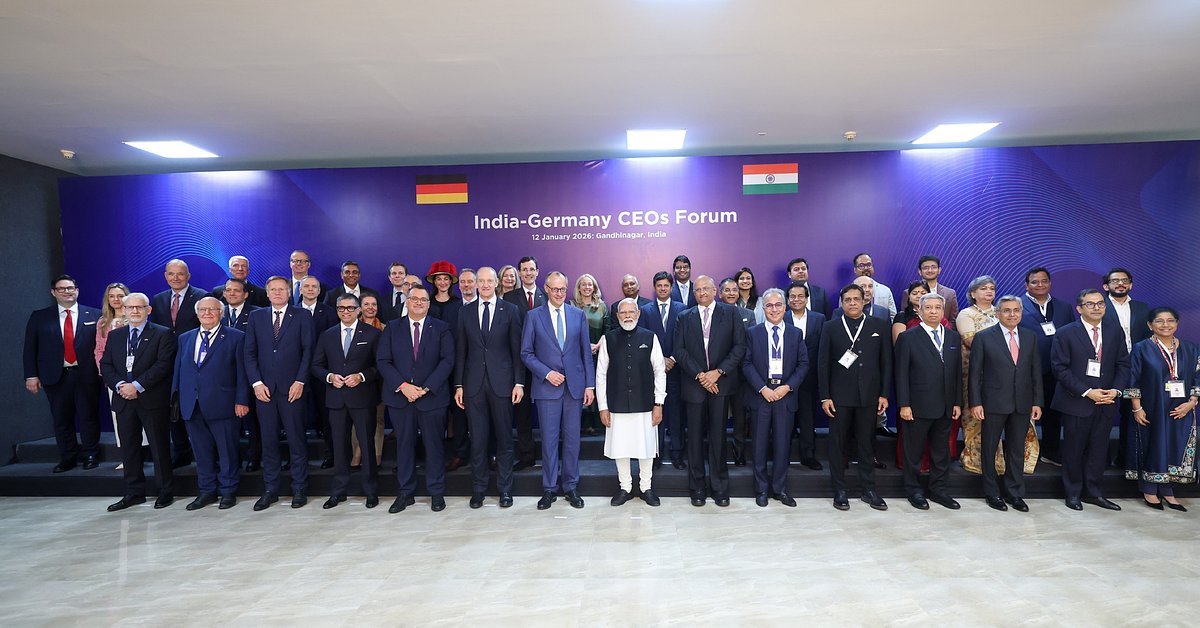
AHMEDABAD, India – January 14, 2026 – In a significant boost to India's quest for semiconductor self-reliance, German technology leader Infineon Technologies AG and the National Institute of Electronics & Information Technology (NIELIT) have signed a landmark Memorandum of Understanding (MoU). The agreement, aimed at creating a highly skilled semiconductor workforce in India, was formalized in the presence of Indian Prime Minister Narendra Modi and visiting German Chancellor Friedrich Merz.
The pact represents a critical fusion of German industrial expertise and Indian educational scale, directly addressing one of the most significant challenges in India's ambition to become a global electronics manufacturing hub: a shortage of specialized talent. As global supply chains are re-evaluated, this collaboration signals a deepening of the India-Germany strategic partnership, moving beyond trade to the co-development of foundational technological capabilities.
A Strategic Pillar for 'Viksit Bharat'
This partnership is not merely a corporate training initiative; it is a strategic component of India's long-term economic vision. The collaboration aligns directly with the 'Viksit Bharat 2047' goal of transforming India into a developed nation and the ambitious India Semiconductor Mission (ISM), which aims to build a comprehensive semiconductor and display ecosystem from the ground up.
Under the MoU, Infineon will work closely with NIELIT, an autonomous body under India's Ministry of Electronics and Information Technology (MeitY), to establish a comprehensive framework for semiconductor workforce development. Jochen Hanebeck, CEO of Infineon, who was part of the German business delegation, underscored the strategic alignment.
"India is one of the world's most dynamic economies, and its ambition to build a vibrant semiconductor ecosystem aligns perfectly with Infineon's expertise in power systems and IoT," Hanebeck stated. "Our partnership with NIELIT reflects our deep commitment to India – not just as a market, but as a strategic innovation and R&D hub. By investing in talent development and knowledge transfer, we are helping build the skilled workforce that will power India's semiconductor future."
Echoing this sentiment, Prof. M.M. Tripathi, Director General of NIELIT, emphasized the collaboration's role in achieving national self-reliance. "This partnership with Infineon represents a significant milestone for India's semiconductor ecosystem development," he said. "By combining NIELIT's nationwide training infrastructure with Infineon's global expertise in semiconductor manufacturing, we will create world-class skilling programmes that prepare our youth for careers in this critical sector."
From Classroom to Cleanroom: The Blueprint for Talent
The agreement lays out a detailed blueprint to bridge the gap between academic knowledge and industry requirements. The collaboration will focus on the crucial backend stages of chip production: semiconductor assembly, test, and packaging (ATP). This is particularly timely as India has recently attracted major investments in this segment, including Micron Technology's facility in Gujarat, creating immediate demand for a skilled workforce.
The partnership's core components include:
- Curriculum Enrichment: Jointly developing and updating training modules to reflect the latest industry standards and practices in ATP.
- Expert Engagement: Facilitating seminars and workshops led by Infineon's global experts to provide students and faculty with cutting-edge insights.
- Train the Trainer Programs: A scalable model where Infineon will train NIELIT instructors, creating a cascading effect that multiplies the number of qualified educators across the country.
- Hands-On Training: Infineon will donate essential equipment to NIELIT centers, allowing students to gain practical, hands-on experience with industry-grade tools, a critical element often missing from traditional engineering education.
This initiative directly confronts the well-documented skill gap in India. While the country produces a vast number of engineering graduates annually, industry reports have consistently pointed to a deficit in specialized skills required for the semiconductor value chain, from VLSI design to fabrication and packaging. The Infineon-NIELIT program is designed to create job-ready professionals equipped for the technical demands of a modern semiconductor facility.
Infineon's Deepening India Commitment
The MoU is the latest and most visible sign of Infineon's deepening, long-term strategic commitment to India, which extends far beyond market access. With a presence in the country for over 25 years, the company has been steadily increasing its investment in India as a hub for innovation and research and development.
This strategy is backed by substantial capital investment. In 2025, the company inaugurated its Global Capability Centre (GCC) in Gujarat's GIFT City, a hub that has already grown to over 150 employees and continues to expand its scope. Furthermore, Infineon is constructing a new high-tech campus in Bengaluru, India's tech capital, which is set for completion by 2026. These facilities are not just back-offices but are integral parts of Infineon's global R&D and operational network.
By investing in physical infrastructure and simultaneously fostering the human capital to staff it, Infineon is executing a holistic, long-term strategy. The partnership with NIELIT ensures a sustainable pipeline of talent that can support not only Infineon's own growing operations but also the broader ecosystem that the Indian government is striving to create.
Geopolitical Undercurrents and a Competitive Field
The announcement, made during Chancellor Merz's first official visit to India, is layered with geopolitical significance. It represents a concrete step in Germany's strategy to diversify its partnerships and strengthen ties with key democratic allies in the Indo-Pacific. For India, it showcases the country's growing appeal as a trusted partner for high-technology collaboration and manufacturing.
The competitive landscape of India's semiconductor sector is heating up, making talent development a key differentiator. While design-focused giants like Intel and AMD have long-established R&D centers in India, the focus is now shifting to manufacturing and ATP. The Infineon-NIELIT collaboration provides a crucial piece of the puzzle, creating the specialized workforce needed for the factory floor.
This initiative will provide a vital support system for the entire industry, creating a pool of skilled labor that can be tapped by all players, fostering a more robust and competitive ecosystem. As India continues to court global chipmakers and incentivizes domestic production through programs like the ISM, the availability of a trained, ready-to-deploy workforce will be its most compelling asset. This partnership is a foundational investment in that very asset, turning national ambition into tangible human potential.