
- $35 million: The digital gold rewards are backed by secured, digitized gold reserves.
- 119 million: GAMEE's registered users, providing a massive audience for the 'Play-For-Gold' model.
- 2026 Rollout: The initiative will be implemented in two phases, with Phase 1 launching in Q1 and Phase 2 in Q2.
Experts view this partnership as a strategic shift toward tangible, asset-backed rewards in gaming, potentially bridging the gap between mainstream gamers and the Web3 economy, though regulatory and economic sustainability remain critical challenges.
Gaming's New Gold Standard: Can Real-World Rewards Change the Game?
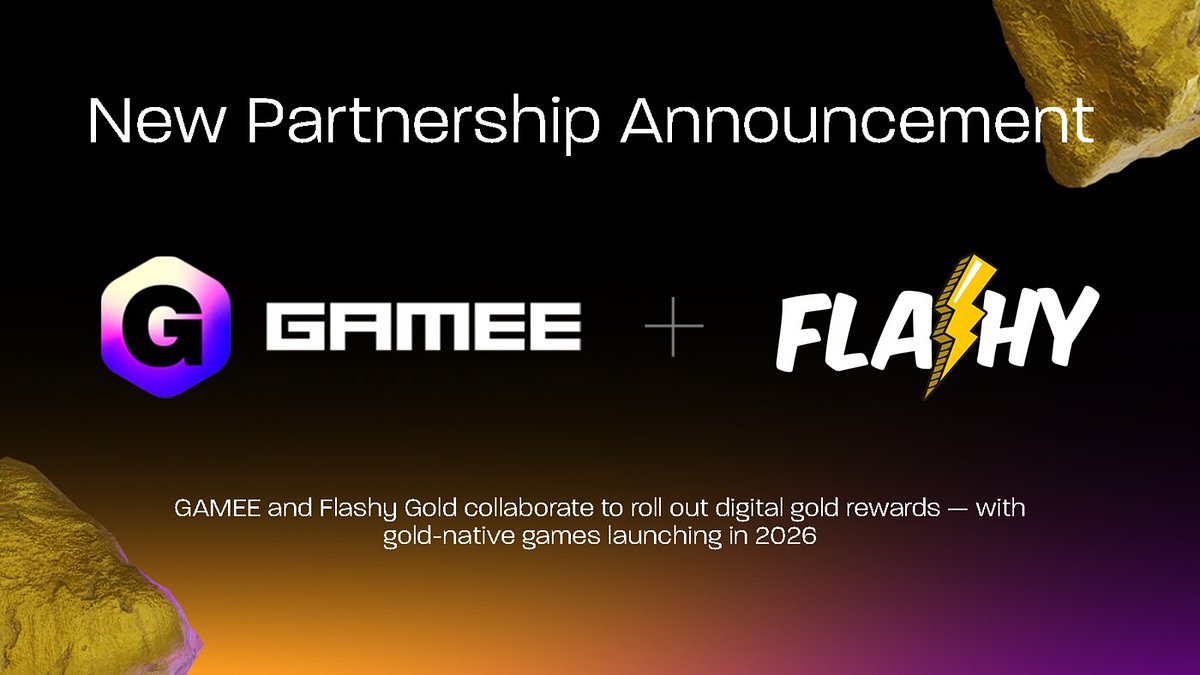
HONG KONG, CHINA – February 12, 2026 – The world of digital gaming is on the cusp of a significant shift as GAMEE, a Web3 gaming powerhouse and subsidiary of Animoca Brands, has announced a strategic collaboration with Flashy Group, the company championing a new 'For-Gold Economy.' The partnership aims to embed digital gold rewards, backed by over $35 million in secured, digitized gold, directly into GAMEE's vast portfolio of games, potentially reshaping how players perceive and earn value online.
This ambitious initiative will introduce a 'Play-For-Gold' model, where players earn a digital token, $NUGS, through gameplay. Unlike many volatile cryptocurrencies that have defined the play-to-earn space, $NUGS are associated with Flashy Gold and backed by real-world, auditable gold reserves. The collaboration signals a move away from purely speculative digital rewards toward tangible, asset-backed incentives, a strategy aimed at attracting mainstream gamers who have remained skeptical of the complex and often unstable Web3 economy.
A New Golden Age for Gaming?
The rollout is structured in two distinct phases throughout 2026, designed to systematically integrate gold rewards into GAMEE's ecosystem. Phase one, launching in the first quarter, will see 'Play-For-Gold' mechanics woven into GAMEE's existing library of popular hyper-casual games. Players will be able to earn $NUGS through familiar competitive formats like tournaments, leaderboards, missions, and special reward-driven events.
During this initial phase, GAMEE will also leverage its massive distribution network to promote 'Dig It Gold Game,' a title developed by Flashy Fun that serves as the flagship for the Play-For-Gold concept. This symbiotic relationship is designed to introduce millions of players to digital gold rewards within familiar gaming environments, lowering the barrier to entry for Web3 participation.
The second phase, dubbed 'The Gold Rush' and slated for the second quarter, is more ambitious. GAMEE will develop and launch a series of new, purpose-built 'gold-native' titles. These games will be built from the ground up around a compelling narrative: digital gold is locked within the internet, and players have the key to get it out. These titles promise deeper engagement through mechanics like meta-progression, gacha systems, and features native to the Telegram platform, all designed for viral growth and long-term player retention.
“Games are where culture forms, where attention lives, and where daily behavior compounds,” said Michael Gord, CEO of Flashy Group, in the announcement. “This collaboration with GAMEE is a major step toward bringing digital gold incentives to global gameplay at scale, and toward making Play-For-Gold a new standard for how people earn value on the internet.”
Bridging the Gap: From Mainstream Gamers to Web3 Adopters
The partnership's success hinges on GAMEE's ability to act as a bridge between the traditional gaming world and the burgeoning Web3 space. With over 119 million registered users, GAMEE possesses a massive audience, largely cultivated during its Web2-focused years. The challenge lies in converting this broad user base into active Web3 participants.
GAMEE has already demonstrated significant prowess in this area. Its WATCoin airdrop successfully onboarded four million new user wallets into the TON ecosystem, a blockchain network deeply integrated with the Telegram messaging app. As the largest Telegram-native game publisher globally, GAMEE is uniquely positioned to leverage Telegram's 900 million-plus user base for seamless onboarding. By building games as Telegram Mini Apps, the company eliminates the friction of separate app store downloads, allowing users to play, earn, and manage assets directly within the chat application.
This strategy aligns with the company's philosophy of making the Web3 learning curve nearly invisible. By introducing crypto elements gradually after a player is already engaged with fun, intuitive gameplay, GAMEE hopes to avoid the pitfalls of previous play-to-earn games that often prioritized earning over enjoyment, leading to unsustainable economies and player burnout.
The $35 Million Question: Regulation and Sustainability
While the promise of earning real gold is alluring, the 'For-Gold Economy' faces significant hurdles, primarily concerning economic sustainability and regulatory scrutiny. The $35 million backing for Flashy Gold is facilitated through a sponsorship with nGRND Inc., a firm specializing in regulatory-compliant tokenization of real-world assets (RWAs), including in-ground gold sites. This 'compliance-first' approach is critical in a complex and evolving legal landscape.
Gold-backed digital assets occupy a regulatory gray area in many jurisdictions. In the United States, they could be viewed as securities by the SEC or commodities by the CFTC. In Europe, the upcoming Markets in Crypto-Assets (MiCA) regulation will establish strict rules for asset-backed tokens, requiring authorization, transparent disclosures, and proof of reserves held in regulated, third-party vaults. Flashy Group's proactive stance on compliance will be essential for navigating these international challenges.
Economically, the $NUGS token incorporates several mechanisms designed for long-term stability. A portion of every transaction fee is used to bolster the asset backing, increase liquidity, and automatically burn tokens to create a deflationary effect. Furthermore, stakers can earn passive income from transaction fees, creating an incentive to hold the token. This model, which ties value directly to a stable real-world asset and a deflationary token structure, stands in stark contrast to earlier play-to-earn models that suffered from hyperinflation and speculative collapse.
A Crowded Field in the Digital Gold Rush
Flashy Group and GAMEE are not entering an empty market. The digital gold space includes established players like Tether Gold (XAUt) and Paxos Gold (PAXG), which collectively manage over $2 billion in assets and offer tokens directly redeemable for physical London Good Delivery gold bars. These products primarily serve as stable financial instruments for crypto investors.
The key differentiator for the Flashy-GAMEE partnership is its application. Rather than offering a static financial asset, they are building an active incentive layer for the internet. The goal is not just for users to hold gold-backed tokens, but to earn them through everyday digital activities, starting with gaming. This positions their initiative less as a direct competitor to PAXG and more as a pioneer in the broader movement of RWA tokenization as a tool for consumer engagement.
The technical integration will be a critical test. The new gold-native titles' reliance on Telegram-native features and gacha mechanics—a popular but sometimes controversial monetization model—will determine their appeal and staying power. While the $35 million in backing provides a strong foundation, the market for the $NUGS token itself is still nascent, with very low liquidity as of early 2026. Building a robust and liquid market for player rewards will be paramount to the long-term success of this digital gold rush. This 'Play-For-Gold' experiment, backed by the timeless allure of gold, is set to be one of the most closely watched developments in the evolving digital economy.