
- 130,000 units: GAC's overseas vehicle exports in 2025, a 45% year-on-year increase.
- 86 countries: GAC's global market presence, with 281 new outlets added in 2025.
- 250,000 units: GAC's ambitious export target for 2026.
Experts view GAC's rapid growth and localization strategy as a blueprint for Chinese automakers challenging traditional global players, signaling a structural shift in the automotive industry.
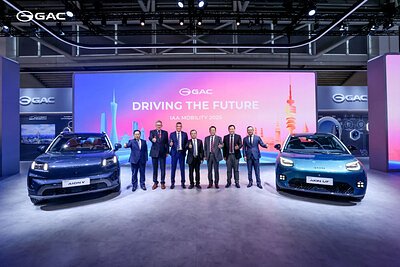
GAC's Global Surge: How a Local-First Strategy Redraws the Auto Map
GUANGZHOU, China – January 01, 2026
Chinese state-owned automaker GAC has capped off a year of explosive international growth, announcing that its overseas vehicle exports surged past 130,000 units in 2025. The figure represents a dramatic 45% year-on-year increase and marks a near-tripling of its foreign sales volume in just two years, catapulting the company into the top eight of Chinese independent auto exporters.
This rapid ascent is more than a corporate success story; it’s a clear indicator of a broader tectonic shift in the global automotive industry, where Chinese brands are increasingly leveraging sophisticated strategies to challenge the long-standing dominance of Japanese, European, and American manufacturers. GAC's performance, underpinned by an aggressive localization strategy and expanding production footprint, provides a compelling blueprint for how to build a global automotive powerhouse in the modern era.
A New Blueprint for Global Expansion
At the heart of GAC's impressive growth is a strategic pivot formalized as "One GAC 2.0." Unveiled at the 2025 Bangkok International Motor Show, this updated global strategy moves far beyond a simple export-led model. Instead, it centers on a philosophy of being "In Local, For Local, Integrated Locally, Serving Locally, Contributing Locally."
This approach signals a departure from the traditional method of shipping standardized vehicles worldwide. GAC is instead building deep, integrated ecosystems within its target markets. The strategy rests on five key pillars: tailoring products for local tastes, building extensive sales and service networks, providing premium customer service, establishing local intelligent manufacturing, and developing comprehensive energy and mobility solutions. By focusing on a unified global brand image while executing highly localized initiatives—such as the "Thailand Action," "Brazil Action," and "Australia Action"—the company can deploy resources more efficiently and adapt quickly to diverse market demands.
This model of deep integration aims to create a sustainable presence that resonates with local consumers and stakeholders. Unlike competitors who might focus solely on sales volume, GAC's investment in a full-chain ecosystem, including its role as the first state-owned automaker to export its integrated energy ecosystem, suggests a long-term vision for becoming an integral part of the automotive fabric in its chosen regions.
From Knock-Down Kits to Market Presence
The tangible results of the "One GAC 2.0" strategy were evident throughout 2025. The company aggressively expanded its global reach, entering 16 new markets, including significant footholds in Brazil, Poland, Portugal, Australia, and Argentina. This brought its total presence to 86 countries and regions, supported by a rapidly growing network that added 281 new outlets for a total of 630 worldwide.
Perhaps most critical to this expansion is the company's commitment to localized production. The successful commencement of knock-down (KD) manufacturing operations in Indonesia and Malaysia—with a similar project for Europe steadily progressing—marks a significant strategic move. Assembling vehicles locally from kits allows GAC to navigate complex import tariffs, reduce logistical costs, create local employment, and more effectively tailor vehicles to regional regulations and consumer preferences. With five overseas plants now in operation, the company is building a distributed manufacturing network that enhances its resilience and competitiveness.
The launch of five new models overseas in 2025 further demonstrates this commitment to product localization. By offering a diverse portfolio that includes traditional fuel, hybrid, and pure electric vehicles, GAC can cater to varying levels of EV infrastructure and consumer readiness across its vast and varied international markets.
Shaking Up the Old Guard in Emerging Markets
GAC's rapid expansion is part of a formidable wave of Chinese automakers—including major players like BYD, Chery, and Geely—that are reshaping the competitive landscape. This challenge is felt most acutely in emerging markets across Southeast Asia, the Middle East, and Latin America, which have become the new battlegrounds for the global auto industry.
Chinese brands are leveraging significant advantages in cost-competitiveness, advanced technology—particularly in New Energy Vehicles (NEVs)—and complete supply chains. According to S&P Global Mobility, 2025 is projected to be the first year that Chinese automakers collectively surpass their Japanese rivals in global new vehicle sales, a historic milestone reflecting this structural transformation. China's overall auto exports are booming, solidifying its status as the world's largest vehicle exporter, driven in large part by a 90% jump in NEV exports in the first ten months of 2025.
In response to market conditions, these companies are demonstrating strategic agility. For instance, facing the prospect of higher EV tariffs in Europe, Chinese brands have pivoted to increase exports of hybrid models, which saw a sixfold increase in imports to the continent. This adaptability, combined with an aggressive push into high-potential markets like Mexico—now China's largest single export destination—is forcing incumbent OEMs to rethink their pricing, sourcing, and regional strategies.
The Road to 250,000: Ambition Meets Reality
Building on its momentum, GAC has set an audacious export target of 250,000 units for 2026, a goal it describes as the foundation for its "second growth curve." The company's ambition doesn't stop there, with a further target of 500,000 annual exports by 2027 across 100 markets. These figures are supported by a planned investment of over 50 billion yuan into research, development, and industrialization, which will fuel the launch of 22 new models over the next three years.
While the company's consistent growth and robust strategic framework provide a strong foundation, the path ahead is not without significant challenges. Competition is intensifying, not only from established global giants but also from ambitious domestic rivals who are also chasing international growth. Furthermore, geopolitical headwinds, supply chain volatility, and the ever-present threat of new trade barriers require constant vigilance and strategic flexibility.
As GAC pushes towards its aggressive 2026 target, its journey offers a compelling case study in modern global expansion. The company's blend of technological ambition, strategic patience, and deep localization is creating a formidable new force in the automotive world, proving that the future of the global car industry may increasingly be designed, built, and defined by strategies originating far from its traditional centers of power.