
- 2030: EU proposal could lead to a near-total ban on PFAS by 2030
- 8%: Medical plastics market projected to grow at a CAGR of over 8% through 2030
- $270 billion: China's medical device market forecast to reach $270 billion by 2027
Experts agree that Americhem's PFAS-free materials and laser-markable thermoplastics are critical innovations for medical device manufacturers navigating stringent global regulations and sustainability demands.
Future-Proofing Medtech: Americhem's Answer to PFAS & UDI Demands
CUYAHOGA FALLS, OH – January 13, 2026 – As the medical device industry stands at a crossroads, pressured by a looming regulatory crackdown on "forever chemicals" and an intensifying mandate for supply chain transparency, materials science is shifting from a background detail to a frontline strategic imperative. Responding to this shift, polymer specialist Americhem is set to unveil a suite of advanced materials at the upcoming Pharmapack and MD&M West trade shows, directly targeting the sector's most pressing challenges.
The company's new offerings—from PFAS-free lubricants to laser-markable thermoplastics—are engineered not just for performance, but for resilience in a rapidly evolving landscape. These innovations arrive as medical device original equipment manufacturers (OEMs) grapple with the dual task of developing next-generation technologies for connected care and robotic surgery while simultaneously future-proofing their products against a complex and often contradictory web of global regulations.
Navigating a Global Regulatory Minefield
A primary driver behind the push for new materials is the growing global scrutiny of Per- and Polyfluorofluoroalkyl Substances (PFAS). These "forever chemicals," long valued in medical applications for their lubricity and chemical resistance, are now facing significant restrictions due to environmental and health concerns. The regulatory landscape, however, is a patchwork of differing approaches that creates significant uncertainty for manufacturers.
In the European Union, a comprehensive restriction proposal submitted to the European Chemicals Agency (ECHA) in 2023 could lead to a near-total ban on thousands of PFAS by 2030, with a final decision anticipated as early as 2025. Industry groups like MedTech Europe have warned that a blanket ban without sufficient derogations for critical medical uses could jeopardize patient access to essential technologies.
Conversely, the U.S. Food and Drug Administration (FDA) has maintained that the specific large-molecule fluoropolymers used in medical devices, such as PTFE, have a long history of safe use and are critical for life-saving products. Yet, at the same time, the U.S. Environmental Protection Agency (EPA) is tightening rules on PFAS in the environment, and individual states are enacting their own patchwork of bans.
It is into this complex environment that Americhem is launching its EcoLube™ MD portfolio of PFAS-free internally lubricated compounds. These materials are designed to provide the low-friction tribological properties essential for devices like auto-injectors, wearable drug pumps, and robotic surgical instruments, without relying on the PFAS additives facing a regulatory countdown. The company is also targeting nonwoven applications like surgical gowns with nDryve™, a PFAS-free, in-melt additive that provides critical fluid repellency, offering a direct alternative for manufacturers seeking to move away from fluorine-based surface treatments.
The Mandate for Unmistakable Identity
Alongside environmental compliance, the demand for absolute traceability has become a non-negotiable aspect of medical device manufacturing. Global regulations, such as the U.S. FDA's Unique Device Identification (UDI) system and the EU's corresponding rules under the Medical Device Regulation (MDR), mandate that most devices carry a unique identifier to be tracked throughout their lifecycle. This has created a significant technical challenge: how to permanently and clearly mark a device, often on the component level, without using inks or labels that can wear off, degrade during sterilization, or pose contamination risks in cleanroom environments.
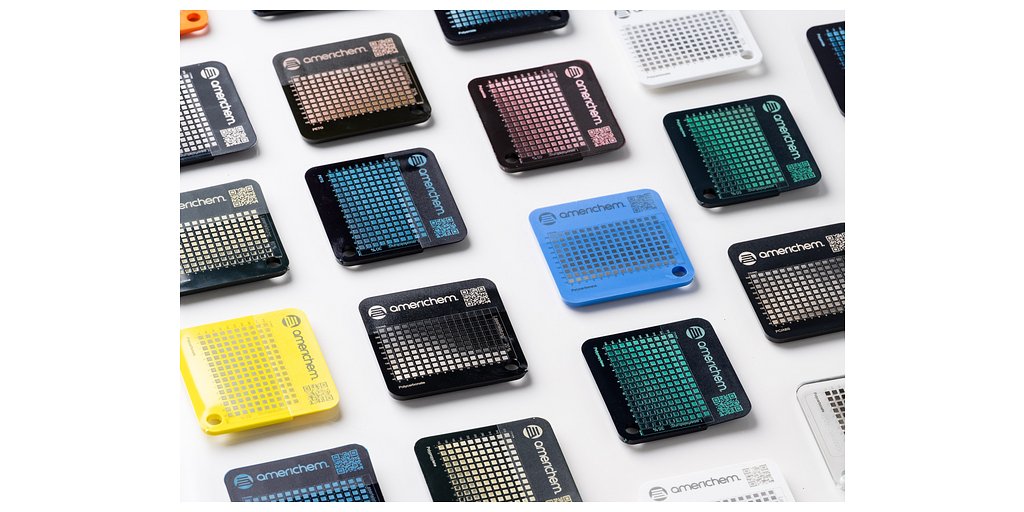
Americhem's new Laser Marking-Ready Thermoplastics are engineered to address this exact need. These materials are formulated to produce a high-contrast, permanent mark when exposed to a laser, directly embedding the UDI and other identifying information onto the plastic part itself. This eliminates the need for adhesives and printing consumables, streamlining production and enhancing the long-term reliability of device identification.
This focus on regulatory de-risking also extends to device aesthetics and color. The company is expanding its ColorRx® line of regulatory-ready color masterbatches. These are not just pigments; they are complete solutions offered in "locked" formulations that have been pre-tested against biocompatibility standards like ISO 10993. For an OEM, using such a masterbatch can significantly reduce the time, cost, and risk associated with the regulatory submission process, ensuring that the colorants used in their device will not pose a biological risk or create unforeseen compliance hurdles.
Engineering Polymers for Next-Generation Care
While compliance is a powerful driver, Americhem's new portfolio is equally focused on enabling the next wave of medical innovation. The increasing complexity of medical technology—from sophisticated robotic-assisted surgical systems to smart, wearable diagnostic tools—places unprecedented demands on the underlying materials.
"There’s a clear shift happening—material choices are now deeply tied to sustainability goals, regulatory scrutiny, and device functionality," noted Matt Miklos, Vice President of Corporate Strategy and M&A at Americhem, in the company's announcement. "What we’re bringing to these shows is not a catalog—it’s a pipeline of engineered solutions designed to be customized, scaled, and validated in partnership with OEMs who are navigating that complexity every day."
This philosophy is embodied in the company's new High-Performance Transparent Alloys. These polymer blends are designed as alternatives to traditional clear materials like polycarbonate, offering improved durability against harsh sterilization methods and enhanced toughness. For structural components in diagnostic equipment or transparent housings for surgical tools, this means a longer device life and greater reliability, directly impacting clinical performance and cost of ownership. The combination of these advanced performance materials with solutions like the PFAS-free EcoLube™ MD lubricants demonstrates a holistic approach to device engineering, where material science becomes a key enabler of function and safety.
A Strategy for Global Growth
The launch of these new technologies is underpinned by a clear business strategy aimed at capitalizing on the medical industry's evolving needs. The company reports continued double-digit growth in its healthcare segment, a claim supported by the broader medical plastics market, which is projected to expand at a compound annual growth rate of over 8% through 2030.
Significantly, Americhem is coupling its technological push with geographic expansion. The planned opening of a new facility in China in 2026 is a strategic move to tap into one of the world's largest and fastest-growing medical device markets, which is forecast to reach a value of $270 billion by 2027. Establishing a manufacturing footprint in China allows the company to better serve the burgeoning local market, build more resilient supply chains, and navigate the country's "In China, For China" industrial policies.
By positioning itself as a partner that can help OEMs tackle their biggest regulatory and technical hurdles, Americhem is making a calculated bet that the future of medical device manufacturing will be won not just with better designs, but with better, smarter, and more compliant materials.