
- Evaluation Fees: Range from $39 for a $5,000 account to $999 for a $200,000 account.
- Profit Split: Starts at 90% for traders, scaling up to 100% for top performers.
- Trader Complaints: Numerous negative reviews on Trustpilot report delayed or denied payouts, inconsistent rule enforcement, and poor customer service.
Experts would likely conclude that while FundedFirm's zero-commission model is innovative and attractive, the lack of regulation, mixed trader experiences, and reliance on evaluation fees raise significant concerns about sustainability and trustworthiness.
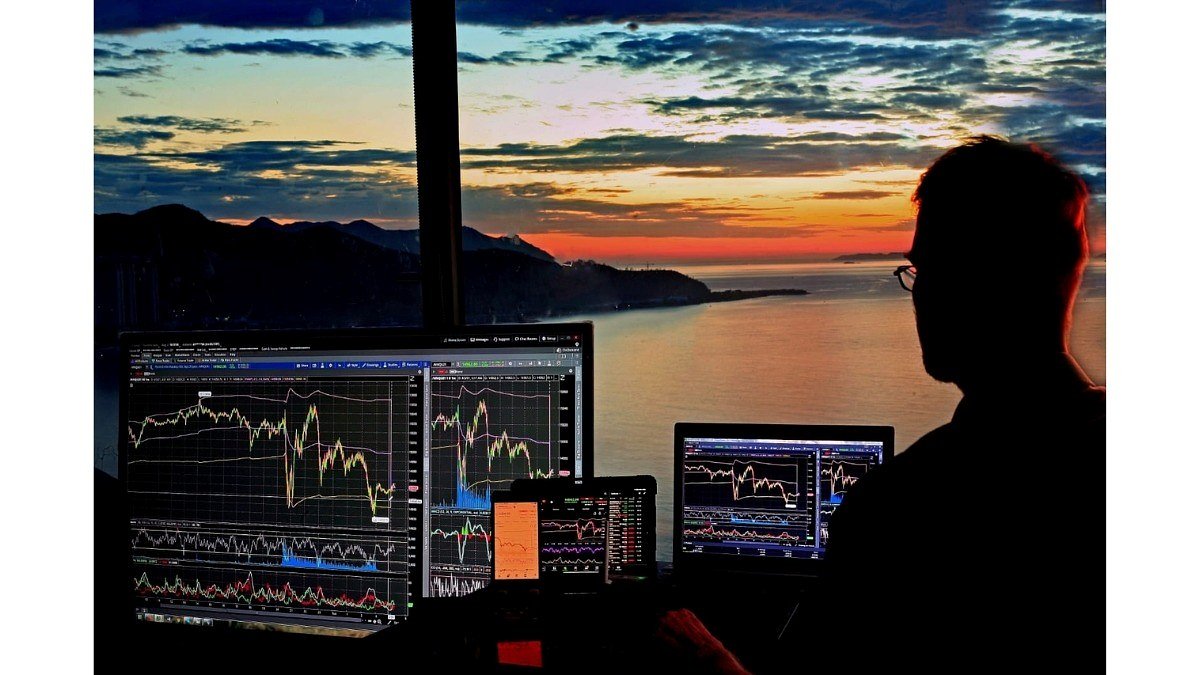
FundedFirm's Zero-Fee Model: Revolution or Risk for Prop Traders?
NEW DELHI, March 27, 2026 – Proprietary trading firm FundedFirm has announced a new zero-commission trading model, a move it claims will create a more transparent and cost-efficient environment for traders. The announcement taps into a growing demand within financial markets for platforms that eliminate hidden fees and restrictive conditions, promising to align trader profitability directly with performance.
By removing transaction commissions—a significant cost for active participants like scalpers and day traders—the UK-based firm aims to position itself as a leader in a rapidly evolving industry. However, while the zero-commission headline is compelling, a deeper look reveals a complex business model operating in a largely unregulated space, with a growing chorus of traders questioning whether the firm’s promises align with reality.
Deconstructing the 'Zero-Commission' Promise
FundedFirm’s marketing emphasizes a trader-first philosophy, built on clarity and fairness. The core of its new offering is the elimination of both per-trade commissions and overnight swap fees, which traditionally eat into the profits of short-term and long-term traders alike. The company states it provides access to professional-grade infrastructure via the MetaTrader 5 platform, complete with competitive, ultra-tight spreads to ensure the absence of commissions doesn't compromise trading conditions.
However, the term “zero-commission” does not mean trading is free. Like most firms in the online proprietary trading space, FundedFirm’s business model is built on several alternative revenue streams. Aspiring traders must first pay a one-time evaluation fee to enter a challenge, with costs ranging from approximately $39 for a $5,000 account to nearly $999 for a $200,000 account. During this evaluation, traders must prove their skill by meeting specific profit targets without breaching strict drawdown limits.
Those who successfully pass the challenge are offered a funded account and a profit-sharing agreement. FundedFirm’s profit split is aggressive, starting at 90% in the trader’s favor and scaling up to 100% for top performers. While attractive, this split means the firm retains a portion of all profits generated by its successful traders, forming a key pillar of its revenue. This structure—combining evaluation fees with a share of profits—is the standard playbook for the industry, suggesting FundedFirm’s innovation lies more in marketing and fee structure than in a fundamental business model overhaul.
A Crowded Field: Disruption in the Prop Trading Arena
FundedFirm’s zero-commission strategy is not happening in a vacuum. It is an aggressive maneuver in an increasingly crowded and competitive proprietary trading landscape. The industry has seen explosive growth, fueled by the democratization of financial markets and the allure of trading with significant capital without personal risk beyond the initial challenge fee. Firms like FundedNext, Funding Pips, and dozens of others compete fiercely for the same pool of talented traders, often using similar evaluation-based models.
To stand out, firms are locked in a race to offer the most attractive terms. This includes higher profit splits, more flexible trading rules, faster payouts, and lower entry costs. In this context, FundedFirm’s zero-commission and 90%+ profit share model is a calculated move to capture market share. It follows a trend initiated by retail brokerages like Robinhood, which leveraged a zero-commission narrative to disrupt the stock trading industry and attract millions of new users.
While this competition can benefit traders by driving down costs and improving terms, it also raises questions about sustainability. Many of these prop firms, including several of FundedFirm's competitors, operate primarily with simulated or demo accounts, even for their “funded” traders. This means the firm is not placing its capital at risk in live markets but is instead profiting from evaluation fees and the statistical probability that most traders will fail their challenges. This structure de-risks the firm’s operations but can create a fundamental conflict of interest if its primary revenue is derived from trader failure rather than trader success.
The Trader Experience: Promises vs. Reality
Despite the polished press release and promises of a trader-centric environment, independent trader feedback paints a more complicated and often troubling picture. While the company is relatively new, having launched in 2024, a significant volume of user reviews on platforms like Trustpilot are overwhelmingly negative. These reports stand in stark contrast to the firm’s official narrative.
A recurring and serious complaint revolves around payouts. Numerous traders report successfully passing evaluations and generating profits, only to have their withdrawal requests delayed, scrutinized, or denied outright. Some claim their accounts were suddenly flagged for obscure rule violations precisely when they attempted to cash out profits. One trader detailed their experience in a widely circulated video, alleging that rules regarding lot sizes were enforced inconsistently and used as a pretext to reject a substantial payout.
Other common complaints include unclear or “hidden” rules that lead to unexpected account breaches, poor customer service with slow or unhelpful responses, and platform instability, including server freezes and execution delays during volatile market periods. While some positive reviews exist, often praising the smooth onboarding process and competitive terms, they are frequently overshadowed by the volume of detailed, negative experiences.
This disconnect between marketing promises and user reality highlights a critical risk for traders in this space. Without a long-term track record, the reputation of a young firm like FundedFirm is built on its actions, and the widespread reports of payout issues severely undermine the trust it seeks to build.
Navigating an Unregulated Frontier
The challenges faced by traders are compounded by the regulatory ambiguity surrounding the online prop trading industry. Although based in the UK with a stated presence in New Delhi, it is unclear what, if any, direct regulatory oversight from bodies like the UK's Financial Conduct Authority (FCA) or the Securities and Exchange Board of India (SEBI) applies to FundedFirm's specific business model. Many prop firms are structured to avoid traditional financial regulations by not accepting client deposits for trading, instead framing the relationship as a contractor agreement to trade the firm's capital.
This unregulated or under-regulated environment means traders have little recourse in the event of a dispute. Unlike with a regulated broker, there is no formal ombudsman or regulatory body to appeal to for issues like denied payouts or unfair account termination. Protection relies almost entirely on the firm’s own integrity and its desire to maintain a positive reputation.
This brings the question of long-term sustainability into sharp focus. A business model that appears to rely heavily on a constant influx of new evaluation fees is only viable as long as the firm can attract new aspiring traders. If a firm develops a reputation for not paying its successful traders, that pipeline of new talent will eventually dry up. For traders, the allure of a zero-commission environment must be carefully weighed against the tangible risks of operating with a young, unregulated entity where the ultimate backstop is trust—a currency that, according to many, appears to be in short supply.