
- $85M Investment: Clean Energy Fuels Corp. invested $85 million in the South Fork Dairy RNG facility.
- 2.6M Gallons Annually: The facility produces approximately 2.6 million gallons of renewable natural gas (RNG) per year.
- -330 Carbon Intensity Score: The RNG boasts a carbon intensity score of -330, making it highly valuable in environmental credit markets.
Experts view this project as a strategic masterclass in vertical integration and monetization of environmental credits, positioning Clean Energy Fuels Corp. as a leader in the burgeoning RNG market with strong competitive advantages and regulatory tailwinds.
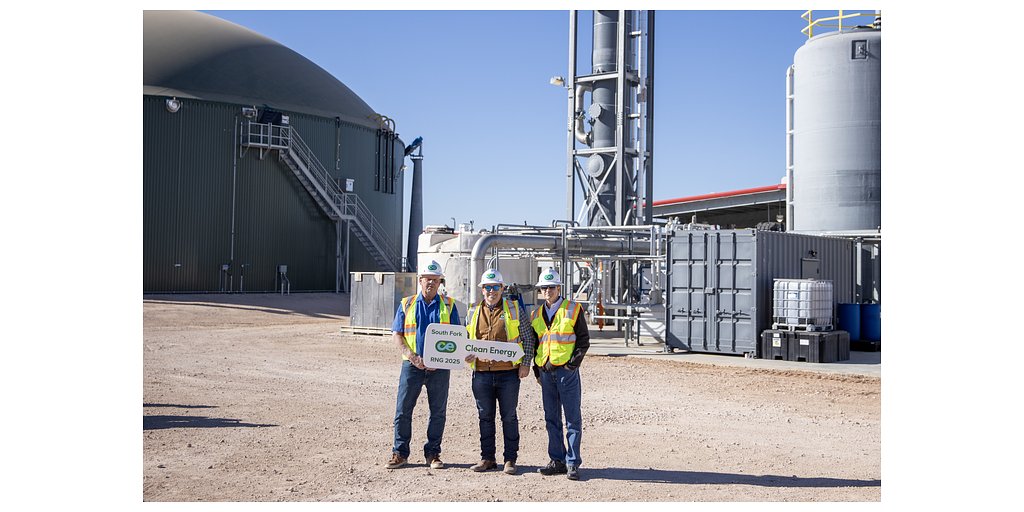
From Manure to Market: Clean Energy's $85M Bet on Green Gas
NEWPORT BEACH, CA – December 01, 2025
In the quiet plains of Dimmitt, Texas, a new nexus of agriculture, energy, and finance has roared to life. Clean Energy Fuels Corp. (NASDAQ: CLNE) has officially begun injecting pipeline-quality renewable natural gas (RNG) from its new facility at South Fork Dairy, one of the largest projects of its kind in the country. While the image of 17,500 dairy cows powering heavy-duty trucks is compelling, the real story for investors and market analysts lies beneath the surface. This $85 million project is more than just a green initiative; it’s a masterclass in vertical integration, the monetization of environmental credits, and a strategic move to dominate a burgeoning energy market.
A Strategic Play for Supply Chain Supremacy
For institutional investors tracking the energy transition, Clean Energy's strategy with the South Fork facility is a critical case study. The company financed the entire $85 million project itself and, in return, will receive 100 percent of the approximately 2.6 million gallons of RNG produced annually. This isn't just a partnership; it's a calculated move to secure a dedicated, low-carbon fuel supply for its sprawling network of over 600 fueling stations across North America.
By taking control of production, Clean Energy insulates itself from supply-side volatility and pricing pressures, a significant risk in the rapidly growing RNG market. As fleets from Amazon to UPS increasingly adopt RNG to meet decarbonization targets, guaranteeing supply becomes a powerful competitive advantage. The company’s ability to bring the facility online “on time and on budget,” as noted by SVP Clay Corbus, further signals strong execution capabilities to the market, especially given the project overcame a significant fire at the dairy during construction.
This vertical integration strategy transforms Clean Energy from a fuel distributor into a full-stack energy provider. It controls the molecule from its creation in four massive anaerobic digesters—which process 300,000 gallons of manure daily—to its final delivery at the pump. This level of control allows the company to manage quality, optimize logistics, and, most importantly, capture value at every step of the chain.
The Lucrative Economics of Carbon-Negative Fuel
The financial architecture of the South Fork project is where the “fintech” aspect of this frontier truly shines. The RNG produced here isn’t just a commodity; it's a generator of high-value environmental credits. The facility has already received approval from the U.S. Environmental Protection Agency (EPA) to generate Renewable Identification Numbers (RINs) under the federal Renewable Fuel Standard (RFS). These credits are tradable assets that obligated parties, like refineries, must purchase to comply with federal mandates, creating a steady, market-driven revenue stream.
Even more significant is the anticipated generation of credits under California's Low Carbon Fuel Standard (LCFS) program, expected to begin in the first quarter of 2026. Dairy-based RNG boasts one of the lowest carbon intensity (CI) scores of any fuel. According to the California Air Resources Board (CARB), its average CI score is around -330. This deeply negative score—achieved by capturing methane that is over 28 times more potent as a greenhouse gas than CO2—makes it incredibly valuable within the LCFS market, where credits have historically traded near $200 per ton of CO2 equivalent.
For the dairy owner, Frank Brand, this model represents a profound shift in agricultural economics. “We’re processing our manure into useful bedding and producing clean, useful fuel for vehicles – it’s pretty amazing stuff,” Brand stated. The project turns a waste management liability into two distinct revenue streams: one from the sale of the gas and another from the environmental credits. In an industry with notoriously tight margins, this “circular economy” approach provides a crucial financial buffer and a sustainable path forward.
Riding the Wave of Regulatory Tailwinds
An $85 million capital expenditure is a significant undertaking, but Clean Energy isn't operating in a vacuum. The project's viability is underpinned by a robust framework of public policy designed to accelerate decarbonization. The federal Inflation Reduction Act of 2022 has been a game-changer, supercharging tax incentives like the Section 48 Investment Tax Credit (ITC), which can cover 30% or more of a project's qualified expenditures.
Furthermore, the industry is poised to benefit from the Section 45Z Clean Fuels Production Tax Credit beginning in 2025, offering a direct incentive of up to $1.00 per gallon for clean transportation fuel. This policy support structure is critical for de-risking private investment and is a key factor analysts consider when evaluating the long-term growth trajectory of companies in the sector. The bipartisan support for measures like the proposed Renewable Natural Gas Incentive Act of 2025 further suggests that these tailwinds are likely to strengthen, not diminish.
The South Fork Dairy facility is therefore a tangible result of policy meeting market innovation. It serves as a blueprint for future projects, demonstrating how public incentives can be effectively leveraged to build out essential infrastructure, reduce emissions from both the agriculture (10% of U.S. GHG emissions) and transportation (28%) sectors, and deliver returns for shareholders.
As the first streams of RNG from South Fork enter the national pipeline, they represent more than just cleaner fuel. They signify a maturing market where environmental externalities are being accurately priced and transformed into financial assets. For Christine Carter’s ‘Fintech Frontiers,’ this project stands as a landmark, proving that the path to a decarbonized economy is being paved not just with good intentions, but with sophisticated financial engineering and strategic corporate investment.