
- $2 billion: RIMAN's revenue since its 2018 launch
- 400,000+: Number of 'Beauty Planners' in RIMAN's direct-selling network
- Organ-on-a-chip technology: Cutting-edge platform used to validate Araliadiol's efficacy
Experts view this Harvard collaboration as a strategic move to establish scientific credibility for K-beauty, potentially setting a new industry standard for evidence-based validation of ingredients.
From Jeju to Harvard: K-Beauty's Push for Scientific Validation
SEOUL, South Korea – April 15, 2026 – In a move signaling a new frontier for the global K-beauty industry, ASK Company, the parent of direct-selling giant RIMAN, has announced a sponsored research agreement with Harvard University. The partnership will see a top bioengineering lab use revolutionary 'organ-on-a-chip' technology to validate the efficacy of Araliadiol, a proprietary ingredient poised to be the next-generation solution for skin regeneration and hair growth.
This collaboration between a Korean beauty powerhouse and one of the world's most prestigious academic institutions marks a significant escalation in the industry's quest for scientific credibility. By subjecting its heritage-derived compound to the rigorous scrutiny of advanced biomimetic testing, ASK Company is betting that verifiable, data-driven proof will become the new currency in a crowded and competitive global beauty market.
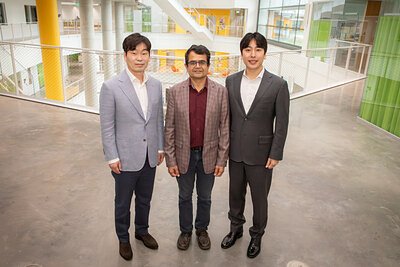
The formal agreement was solidified at the Harvard Science & Engineering Complex, bringing together RIMAN/ASK Company Founder & Chairman Joonghyun Ahn and Professor Samir Mitragotri of the Harvard John A. Paulson School of Engineering and Applied Sciences. The project will focus on unlocking the full potential of Araliadiol, an active compound derived from RIMAN's signature Giant BYoungPool™.
The Science of Skin on a Chip
At the heart of this collaboration is Araliadiol, a novel molecule identified and isolated by ASK Company from Giant BYoungPool™, a unique and patented cultivar of Centella Asiatica grown on Jeju Island. Preliminary studies in Korea with Sungkyunkwan and Konkuk Universities have already indicated the compound’s potent anti-inflammatory and antioxidant properties, showing strong cell-protective effects even at low concentrations.
However, the Harvard partnership aims to elevate this research to an unprecedented level by employing organ-on-a-chip (OOC) technology. This cutting-edge platform involves creating micro-engineered chips that house living human cells in a 3D structure, effectively replicating the complex biology of human organs—in this case, skin and hair follicles—in miniature. These micro-physiological systems allow scientists to observe how ingredients interact with human tissue in a dynamic, controlled environment that is far more predictive of human response than traditional cell cultures or animal testing.
Professor Mitragotri, a leading figure in bioengineering and drug delivery, is renowned for his work in overcoming biological barriers. His lab's expertise will be leveraged to precisely measure Araliadiol’s impact on skin regeneration and its ability to activate follicular cells for hair growth. This method provides a powerful, ethical, and human-relevant alternative to animal testing, aligning with growing consumer demand for cruelty-free product validation.
A Strategic Alliance for Credibility
While K-beauty has long been celebrated for its innovative textures and ingredient-focused formulations, this partnership represents a strategic pivot toward irrefutable scientific validation. By aligning with Harvard, RIMAN is seeking to build a formidable moat of credibility around its proprietary technology, a move that could reshape consumer trust and brand authority, particularly within the direct-selling model.
For a company like RIMAN, which has achieved over $2 billion in revenue since its 2018 launch through a network of over 400,000 'Beauty Planners', third-party validation from a globally recognized institution is invaluable. It provides a powerful narrative that moves beyond marketing claims, offering its distributors and customers a foundation of scientific proof. This is especially critical in the era of the 'skintellectual,' a discerning consumer who researches ingredients, scrutinizes clinical data, and demands evidence-based results.
"This research collaboration marks a significant milestone in our R&D journey," stated Mr. Joonghyun Ahn, Founder & Chairman of RIMAN/ASK Company, in the official announcement. "We aim to validate the efficacy of Araliadiol and establish it as a functional ingredient in the beauty market." This statement underscores a clear strategy: to use elite-level science to transform a proprietary ingredient into a globally recognized and trusted asset.
From Heritage Ingredient to Biotech Innovation
The journey of Araliadiol encapsulates the evolution of the modern beauty industry, blending agricultural heritage with advanced biotechnology. It begins not in a sterile laboratory but on the fertile volcanic soil of South Korea's Jeju Island, where RIMAN cultivates its signature Giant BYoungPool™ at its own smart farm. This unique Centella Asiatica cultivar, which is so distinct it was granted Plant Variety Protection in both South Korea and the United States, serves as the source material.
Through a proprietary extraction process, ASK Company isolates Araliadiol. But the company's R&D strategy goes a step further. Recognizing the limitations of relying solely on agricultural yields and the natural variability of botanical extracts, the company has also developed a synthetic production process for pure Araliadiol. This dual approach ensures not only the protection of a natural resource but also the scalability, purity, and consistency required for a global cosmetic ingredient. It represents the pinnacle of 'nature-inspired' innovation, where science is used to perfect and standardize what nature provides.
This meticulous control over the entire supply chain, from cultivation to extraction to synthesis, positions RIMAN to compete not just on the basis of a compelling brand story, but on the technical merits of a highly consistent and effective active compound. The Harvard collaboration is the final, crucial step in validating the output of this entire process.
Redefining Efficacy in a Competitive Market
The research into Araliadiol's effects on skin regeneration and hair growth targets two of the most lucrative and challenging sectors in the beauty industry. The market is saturated with ingredients, from established peptides and retinoids for skin to drugs like minoxidil for hair. For a new ingredient to penetrate this landscape, it must offer a clear point of differentiation.
By leveraging OOC technology, ASK Company can generate sophisticated data on the biological mechanisms behind Araliadiol's effects, potentially revealing a unique mode of action that sets it apart from competitors. If the research confirms its efficacy in activating follicular cells or accelerating skin repair, Araliadiol could become a sought-after active for formulators worldwide, solidifying RIMAN's position as an innovation leader in K-beauty.
Ultimately, this partnership is more than a single research project; it is a blueprint for the future of cosmetic development. It demonstrates how brands can move beyond traditional botanicals by investing in deep science to unlock novel compounds and then proving their worth through the most advanced validation methods available. As RIMAN seeks to strengthen the heritage of Giant BYoungPool™, its journey from a Jeju farm to a Harvard lab illustrates the new global standard for excellence in the beauty industry.