
- 80% of countywide elections lost by Harris County Republicans in the last 5.5 years.
- 2.5 million high school students impacted by Bouchard's nonprofit leadership.
- 60% of Republican voters projected to be Gen Z and Millennials by 2028.
Experts would likely conclude that Bouchard's data-driven, nonprofit-style approach represents a bold but necessary experiment to revitalize a struggling local GOP organization, though its success remains uncertain in a rapidly changing political landscape.
From Health to Politics: Can a Nonprofit Leader Revive a County GOP?
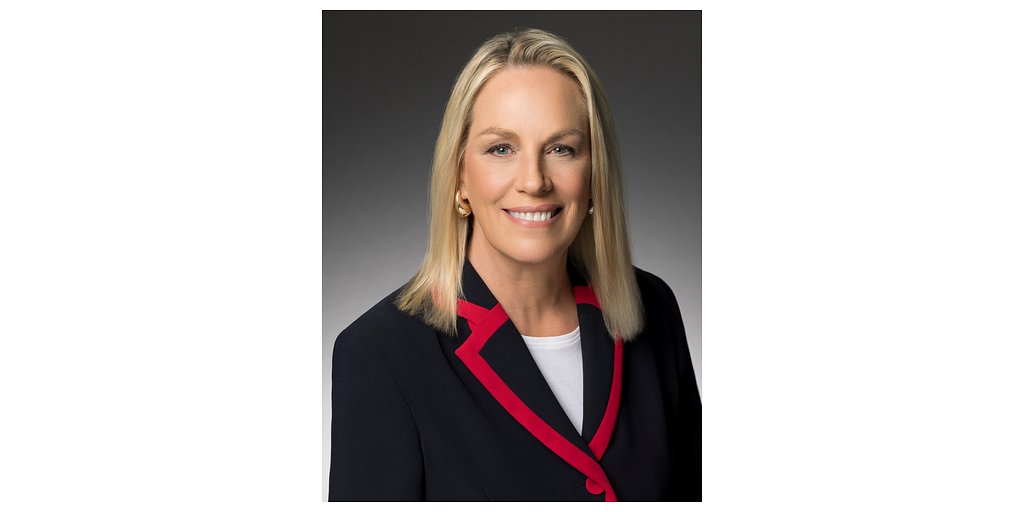
HOUSTON, TX – December 01, 2025 – In an era where political parties are increasingly scrutinized for their effectiveness and relevance, a new type of challenger is stepping into the fray in Texas’s largest county. Michelle Bouchard, a nonprofit leader renowned for scaling a national youth wellness organization, has officially launched her campaign for Harris County Republican Party (HCRP) Chair. She brings with her not a traditional political playbook, but a corporate-style turnaround plan aimed at reversing years of significant electoral losses.
Bouchard, an eighth-generation Texan and HCRP Precinct Chair, is positioning herself as a change agent. Her campaign centers on a stark assessment of the party's recent performance. “Harris County was built on courage and grit,” she said in her announcement. “We must have the courage to embrace change.” That change is outlined in her “GRIT” strategy—an acronym for Goals, Results, Integrity, and Team—which she promises will transform the HCRP into “a well-funded, well-run machine that wins elections.” This move signals a potential shift in how local political organizations are managed, drawing inspiration from the data-driven, results-oriented world of high-impact nonprofits.
A Party at a Crossroads
The impetus for Bouchard’s reformist campaign is a political reality that has become impossible for local Republicans to ignore. Her campaign highlights a troubling trend: “Republicans have lost more than 80% of countywide elections over the last five and a half years.” While the specific percentage is a campaign talking point, the underlying data paints a grim picture for the HCRP. Research confirms that the party has not won a single countywide administrative office since 2014. Harris County, once a Republican stronghold, has shifted decidedly Democratic, with Joe Biden winning the county by over 13 points in 2020 and Kamala Harris securing it by more than 5 points in 2024.
This sustained period of losses has created a crisis of confidence and a clear opening for a challenger like Bouchard. She points to the loss of the Cy-Fair ISD school board—a body in a historically Republican area—as a “tipping point” that illustrates the party’s waning influence even at the most local levels. However, the narrative is not without contest. The incumbent HCRP Chair, Cindy Siegel, who is running for re-election, has presented a more optimistic view, celebrating what she termed “9 countywide Republican victories in 2024” as the party’s “strongest showing in a decade.” This sets the stage for a fundamental debate over the party’s direction: is the current path a slow but steady recovery, or does the organization require the radical overhaul Bouchard is proposing?
From National Health Movement to Local Politics
What makes Bouchard’s candidacy particularly compelling is her background, which lies not in career politics but in organizational growth and social impact. For years, she served as the president of HealthCorps, a national nonprofit co-founded by Dr. Mehmet Oz, who is now President Trump’s appointed Administrator of the Centers for Medicare and Medicaid Services. Her tenure there was marked by extraordinary expansion and financial success.
Under her leadership, HealthCorps grew from a fledgling two-state pilot program into a 23-state movement. According to her campaign, this work “improved the resilience and wellbeing of more than 2.5 million high school students.” This was achieved through a combination of strategic vision and formidable fundraising prowess; Bouchard’s team raised over $70 million to support the organization’s mission. Her experience includes overseeing multimillion-dollar budgets, managing large teams, and even testifying before the U.S. Senate in 2009 to advocate for youth health initiatives. She is now betting that the same skills used to build a national nonprofit—strategic planning, data analysis, stakeholder engagement, and relentless fundraising—are precisely what the HCRP needs to rebuild its operational capacity and regain its footing.
Courting a New Generation
A cornerstone of Bouchard’s proposed innovation is a strategic pivot toward a demographic the Republican party has struggled to attract: younger voters. Citing national data showing that Gen Z and Millennials will constitute 60% of Republican voters by 2028, she argues that ignoring this cohort is a recipe for continued decline. “We cannot ignore this next generation,” she declared, making youth engagement a central theme of her platform.
In Harris County, this challenge is particularly acute. While Millennials and Gen Z together represent a formidable 44% of the likely voter population, their participation rates are notoriously low. Data shows that young adults aged 18-29 have the lowest voter registration and turnout rates in the county. In the recent November 2024 election, for example, young men aged 18-24 had the lowest turnout of any demographic group. The potential, however, is massive. If this younger demographic voted at the same rate as seniors, it would introduce nearly 180,000 additional votes into the local electoral system.
Bouchard’s experience at HealthCorps, an organization dedicated to empowering high school students, provides a unique foundation for this effort. Her work involved creating programming that reached young people where they were, from Sharpstown and Lamar high schools in Houston to communities within the Chickasaw Nation. The core question is whether she can translate that success into the political sphere, crafting a message and a platform that resonates with young, diverse voters in a deeply blue-leaning urban county.
Her campaign represents a significant test: can a leader with a proven track record in building mission-driven organizations apply those same principles to revive a political party? By challenging the status quo, Bouchard is forcing a conversation about what it takes to win in a modern, diverse, and rapidly changing electorate. The outcome of this leadership race could have implications far beyond Harris County, serving as a case study on whether the future of political organizing lies in the innovative, data-centric strategies honed in the world of social impact.