
- 78 years: Rodale Institute's Farming Systems Trial (FST) has been comparing conventional and organic agriculture for nearly eight decades.
- 5th decade: The FST is now in its fifth decade, providing long-term data on regenerative organic methods.
- 2025: Rodale Institute was named one of Fast Company’s Most Innovative Companies.
Experts in regenerative agriculture and public health widely agree that improving soil health through organic and regenerative farming practices is crucial for addressing chronic disease, climate change, and food system sustainability.
From Crisis to Crusade: Rodale CEO Links Soil Health to Human Survival
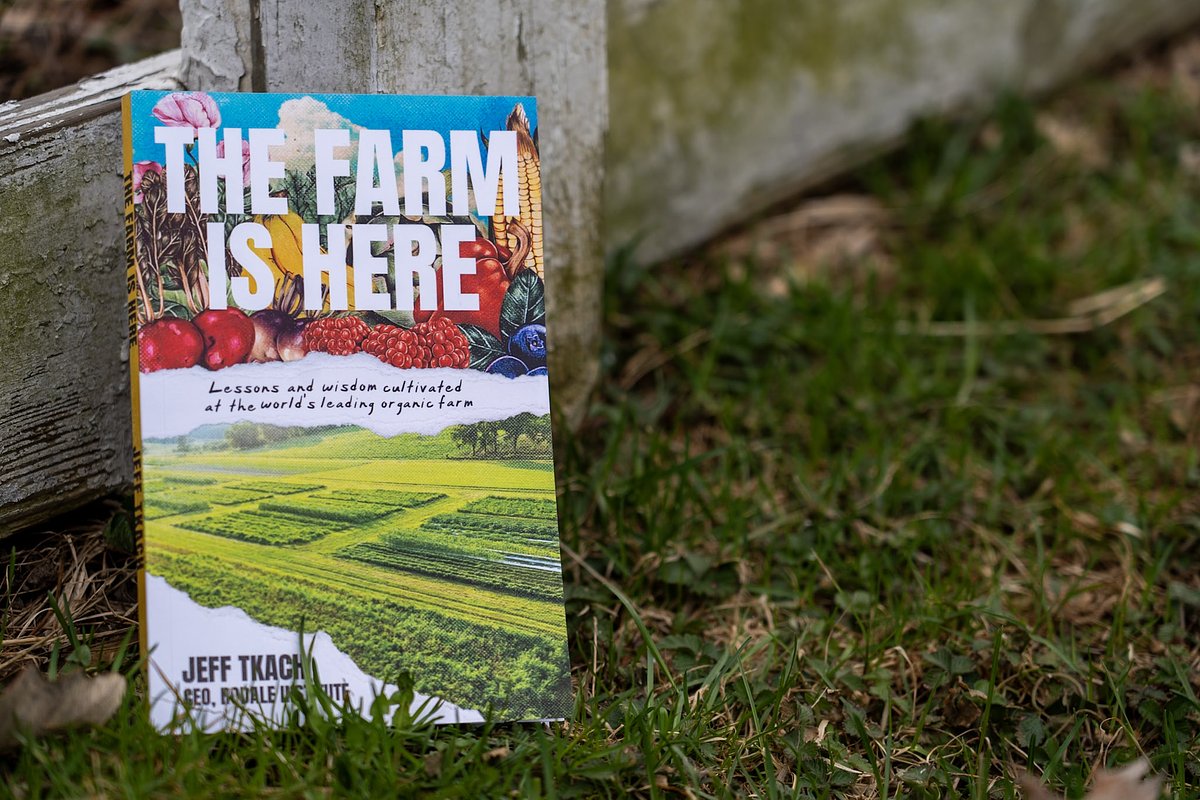
KUTZTOWN, PA – March 24, 2026 – Jeff Tkach, the CEO of Rodale Institute, is no stranger to the connection between food and health. But for him, it’s not just a professional mission—it’s a story of personal survival that forms the core of his debut book, The Farm Is Here, launched today. The book makes an urgent case that the future of public health is inextricably linked to the health of the soil beneath our feet.
A Personal Prescription Rooted in Soil
Before leading one of the world's most influential non-profits in regenerative organic agriculture, Tkach faced a debilitating health crisis that conventional medicine couldn't solve. In 2016, he suffered a "tremendous health collapse," enduring a barrage of mysterious symptoms including chronic gastrointestinal distress, intense body aches, hallucinations, and severe panic attacks. After countless doctor visits yielded no answers, a functional medicine practitioner finally diagnosed him with chronic Lyme disease.
This harrowing experience became a turning point. It wasn't the first time he'd found healing through lifestyle changes; as a teenager, he had overcome chronic illness by transforming his diet after discovering a Rodale, Inc. publication. Decades later, his journey back to health from Lyme disease reinforced a profound lesson: food is medicine. This personal realization propelled him from a successful career in health and wellness media—where he managed brands like Prevention and Yoga Journal—to the forefront of the agricultural movement. His path led him first to Chief Impact Officer and then to CEO of the Rodale Institute, the very organization pioneering the science behind the "food is medicine" philosophy.
In The Farm Is Here, Tkach uses his story not as a simple memoir, but as a powerful allegory for a nation grappling with its own health crisis. He illustrates how his personal journey of healing mirrors the potential for healing our land, drawing a direct line from his recovery to the regenerative principles that can restore our degraded ecosystems and, in turn, our collective well-being.
The Science of a Healthier Nation
While Tkach’s personal narrative provides a compelling entry point, the book’s foundation is built on decades of rigorous scientific research from the Rodale Institute. For 78 years, the Pennsylvania-based nonprofit has been a global leader in studying and promoting organic and regenerative farming practices.
“If we as a nation are to achieve real progress on health, we must start by rebuilding the soil beneath our feet,” Tkach stated in the book's announcement. This assertion is backed by the Institute’s landmark Farming Systems Trial (FST), a side-by-side comparison of conventional and organic agriculture now in its fifth decade. Research from the FST and other studies has consistently shown that regenerative organic methods can produce yields that meet or exceed conventional systems, while also sequestering carbon, improving water quality, and increasing biodiversity.
The Farm Is Here translates this complex science for a broader audience, arguing that the nutrient depletion in modern soil directly contributes to the nutrient deficiencies in our food, which fuels the epidemic of chronic disease. Tkach posits that regenerative organic agriculture isn't just an environmental strategy but a critical public health intervention. By focusing on building healthy, living soil, farmers can grow more nutrient-dense food, which is fundamental to preventing and even reversing illness.
From Policy to Plate: A Call to Action
The book moves beyond diagnosis to offer a clear prescription for change. Tkach emphasizes that the responsibility for this transformation doesn't lie with farmers alone. He presents a roadmap with actionable steps for individuals, institutions, and policymakers, framing health as a collective endeavor.
“Health isn’t just a personal matter; it grows from the health of our environment and our choices as society,” Tkach writes, a sentiment that echoes through his policy advocacy. In his role, Tkach is actively working to bridge the gap between agriculture and healthcare, serving on advisory boards for Google's Food is Medicine Institute and co-chairing the Regenerative Organic Alliance.
For individuals, the book offers guidance on making more conscious food choices and supporting local, regenerative farms. For institutions like hospitals and schools, it advocates for sourcing food that heals both people and the planet. On a policy level, it calls for shifting subsidies and incentives to support farmers transitioning to regenerative practices, effectively making agriculture a part of the healthcare solution. The goal is to create a system where the most nutritious food is also the most accessible and affordable.
A Growing Movement for a Hopeful Future
The release of The Farm Is Here comes at a time of growing public awareness around the interconnectedness of food systems, climate change, and personal health. Tkach’s message is amplified by a chorus of influential voices who see regenerative agriculture as a path forward.
Rose Mercario, the former CEO of Patagonia, a company known for its deep environmental ethos, praised the book, calling it "an important book rooted in hope for our planet." This endorsement highlights the convergence of thought between environmental advocates and health proponents. The Rodale Institute itself, named one of Fast Company’s Most Innovative Companies in 2025, continues to be a catalyst for this change, proving that what was once considered an alternative farming method is now essential for humanity's survival.
Ultimately, Tkach’s book is a powerful argument that the solutions to our most pressing crises—from chronic disease to climate change—are not hidden in a high-tech lab but are waiting to be cultivated in the soil. It’s a call to see the farm not as a distant, abstract place, but as the very foundation of our homes, our communities, and our health. The farm, Tkach argues, is here, and it holds the key to a more resilient and vibrant future for all.