
- $18,000 donation to fund 50 biochar kilns in northern Thailand
- 150 tons of agricultural waste converted annually, removing 80–100 tons of CO2 yearly
- PM2.5 levels in Chiang Mai frequently exceeded 53–106 µg/m³ in 2024 (WHO limit: 15 µg/m³)
Experts would likely conclude that Iron Software’s biochar kiln initiative represents a practical, multi-benefit solution to Chiang Mai’s air pollution crisis, combining local environmental action with measurable carbon removal and economic support for farmers.
From Code to Kilns: Tech Firm Fights Thai Air Pollution Crisis
CHICAGO and CHIANG MAI, Thailand – January 06, 2026 – As it celebrates its 10th anniversary, Chicago-based Iron Software is turning its attention from code to carbon by funding a novel solution to a crisis plaguing its own international team. The company, a leading developer of .NET libraries, has announced an $18,000 donation to Warm Heart Worldwide/Biochar Life to deploy 50 specialized biochar kilns in northern Thailand, aiming to mitigate the hazardous air pollution that chokes the region annually.
The initiative represents a direct and localized response to an environmental problem that personally affects the company’s 50-person engineering hub located in Chiang Mai. By converting agricultural waste into a valuable resource, the project offers a multi-pronged solution that promises cleaner air, healthier soil, and new income for local farmers.
Chiang Mai's Tech Boom Meets a Burning Problem
Over the past decade, Chiang Mai has transformed into one of Southeast Asia’s most dynamic tech hubs. Dubbed a “mini Silicon Valley,” the city has attracted a global workforce of software developers, startups, and digital nomads with its unique blend of high-speed internet, a low cost of living, and a rich cultural landscape. This combination has fostered a thriving developer community and made it an ideal location for international companies like Iron Software to establish critical operations.
However, this idyllic image is shattered each year between February and April. During the annual “burning season,” smoke from agricultural burning and forest fires blankets the region, creating some of the world's most hazardous air quality conditions. In recent years, Chiang Mai has repeatedly topped IQAir's global rankings as the world's most polluted major city, with levels of PM2.5—tiny, harmful airborne particles—soaring far above World Health Organization safety guidelines. In 2024, readings frequently hit between 53 and 106 micrograms per cubic meter, well over the WHO's recommended limit of 15 µg/m³. This recurring crisis poses a significant threat to the health of millions and the long-term sustainability of the city's economic boom.
For the tech professionals who call Chiang Mai home, the impact is unavoidable. "I've lived in Chiang Mai for more than ten years, and the smoky season is noticeably impacting people's lives," said Jacob Mellor, Chief Technology Officer at Iron Software. "We've invested heavily in making our office a safe environment—medical-grade air purifiers, real-time AQI monitoring—and our remote work policy means team members can work from anywhere or take leave during the worst weeks. But we wanted to do more than protect ourselves. Our team members have families here, kids in local schools, neighbours who are farmers. This partnership is about giving back to the broader community that's become home to so many of us."
A Practical Solution with Multiple Benefits
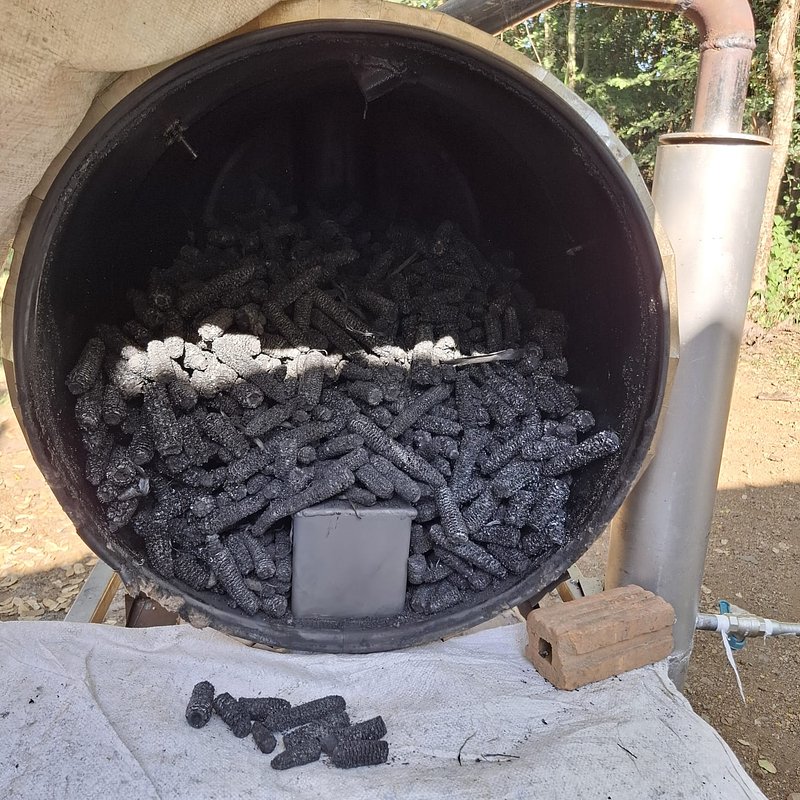
Iron Software’s partnership with Biochar Life directly confronts the root of the agricultural smoke problem. The $18,000 donation will fund 50 “Aom Kilns” for smallholder farmers in the Phrao district, a region heavily impacted by crop burning. These low-emission, high-efficiency kilns use a process called pyrolysis to convert agricultural waste, such as corn stalks, into biochar—a stable, carbon-rich form of charcoal.
Instead of being burned in open fields and releasing massive plumes of smoke, the waste is transformed into a valuable product with a cascade of benefits. The project is projected to convert 150 tons of agricultural waste annually, supporting 40 to 50 farming families. Environmentally, it prevents smoke pollution while permanently removing an estimated 80 to 100 tons of CO2 from the atmosphere each year.
"As we celebrate Iron Software's 10th anniversary, we're committed to investing in the communities where our teams live and work," said Cameron Rimington, CEO of Iron Software. "Our Chiang Mai engineering hub—where we develop core products like IronPDF for HTML to PDF conversion in C# and .NET—has been instrumental to our growth... By funding these biochar kilns, we're not just addressing local air quality, we're supporting farmers' livelihoods and contributing to measurable carbon removal. It's exactly the kind of clever, multi-benefit solution the tech industry should be championing."
This sentiment is echoed by the project's implementers. "Iron Software represents really the first CSR innovation partner for us in Thailand," said Matt Rickard, CEO of Biochar Life. "The local element of this partnership is crucial—everyone at Iron Software experiences the smoke pollution problem firsthand and will benefit from the solution. These kilns will enable farmers to earn income from their agricultural waste rather than burning it, while the resulting biochar improves soil health and reduces the need for chemical fertilizers."
Biochar: A Powerful, Underfunded Climate Tool
Beyond its immediate local impact, the initiative shines a spotlight on biochar as a potent but often overlooked climate technology. Unlike more speculative or slow-acting carbon removal methods, biochar offers instant, measurable, and permanent sequestration. The carbon locked within the biochar remains stable in soil for hundreds or even thousands of years.
According to recent studies, biochar solutions have accounted for a staggering 96% of all verified carbon removal to date, yet they receive only a fraction of the funding directed toward other technologies like direct air capture. The Intergovernmental Panel on Climate Change (IPCC) has recognized biochar as a viable and important tool for carbon dioxide removal, highlighting its co-benefits for sustainable land management.
By investing in this technology, Iron Software is not only engaging in philanthropy but also championing a practical, scalable, and scientifically-backed climate solution. The Aom Kiln, designed by Biochar Life's COO Kwanpiromtara Suksri, represents a key innovation that makes this technology accessible and effective for the smallholder farmers who are on the front lines of the burning crisis.
A New Chapter in Corporate Environmentalism
This project marks a significant evolution in Iron Software's environmental strategy. As a member of 1% for the Planet, the company has a history of environmental giving, including over $50,000 donated to the TeamSeas ocean cleanup campaign since 2022. While its past efforts have focused on global issues, the biochar initiative demonstrates a strategic shift toward targeted, local action that addresses challenges directly impacting its employees and operational communities.
This hands-on approach reflects a growing trend in corporate social responsibility, where companies move beyond passive donations to become active partners in solving complex problems. With the kilns scheduled for deployment in the first quarter of 2026, just ahead of the peak burning season, the project aims to deliver tangible results this year.
The initiative serves as a powerful model for how global tech firms can leverage their resources to foster resilience and sustainability within the local communities that are crucial to their success.