
- $1.8 billion in equity invested by Brookwood across its portfolio
- 450 stores in Yesway's network post-IPO
- $327 billion in U.S. convenience store sales in 2023
Experts would likely conclude that Brookwood's success with Yesway demonstrates the viability of a hands-on, operational-first approach in private equity, particularly in fragmented retail sectors.
From Blueprint to Burritos: A Real Estate Firm's Rare Retail IPO
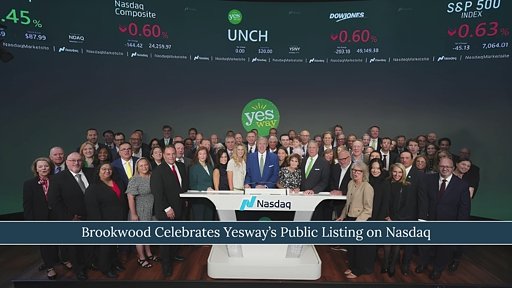
BEVERLY, Mass. – June 9, 2026 – When private equity firm Brookwood Financial Partners celebrated the successful public listing of its convenience store chain, Yesway, on Nasdaq this past April, it wasn't just another lucrative exit. It was the culmination of a decade-long, high-stakes bet that a firm known for buying and selling commercial real estate could build a consumer retail powerhouse from the ground up. In the world of high finance, where firms typically stick to their knitting, Brookwood’s achievement is a genuine outlier—a story of how a real estate blueprint evolved into a retail empire famous for, of all things, its deep-fried burritos.
Yesway’s debut on The Nasdaq Global Select Market under the ticker “YSWY” on April 21 marked a milestone that few private equity firms—and even fewer with roots in real estate—ever reach. They didn't just buy a company; they conceived it, capitalized it, and scaled it. As a former market analyst, I’ve seen countless press releases celebrating financial victories, but this one tells a deeper story about strategy, patience, and the evolving nature of value creation.
“It is rare for a private equity real estate investment firm to help build a consumer retail company of this scale from inception through a successful public listing,” said Thomas N. Trkla, Brookwood's founder, Chairman and Chief Executive Officer. “We believe Yesway’s achievement demonstrates the power of Brookwood’s differentiated, hands-on approach.” His statement, while predictably proud, holds a significant truth about the path his firm chose.
The Architect and the Asset
Founded in 1993, Brookwood has a long history in the commercial real estate sector, having invested over $1.8 billion of equity across a portfolio valued at more than $4.9 billion. Its traditional model involved acquiring properties and adding value through leasing and management. But in 2015, the firm embarked on a new, thesis-driven venture. The thesis was that the American convenience store market was highly fragmented and ripe for consolidation and modernization.
Instead of executing a typical leveraged buyout of an existing major player, Brookwood chose the harder, riskier path: building a platform from scratch. This “build-from-scratch” strategy is a world away from the financial engineering that often characterized private equity in the past. It requires more than just capital; it demands deep operational involvement, a clear strategic vision, and the patience to nurture a business from infancy.
Brookwood started with an idea and a checkbook, establishing Yesway with the clear objective of creating a best-in-class convenience store chain. This approach allowed the firm to bypass the high entry valuations of established chains and to instill its own operational DNA from day one. It was a deliberate move from being a landlord to becoming an operator, a shift that carries immense risk but also the potential for outsized returns if executed correctly. The firm's success with Yesway is a powerful validation of this hands-on, operational-first philosophy.
The Road to Nasdaq: Building Yesway Brick by Brick
Yesway's journey from a concept in a Brookwood boardroom to a publicly traded company with approximately 450 stores is a masterclass in strategic growth. The expansion wasn't haphazard; it was a disciplined combination of new-store development and, crucially, strategic acquisitions.
The most transformative move came in 2019 with the acquisition of Allsup’s, a beloved 304-store chain with a near-cult following in New Mexico and Texas. This single transaction didn't just double Yesway's footprint; it gave the company a powerful regional brand and a signature product: the legendary Allsup's deep-fried burrito. In the often-generic world of convenience retail, having a unique, craveable product is an invaluable asset that drives loyalty far beyond the gas pump.
By integrating strong regional brands like Allsup's into its portfolio, Yesway built a network of stores that felt local and authentic while benefiting from the scale and operational sophistication of a large parent company. Brookwood’s capital and expertise fueled investments in store remodels, technology upgrades, and an expansion of foodservice offerings, aligning the growing chain with the most powerful trends in the industry.
Competing in Modern Convenience Retail
The American convenience store is no longer just a place for gas and cigarettes. The industry, which saw record in-store sales of over $327 billion in 2023, is increasingly driven by foodservice. Freshly prepared meals, coffee, and grab-and-go options are the new battleground, and they are far more profitable than fuel. Yesway's focus on its foodservice program, anchored by the Allsup’s brand, positions it perfectly within this trend.
Its public listing now pits it more directly against national giants like 7-Eleven and Circle K, as well as formidable regional competitors like Casey's General Stores, another Midwestern powerhouse known for its pizza. While its national footprint is smaller, Yesway's competitive advantage lies in its regional density and strong brand identity in its nine-state territory across the Midwest and Southwest. The capital raised from the IPO will be critical for fending off these rivals, continuing its growth trajectory, and investing in the next wave of retail innovation, from frictionless checkout to electric vehicle charging infrastructure.
A New Blueprint for Private Equity?
Beyond the specifics of convenience stores and burritos, the Yesway story is a significant data point in the evolution of private equity. It serves as a powerful case study for the “platform building” model, where firms act as entrepreneurs, not just financiers. This approach requires a different skill set—one that blends strategic insight, operational expertise, and long-term vision.
Brookwood took a fragmented sector, applied a clear thesis, and patiently built an institutional-quality company. The successful IPO of Yesway sends a clear signal to the market: immense value can be created not just by buying and fixing broken companies, but by building new ones from the ground up. As other private equity firms seek new avenues for generating returns in an increasingly competitive landscape, the blueprint Brookwood created with Yesway may prove to be one worth studying.