
- 9 innovative companies founded by veterans and military spouses selected for the Veteran Entrepreneur Program (VEP) accelerator
- 93% of veteran entrepreneurs report that skills acquired during service were instrumental to their business success
- $55 million in financial support provided by the PenFed Foundation to military families since 2001
Experts agree that veteran entrepreneurs bring unique strengths to business, including leadership, adaptability, and problem-solving skills, making programs like the VEP crucial for translating military experience into economic success.
From Battlefield to Boardroom: Veteran Innovators Forge New Frontiers
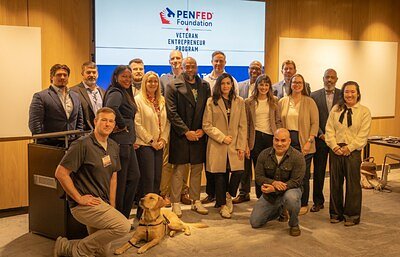
TYSONS, Va. – March 02, 2026 – The discipline, resilience, and strategic thinking honed in military service are finding a powerful new application: the modern startup. This is the central theme of the PenFed Foundation for Military Heroes' latest Veteran Entrepreneur Program (VEP) cohort, which recently concluded its in-person training in Bentonville, Arkansas. Nine innovative companies, founded by veterans and military spouses, have been selected for the intensive six-week accelerator, showcasing a new wave of entrepreneurs poised to tackle some of the nation's most critical challenges.
The program, which combines four days of immersive training with six weeks of dedicated one-on-one mentorship, represents a vital bridge between military life and civilian success. It provides a unique platform for founders to refine their strategies, expand their networks, and access the resources necessary for significant growth.
Service, Strategy, and Startups
The transition from military command to corporate leadership is proving to be a natural one. Veterans are historically more entrepreneurial than their civilian counterparts, and according to recent studies, 93% of veteran entrepreneurs report that skills acquired during their service have been instrumental to their business success. These are not just soft skills; they are the bedrock of effective entrepreneurship: proactive leadership, adaptability under pressure, and decisive problem-solving.
"The military community brings the intensity and passion required for entrepreneurship, along with a deep commitment to serving others," said Terry Williams, a retired U.S. Marine Corps Brigadier General and the Director of the Veteran Entrepreneur Program. "We are proud to support them along their way to success."
This ethos is evident across the VEP. The program is more than a business class; it's an ecosystem designed to leverage the inherent strengths of its participants. While the Small Business Administration (SBA) offers crucial resources like the Boots to Business program and Veterans Business Outreach Centers, non-profits like the PenFed Foundation provide a different, highly personalized layer of support, fostering a community of peers who understand the unique journey from service to startup.
A Blueprint for Impact: The 'No Equity' Model
In the high-stakes world of startup accelerators, where trading equity for expertise is the norm, the PenFed Foundation has forged a different path. The VEP is offered completely free of charge, and crucially, the foundation takes no equity in the businesses it supports. This distinctive 'no equity' model is a game-changer for founders, allowing them to retain full ownership and control of their vision while benefiting from world-class mentorship and resources.
This approach maximizes the long-term economic empowerment of military families and reflects the foundation's core mission. Since its founding in 2001, the PenFed Foundation has provided over $55 million in financial support to military families. Its affiliation with PenFed Credit Union, which covers all administrative costs, ensures that donor contributions are channeled directly into impactful programs like the VEP.
Recognizing that entrepreneurs exist at all stages, the foundation has even expanded the program for 2026, introducing a dual-track model. Alongside the growth-stage Accelerator, a new Incubator track will serve early-stage founders, broadening the pipeline of support. This strategic evolution underscores a deep understanding of the entrepreneurial lifecycle and a commitment to meeting veterans where they are on their journey.
The Next Wave: Innovation with a Mission
The nine companies in the February 2026 cohort are not just building businesses; they are developing cutting-edge solutions for complex societal, environmental, and technological problems. Their work spans from national security to personal wellness, demonstrating the breadth and depth of veteran-led innovation.
Phineas Labs: Founded by Air Force veteran Justin Tullos, this Service-Disabled Veteran-Owned Small Business is enhancing safety for first responders. Its flagship product, FireSight, is a throwable, softball-sized radar device that gives firefighters the ability to see through smoke and darkness, locating victims and assessing room layouts in zero-visibility environments. This technology has the potential to save countless lives by giving rescuers critical information in the most dangerous moments.
Gorsage Industries: Tackling both environmental waste and supply chain vulnerabilities, Navy veterans Kyle Gorsage and Daniel Wise founded a company that converts hazardous semiconductor waste into essential domestic materials. Their process refines byproducts from AI chip manufacturing into fertilizer and fluorspar, reducing disposal costs by over 80% and strengthening U.S. agricultural independence from foreign supply chains.
SkinAware: Air Force veteran and board-certified surgeon Dr. Kevin Phelan is leveraging AI to make early skin cancer detection more accessible. The company is developing a smartphone-based platform designed to provide accurate risk assessments, with a focus on catching melanomas earlier and reducing unnecessary medical referrals. By prioritizing veterans and underserved communities, SkinAware aims to bridge critical gaps in healthcare access.
Yuzi Care: Addressing a significant need in the U.S. healthcare system, Army veteran and Navy spouse Stephiney Foley founded Yuzi Care to modernize postpartum support. The tech-enabled platform connects new families with vetted care professionals and provides personalized postpartum plans, handling everything from credential verification to billing, and thereby easing the burden on families during a critical life transition.
Other companies in the cohort are developing AI-powered learning systems (8P3P), creating rule-based stock trading strategies (L'Enfant Capital), simplifying military home-buying (MustWants), securing critical mineral supply chains (Ridgeline Elements), and streamlining access to veteran benefits (Vetavize).
Fueling the National Economy
The impact of programs like the VEP extends far beyond the individual companies they support. Veteran-owned businesses are a formidable force in the U.S. economy. In 2021 alone, the nation's 304,823 veteran-owned employer firms generated an estimated $922 billion in revenue and employed millions of Americans. These businesses are particularly prevalent in high-skill sectors like professional, scientific, and technical services, driving innovation and creating high-value jobs.
Despite their proven success, veteran entrepreneurs often face significant barriers, particularly in accessing capital and building the strong networks necessary for growth. This is where the PenFed Foundation's accelerator becomes so critical. By providing direct mentorship, networking opportunities, and a pathway to investment—all without taking a stake in the company—the program directly addresses these challenges. It acts as a powerful catalyst, unlocking the immense potential of veteran entrepreneurs and ensuring their leadership, discipline, and mission-focused drive continue to strengthen the national economic fabric.
The successful conclusion of the in-person training for the February cohort is not an end, but the beginning of a new phase of growth, not just for these nine companies, but for the industries they are set to transform.
Topics & Related
Diagnostics
AI & Machine Learning
Financial Services
Sustainability & Climate
Artificial Intelligence
Restructuring
Revenue
Related Company Pulse