
- Market Value: The Indian electric appliance rental market was valued at over USD 220 million in 2025, with projections to reach USD 460 million by 2030 (CAGR of 10-17%).
- Refrigerator Dominance: Refrigerators account for nearly 30% of the rental appliance market.
- Price Range: Upfront cost of a new refrigerator ranges from ₹15,000 to ₹35,000 (approx. USD 180–420).
Experts view this shift as a structural norm driven by urban mobility and financial prudence, signaling a long-term redefinition of home ownership in India.
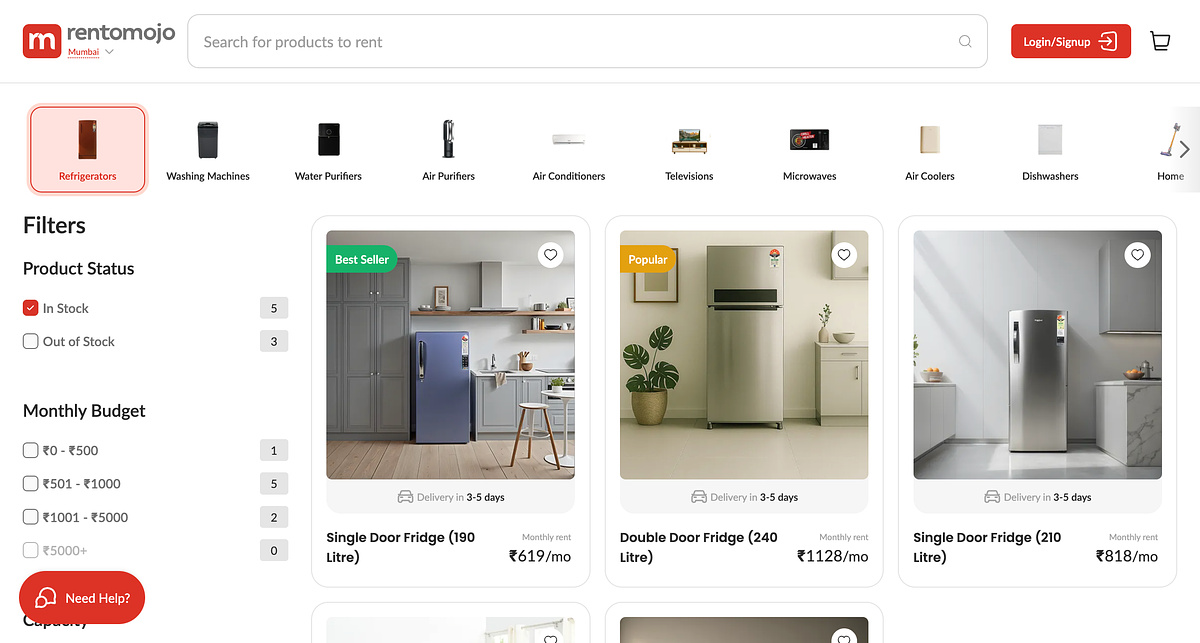
Fridge Rentals Surge, Chilling Traditional Appliance Sales in India
BENGALURU, KA – March 16, 2026 – A quiet revolution is humming in the kitchens of India’s largest cities. For a growing number of young, urban professionals, the quintessential home appliance—the refrigerator—is no longer a purchase, but a subscription. Companies like Rentomojo are reporting unprecedented demand for refrigerator rentals across metros like Bangalore, Delhi, Mumbai, and Hyderabad, signaling a profound shift in consumer behavior that is challenging the long-standing tradition of appliance ownership.
This trend is not merely about convenience; it's a calculated financial and lifestyle choice for a generation defined by mobility and economic prudence. As India's urban workforce navigates frequent job changes, relocations, and the complexities of shared living, the "asset-light" lifestyle is moving from a niche concept to a mainstream reality.
The New Economics of Urban Living
For young professionals in the 22–34 age bracket, the journey of setting up a new home in a bustling metropolis is fraught with financial hurdles. The upfront cost of a new refrigerator, which can range from ₹15,000 to ₹35,000, represents a significant capital outlay that competes with other pressing needs like rental deposits, transportation, and building an emergency fund.
Rental platforms have tapped into this financial sensitivity by dismantling the barrier of high initial investment. Instead of draining their savings on a depreciating asset, consumers can now pay a small refundable deposit and a manageable monthly fee. For a salaried individual earning between ₹50,000 and ₹80,000 per month, this model preserves precious liquidity, offering a buffer against the financial instability that can accompany career transitions or unexpected expenses.
The appeal extends far beyond the initial cost savings. The traditional ownership model is laden with hidden burdens that the rental economy systematically eliminates. Pain points such as coordinating delivery and installation in high-rise apartments, the logistical nightmare of transporting bulky appliances during a move, and the anxiety of post-warranty breakdowns are all absorbed by the rental service. If a refrigerator malfunctions, a service team is dispatched at no extra cost. If a tenant relocates between serviceable cities, the company manages the pickup and re-delivery. This bundling of services—maintenance, relocation, and even upgrades—transforms the refrigerator from a cumbersome possession into a seamless utility.
A Market Disruption on Ice
This shift in consumer preference is sending ripples through the Indian appliance market. Independent market analysis validates the trend, with the Indian electric appliance rental market, valued at over USD 220 million in 2025, projected to grow at a compound annual growth rate (CAGR) of over 10%. Some forecasts are even more aggressive, predicting a CAGR of over 17% to reach more than USD 460 million by 2030. Refrigerators are at the forefront of this boom, consistently accounting for the largest share of the rental appliance market, representing nearly 30% of the segment.
This surge poses a direct challenge to traditional appliance manufacturers and their retail partners, whose business models are predicated on one-time hardware sales and supplementary revenue from extended warranties. While the overall market for refrigerator sales in India is still expanding, growing from USD 5.34 billion in 2025 to a projected USD 9.26 billion by 2031, rental platforms are carving out a significant and rapidly growing niche.
The competitive landscape is heating up, with players like Furlenco and Cityfurnish also vying for the loyalty of India's urban millennials. These companies are not just renting out appliances; they are selling a service-led promise of flexibility and freedom from the hassles of ownership. This forces traditional retailers, who have long dominated through multi-brand stores and exclusive showrooms, to reconsider their value proposition in an era where "access" is increasingly valued over "ownership." Urban economists note that in high-mobility cities like Mumbai and Bangalore, where 11-month lease cycles are common, the asset-light consumption model is becoming a structural norm rather than a temporary fad.
The Subscription-Based Household
The success of refrigerator rentals is emblematic of a wider adoption of the sharing economy and subscription-based services in India. Consumers, already accustomed to subscribing to entertainment, transportation, and software, are now applying the same logic to essential household infrastructure. The model provides a pragmatic solution to the common dilemmas of urban life, particularly in shared housing.
For roommates, renting an appliance avoids the frequent and often awkward disputes over ownership and financial equity when one person moves out. The rental agreement is clear, and the asset belongs to a third party, simplifying the financial and logistical aspects of co-living. Furthermore, the ability to upgrade or downgrade an appliance as life circumstances change—from a single-door fridge for a bachelor to a double-door model for a young couple—offers a level of flexibility that purchasing simply cannot match.
For the rental companies, the model is built on recurring revenue and efficient asset management. While they face significant operational costs related to logistics, maintenance, and asset depreciation, these are factored into a sustainable subscription price. By refurbishing and redeploying units, they extend the lifecycle of each appliance, creating a business model that is not only economically viable but also aligns with principles of a circular economy.
The Future is Flexible
As digitalization deepens and logistical networks expand, the appliance rental trend is poised for further growth, with companies looking to penetrate Tier-2 and Tier-3 cities. The next frontier may involve the integration of smart appliances into rental fleets, offering customers AI-powered energy management and IoT connectivity as part of their subscription, appealing to a tech-savvy and environmentally conscious consumer base.
This evolution from a capital-heavy ownership model to an asset-light, service-led paradigm is redefining what it means to set up a home in modern India. It reflects a fundamental re-evaluation of value, where convenience, flexibility, and financial agility are prized above the traditional security of possession. For millions of young Indians navigating the dynamic landscape of urban life, the most rational choice is increasingly not what to buy, but what to subscribe to. In this new reality, avoiding depreciation, eliminating service anxiety, and preserving cash flow are the new pillars of smart living.