
- 33 new voyages added to the 2027 Mediterranean season
- Over 40 new ports of call, including Egypt
- Global luxury yacht market projected to reach $14 billion by 2032
Experts would likely conclude that Four Seasons Yachts is strategically differentiating itself through bespoke access and service excellence, but must address sustainability concerns to fully lead the luxury yacht market.
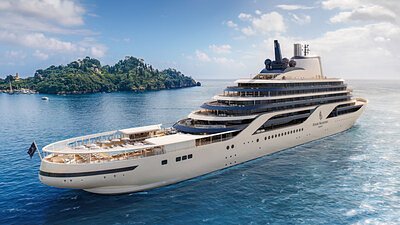
Four Seasons Yachts: Charting a Course Beyond Luxury into Crowded Seas
TORONTO, ON – November 24, 2025
When a titan of luxury hospitality like Four Seasons announces it’s taking to the seas, the industry takes notice. But the latest unveiling of Four Seasons Yachts' expanded 2027 Mediterranean season is more than just a new set of destinations; it's a meticulously crafted statement of intent. With 33 entirely new voyages, over 40 new ports of call, and a strategic push into Egypt, the brand is signaling a move to redefine the very meaning of ultra-luxury travel at sea. This isn’t merely about launching a yacht; it's about launching a new paradigm of bespoke exploration, a venture that seeks to translate its legendary on-land service ethos onto the waves of a fiercely competitive market.
The New Map of Exclusivity
At the heart of the 2027 announcement is a deliberate departure from the conventional cruise playbook. By ensuring no itinerary from its inaugural 2026 season is repeated, Four Seasons is directly addressing a core demand of the modern high-net-worth traveler: novelty and genuine discovery. The plan moves beyond the well-trodden paths of the Mediterranean to include quieter coastlines and culturally rich locales like Lisbon, Rimini, and the storied shores of Egypt—a marquee addition with three distinct voyages.
"Our 2027 Mediterranean collection reflects our belief that, today, exceptional travel is rooted in bespoke access," stated Ben Trodd, CEO of Four Seasons Yachts, in the company's official release. This focus on "access" is the venture's cornerstone. It manifests in several key ways. First, the introduction of more five-night voyages caters to a desire for deeper, more concentrated regional immersion without the commitment of a longer cruise. These shorter trips are designed to combine glamorous marina days with calls at intimate harbors accessible only to smaller vessels, a clear differentiator from larger luxury liners.
Second, the emphasis on 27 overnight stays in ports like Casablanca, Morocco, and Porto Cervo, Sardinia, directly challenges the fleeting nature of traditional cruising. It aligns with an emerging industry trend where, for the affluent, "lingering is the new luxury." Allowing guests to experience a destination's character after dusk, far from the daytime crowds, transforms a simple port call into a more profound cultural connection. This strategy isn't just about providing a floating five-star hotel; it's about curating a richer, more authentic travel narrative.
A Calculated Play in Crowded Waters
Four Seasons is entering a market that is both booming and intensely competitive. The global luxury yacht market is projected to swell to over $14 billion by 2032, fueled by a growing population of ultra-high-net-worth individuals seeking experiential purchases over material goods. However, the space is already populated by formidable players.
The Ritz-Carlton Yacht Collection, another hospitality-led brand, has also announced an ambitious 2027 season with 50 new voyages. Established small-ship lines like Silversea and Seabourn have long cultivated loyal followings with their own brands of all-inclusive luxury. Meanwhile, newcomer Explora Journeys is making waves with its focus on a "gentler pace and deeper immersion," debuting its fourth vessel in 2027.
In this context, Four Seasons' strategy appears to be one of hyper-differentiation through service and synergy. The joint venture—combining its own hospitality expertise with yachting operator Marc-Henry Cruise Holdings and master shipbuilder Fincantieri—is designed to deliver an uncompromisingly luxurious product. The first vessel, Four Seasons I, promises an all-suite, residential-style experience, with features like a nearly 10,000-square-foot Funnel Suite and a unique transverse marina. The plan to seamlessly integrate voyages with stays at its properties, such as the Four Seasons Hotel Alexandria, further leverages its powerful brand ecosystem, creating a holistic land-and-sea journey that competitors cannot easily replicate.
The Ripple Effect on Shore
The expansion's impact extends far beyond the yacht's railings. The introduction of high-end, low-volume tourism to over 40 new destinations carries significant economic and cultural implications. For ports in Egypt, Morocco, and Turkey, the arrival of a Four Seasons yacht represents an influx of the world's wealthiest travelers. This can stimulate local economies, supporting high-end tour operators, artisans, and service providers while potentially spurring investment in port infrastructure.
The brand's stated goal of fostering "meaningful cultural connection" suggests an awareness of the responsibility that comes with this access. The challenge for any luxury operator entering less-frequented locales is to ensure that its presence enriches rather than commodifies the local culture. Success will be measured not just by guest satisfaction, but by the ability to build sustainable, respectful relationships with these communities, ensuring the “untapped charm” they seek to showcase remains authentic for years to come.
The Unspoken Voyage: Navigating Sustainability
While the 2027 announcement paints a vivid picture of luxury and exploration, it remains notably quiet on one of the most critical issues facing the maritime industry: environmental sustainability. In an era of heightened eco-consciousness, especially among affluent consumers, a brand's environmental stewardship is no longer a footnote but a core tenet of its value proposition.
Competitors are already navigating these waters with clear intent. The Ritz-Carlton Yacht Collection's new vessels will use liquefied natural gas (LNG) to significantly cut emissions. Explora Journeys' ships are RINA Dolphin-certified for low underwater noise and have banned single-use plastics. Silversea's newest ship, Silver Nova, is designed for local emission-free port operations using fuel cells and batteries. These initiatives are responses to both consumer demand and increasingly stringent regulations, like the International Maritime Organization's goal of achieving net-zero greenhouse gas emissions by 2050, with new fuel standards set to begin in 2027.
As Four Seasons Yachts prepares for its 2026 inaugural voyage, the question of its environmental strategy looms large. To truly lead the next generation of luxury travel, its commitment to protecting the pristine waters and coastlines it plans to showcase must be as robust and transparent as its legendary commitment to service. For a brand built on anticipating the needs of its guests, proving its dedication to the planet may be its most important voyage yet.