
- 4 million acres of national forest land urgently need replanting due to wildfires.
- 1 billion trees required to be planted in the next decade under the Forest Service's national strategy.
- 4.28 million acres of hazardous fuels treated in fiscal year 2024 under the Wildfire Crisis Strategy.
Experts agree that unprecedented collaboration between public agencies and nonprofits is essential to address the reforestation crisis driven by escalating wildfires and deforestation.
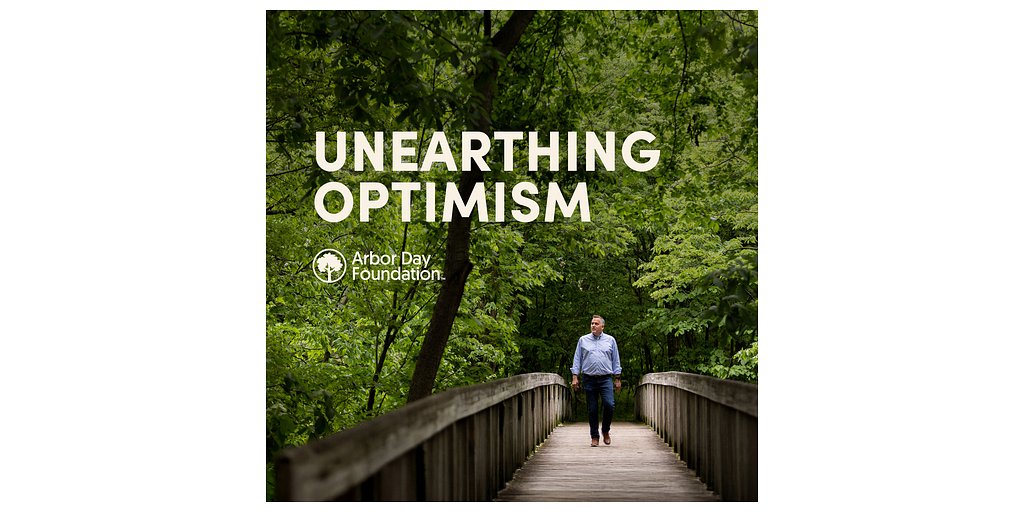
Forest Service Chief Charts Reforestation Path on Arbor Day Foundation Podcast
LINCOLN, NE – May 18, 2026 – In a significant convergence of public policy and nonprofit action, U.S. Forest Service Chief Tom Schultz recently joined the Arbor Day Foundation's podcast, “Unearthing Optimism,” to discuss the formidable environmental challenges facing America's forests. The conversation with host and foundation CEO Dan Lambe highlights a growing consensus: tackling the escalating crises of wildfire and deforestation requires unprecedented collaboration.
The episode serves as more than just a discussion; it represents a public-facing dialogue between two of the nation's most influential entities in forestry. As the 21st Chief of the U.S. Forest Service, Schultz helms the agency responsible for managing 193 million acres of national forests and grasslands. The Arbor Day Foundation, as the world's largest tree-planting nonprofit, has facilitated the planting of over half a billion trees since 1972. Their joint appearance underscores a shared mission to restore and protect these vital landscapes.
A New Narrative for Environmental Stewardship
The podcast, “Unearthing Optimism,” has carved a unique niche in environmental media by deliberately shifting the narrative away from despair and toward actionable hope. Featuring influential figures from science, culture, and policy—including past guests like Bill Nye and actor Rainn Wilson—the series aims to inspire listeners by focusing on solutions and the power of collective effort.
The episode with Chief Schultz fits squarely within this mission. In it, he and Lambe explore the immense task of replanting forests after devastating wildfires and the critical role of teamwork in stewarding the nation's natural heritage.
“Not only is Chief Schultz incredibly knowledgeable, he’s also deeply committed to service, stewardship and teamwork. Listeners are going to come away from this episode with a new appreciation for the people and principles shaping our country’s forestlands,” said Lambe in a statement. He emphasized the podcast's role as a source of encouragement during difficult times. “In a time when it’s easy to feel overcome by challenges, this podcast is a way for people to embrace hope.”
This approach reflects a broader strategy in environmental communication: engaging the public not just with the scale of the problem, but with the tangible progress being made. By providing a platform for leaders like Schultz to discuss both challenges and strategies, the foundation hopes to galvanize a wider audience into becoming active participants in conservation. The podcast is available on all major streaming platforms, including Spotify, Apple Podcasts, and Amazon Music, ensuring its message of pragmatic optimism reaches a broad demographic.
Confronting the Wildfire Crisis Head-On
The conversation on the podcast is anchored in a stark reality: the U.S. Forest Service is facing a monumental reforestation challenge, primarily driven by the increasing frequency and severity of wildfires. According to agency data, a backlog of over 4 million acres of national forest land is in urgent need of replanting. More than half of this staggering figure is the direct result of high-severity fires that scorched the West in 2020 and 2021 alone.
These megafires burn so intensely that they destroy the natural seed sources required for a forest to regenerate on its own. Without intervention, these charred landscapes are at high risk of converting to non-forest ecosystems like shrublands or grasslands. Such a conversion has cascading consequences, impacting water quality and supply for downstream communities, destroying wildlife habitats, and reducing the land's capacity to sequester carbon.
The problem is compounded by a host of operational and ecological hurdles. The agency faces a national shortage of tree seeds and a lack of nursery capacity to grow the hundreds of millions of seedlings required. Furthermore, there is a scarcity of trained workers to conduct the labor-intensive tasks of planting and subsequent monitoring to ensure the young trees survive. These logistical bottlenecks are a key focus of the Forest Service's current strategy, which Chief Schultz is tasked with implementing. The podcast discussion provides a crucial public forum to explain the complexity of post-fire recovery and the long-term vision required to restore these ecosystems.
A "Back-to-Basics" Approach to Forest Management
Chief Tom Schultz brings a unique perspective to these challenges. Appointed as the 21st Chief, he is the first to lead the agency without having previously worked within its ranks. His diverse background includes service as an Air Force officer, director of Idaho's Department of Lands, and a vice president in the private timber industry. This blend of military, state government, and private-sector experience informs his "back-to-basics" approach to managing public lands.
Since taking the helm, Schultz has prioritized several core areas: enhancing wildfire readiness, accelerating active forest management, and strengthening partnerships. His focus on "active management" includes thinning overgrown forests to reduce fuel loads, removing dead and dying trees that can fuel fires, and streamlining processes to expedite reforestation efforts. This pragmatic strategy aims to make forests more resilient to disturbances like fire, drought, and insect infestations before they occur.
His leadership is central to the implementation of the Forest Service's 10-year Wildfire Crisis Strategy, a science-based plan launched in 2022 to dramatically increase the scale of forest health treatments in high-risk areas. In fiscal year 2024, the agency and its partners treated 4.28 million acres of hazardous fuels, demonstrating a commitment to proactive, landscape-scale restoration. Schultz's appearance on the podcast allows him to communicate this vision directly to the public, building understanding and support for the agency's vital, and often challenging, work.
The Power of Partnership in a Greener Future
Perhaps the most resonant theme of the podcast episode is the indispensable role of partnerships. Both the Forest Service and the Arbor Day Foundation recognize that no single entity can solve the complex environmental issues at hand. The scale of the reforestation backlog alone—requiring the planting of over one billion trees in the next decade under the agency's national strategy—necessitates an "all-hands-on-deck" approach.
The Arbor Day Foundation's entire operational model is built on collaboration. Its long-standing partnership with the Forest Service and the National Association of State Foresters on the Tree City USA program has helped foster community-level urban forestry for decades. The foundation also leads the Alliance for Community Trees, a network of local nonprofits, and works with over 250 corporate partners to fund and implement tree-planting projects worldwide.
This collaborative ethos aligns perfectly with the Forest Service's current direction. The REPLANT Act, which provides critical funding to address the reforestation backlog, and the broader Reforestation Strategy both explicitly call for leveraging partnerships to expand seed collection, increase nursery production, and get more trees in the ground. By joining forces, the federal government's scientific expertise and land management authority can be powerfully combined with the nonprofit sector's ability to mobilize volunteers, raise private funds, and engage communities.
This synergy between public agencies and private organizations, as highlighted in the “Unearthing Optimism” episode, represents the most promising path forward for America's forests. It is a model where shared stewardship and collective action work to heal landscapes, build resilience, and cultivate a more hopeful future, one tree at a time.