
- $58 billion: Annual cost of food waste in Canada, representing nearly half of all food produced.
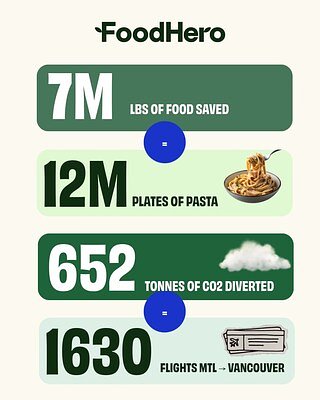
- 7 million pounds: Amount of food diverted from landfills by FoodHero in 2025.
- 23%: Portion of avoidable food waste linked to consumer confusion over 'best before' dates.
Experts agree that technology-driven solutions like FoodHero are crucial in addressing Canada's food waste crisis, offering both economic and environmental benefits while bridging the gap between surplus food and consumer demand.
FoodHero's Tech Tackles Canada's $58 Billion Food Waste Problem
MONTREAL, QC – March 16, 2026 – As Canadian households grapple with soaring food prices, a Montreal-based technology company has announced a significant milestone in the fight against a parallel crisis: food waste. In its 2025 Impact Report released today, FoodHero revealed that its platform successfully diverted over seven million pounds of perfectly good food from landfills last year, translating to both environmental savings and much-needed relief for consumer wallets.
The achievement casts a spotlight on a growing movement that uses technology to connect surplus food with savvy consumers, tackling a problem of staggering proportions. The report underscores the stark paradox of Canada's food system: while many struggle with grocery bills, the country wastes nearly half of the food it produces.
A Problem of Scale: Canada's $58 Billion Paradox
The data surrounding food waste in Canada is sobering. According to recent findings from organizations like Second Harvest, nearly 50% of all food produced for the Canadian market is lost or wasted. Of that, 41% is considered avoidable, representing a staggering $58 billion in lost value annually. The environmental toll is equally immense, with discarded food generating approximately 25.7 million metric tonnes of CO₂ equivalent each year—the same carbon footprint as 285 million flights around the globe.
This national issue has a direct impact at the household level. On average, a Canadian family throws away more than $1,300 worth of food each year, a figure that resonates painfully as over half of Canadians report concern over rising food costs. It is the equivalent of tossing one full bag of groceries into the bin every week.
"Food waste is one of the most striking paradoxes in our food system," said Renaud LeBlanc, President of FoodHero, in a statement accompanying the report. "Even as food prices rise and food insecurity increases, large quantities of perfectly edible food are still being discarded. FoodHero shows that it's possible to turn these surpluses into real value for families, retailers and the environment."
The 'Best Before' Battle and Consumer Confusion
A significant driver of this waste is a simple misunderstanding. Research shows that 23% of all avoidable food waste is linked to consumer confusion over "best before" dates. Many shoppers mistakenly interpret these labels, which indicate peak quality, as rigid expiration dates related to safety. Consequently, vast quantities of safe, edible food are prematurely discarded.
"Best before" dates, regulated by the Canadian Food Inspection Agency (CFIA), are about freshness, taste, and nutritional value, not safety, for most unopened products. In contrast, "expiration" dates are used on a much smaller category of items, like meal replacements and nutritional supplements, and indicate when the product should no longer be consumed.
National campaigns like Love Food Hate Waste Canada have been working to educate the public on this distinction, encouraging consumers to use their senses to judge a food's quality rather than relying solely on a date. However, the persistence of the problem highlights the need for multifaceted solutions. Platforms like FoodHero are playing an implicit educational role by creating a market for items nearing or just past their "best before" date, demonstrating their continued value and safety.
A Tech-Driven Solution for Pockets and Planet
At its core, FoodHero offers a simple, technology-driven solution. The company's mobile application connects shoppers with over 1,100 participating grocery stores across the country, allowing them to purchase surplus food items at discounts ranging from 25% to 60%. These are typically products approaching their "best before" date, produce that is cosmetically imperfect, or items from overstocked inventory.
For retailers, the platform provides a powerful tool to combat "shrink"—the industry term for inventory lost to spoilage or damage. Instead of discarding surplus food and absorbing a total loss, stores can generate revenue, reduce disposal costs, and attract customers who may make additional purchases while in-store. The system is designed for easy integration, allowing staff to quickly scan and upload items to the app. This streamlined process was key to a major 2024 partnership with Empire Company, which brought the service to over 1,000 of its retail locations nationwide and set the stage for the impact seen in 2025.
For consumers, the app uses geolocation to show nearby deals on a wide range of products, including meat, fish, dairy, baked goods, and produce. By purchasing these items, shoppers not only save money but also participate directly in reducing the environmental footprint of their groceries. FoodHero quantifies this impact, estimating that the seven million pounds of food saved in 2025 prevented approximately 652 metric tons of CO2 equivalents from entering the atmosphere.
Navigating a Crowded Field of Food Rescuers
FoodHero is not alone in the growing field of food waste technology. It operates in a competitive landscape alongside other popular apps like Too Good To Go, which offers "surprise bags" of surplus food from restaurants and stores, and Flashfood, which also partners with grocers to sell discounted items. The emergence of multiple players in this space signals a significant market shift and growing consumer demand for sustainable and affordable food options.
While these commercial platforms focus on direct-to-consumer sales, they complement the long-standing efforts of non-profit food rescue organizations like Second Harvest. These organizations typically collect surplus food from all levels of the supply chain—from farms to manufacturers and retailers—and redistribute it to charities and social programs to fight food insecurity.
The dual existence of for-profit apps and non-profit rescue operations illustrates a maturing ecosystem for tackling food waste. While food banks address immediate hunger, platforms like FoodHero create a self-sustaining commercial incentive for retailers to reduce waste and offer an accessible way for the general public to contribute to the solution. This alignment with both economic and environmental goals is increasingly resonating with policymakers, who see the circular economy as a critical component of Canada's strategy to reduce greenhouse gas emissions and build a more resilient food system. The success reported by FoodHero suggests this collective movement is not just a passing trend, but a fundamental rethinking of how we value food.