
- $25,000 VISTA Award granted to University of Miami for algae-based carbon-negative concrete research
- $23 billion Everglades restoration initiative to enhance climate resilience
- $83 million granted by VoLo Foundation since 2014, with $27 million in 2025 alone for climate initiatives
Experts agree that Florida's innovative, nature-powered solutions—such as algae-based concrete and Everglades restoration—are critical for climate resilience and demonstrate the power of science-driven collaboration in addressing environmental challenges.
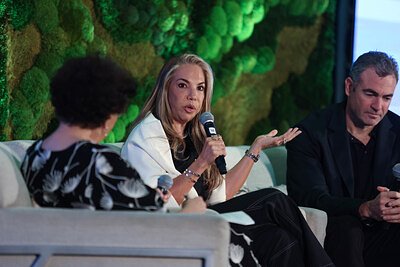
Florida's Climate Fight: From Algae Concrete to Everglades Restoration
ORLANDO, Fla. – March 19, 2026 – While the global climate conversation often focuses on daunting challenges, a recent gathering in Orlando shifted the narrative toward tangible, science-driven solutions. The VoLo Foundation's Climate Correction 2026 conference, held March 10-11, brought together a dynamic mix of 292 scientists, entrepreneurs, and policymakers to explore a powerful theme: "Nature Powered Solutions." The event served as a critical forum, moving beyond theory to showcase practical innovations and collaborative strategies poised to redefine Florida's environmental future.
Among the many discussions, a groundbreaking project from the University of Miami captured the essence of the conference's forward-looking spirit. A student team, recipients of the prestigious VISTA Award, is developing a method to create carbon-negative concrete using Florida-native algae. This innovation, and others like it, underscored a central message of hope and action, demonstrating how human ingenuity, when paired with nature's own systems, can forge a path toward resilience.
Paving a Greener Future with Algae
The highlight of the conference's focus on innovation was the presentation of the VISTA Award, a $25,000 grant from the VoLo Foundation supporting graduate student research. This year's award went to a University of Miami team for its project, "Functionalization and Pre-Carbonation of Florida-Native Algae Biochar for Carbon-Negative Cementitious Composites." This research directly confronts one of the world's largest carbon culprits: the cement industry, responsible for an estimated 8% of global CO2 emissions.
The project's novelty lies in its dual-pronged approach. First, the team converts locally sourced algae into biochar, a stable, charcoal-like substance. This biochar is then used to replace a portion of the traditional cement in a concrete mix. Crucially, the researchers are refining a process of pre-carbonation, which enhances the biochar's chemical reactivity and allows it to bond more effectively within the concrete, maintaining structural integrity. Second, the team is exploring "carbon curing," a process where the finished concrete is hardened using captured CO2 gas. The concrete absorbs and permanently mineralizes the carbon dioxide, effectively locking it away and transforming a carbon-emitting product into a carbon sink. This research aligns with a growing global trend in material science, where biochar-amended composites are seen as a key to decarbonizing the construction industry, with some studies suggesting potential emissions reductions of up to 80%.
With the VISTA Award grant, the University of Miami team plans to upgrade its equipment to gain more precise control over the biochar production process, a critical step toward scaling the technology. The ultimate goal is to patent their methods and partner with industry leaders, potentially revolutionizing how buildings, bridges, and infrastructure are constructed in Florida and beyond.
Nature as Infrastructure: Reviving Florida's Ecosystems
A central theme of Climate Correction 2026 was the profound idea of treating nature itself as a form of critical infrastructure. Sessions like "Greening the City" explored how integrating natural systems into urban environments can combat extreme heat, improve air quality, and manage stormwater—all while addressing historical environmental inequities where underserved communities often lack access to green spaces.
No project exemplifies this theme more than the ongoing restoration of the Everglades. Experts at the conference emphasized that this massive, multi-billion-dollar effort is not merely an environmental project but a cornerstone of Florida's long-term climate resilience and economic stability. The $23 billion state-federal initiative aims to reverse decades of damage by restoring the natural flow of water, revitalizing critical habitats that serve as natural buffers against storms, and protecting the water supply for millions of Floridians. Despite facing persistent challenges from agricultural runoff and urban encroachment, the project has seen record bipartisan funding in recent years, including a $3.5 billion commitment from the state announced in 2023. Healthy wetlands, speakers stressed, improve water quality, protect coastal communities, and support the tourism and fishing industries that are vital to the state's economy.
Beyond the Everglades, cities across the state are adopting nature-based solutions. Tampa's "Sponge City" initiative uses a network of rain gardens, permeable pavements, and restored wetlands to absorb and manage rainwater, mitigating floods and filtering pollutants. In South Florida, communities are aggressively expanding their tree canopies and investing in green roofs to combat the urban heat island effect, demonstrating a growing recognition that working with nature, rather than against it, yields significant and lasting benefits.
A Coalition for Climate Action
The conference repeatedly drove home the point that no single entity can solve the climate crisis alone. Throughout the two-day event, speakers from diverse fields emphasized that meaningful progress requires deep and sustained collaboration between scientists, business leaders, government agencies, and local communities. Case studies from organizations like 4Ocean and Rock The Ocean, which partners with the Tortuga Music Festival, highlighted how businesses and even cultural events can serve as powerful platforms for mobilizing public awareness and generating measurable environmental impact.
Effective communication was another key focus. Television host Zay Harding, whose CBS series The Visioneers with Zay Harding is produced with VoLo Foundation as its exclusive partner, spoke on the importance of storytelling. The series targets a teenage audience, showcasing real-world "eco-heroes" and their innovations to inspire the next generation. By making complex solutions accessible and exciting, the show aims to cut through climate fatigue and empower young people to act.
This sentiment was echoed in the closing remarks by Thais Lopez Vogel, co-founder of the VoLo Foundation. She stressed that data and science are essential but insufficient on their own. "When you touch hearts and emotions, that's when people act," she stated, urging attendees to find their own role in the larger movement. "You don't have to do it all, but you have to do something." It is this spirit of shared responsibility that the foundation seeks to cultivate. Since its inception in 2014, the private, founder-funded organization has granted over $83 million to various projects, with climate initiatives being its number one priority. In 2025 alone, it distributed over $27 million, with 37% dedicated to environmental awareness, research, and mitigation, cementing its role as a significant force for accelerating science-based solutions in Florida and across the globe. The conference underscored that each innovative project, restored wetland, and collaborative partnership is a vital piece of a much larger collective effort to build a sustainable world.