
- 20-qubit quantum computer: Finland's new Aalto Q20 is now operational, marking the fourth such system deployed by IQM in the country.
- 3,000 quantum-related jobs needed by 2035: Finland faces a talent shortage, with urgent demand for skilled professionals.
- $600 million raised by IQM: The company has secured significant funding, including a $320 million Series B round in 2025.
Experts agree that Finland's strategic investment in quantum technology, combined with its robust ecosystem of industry and academia, positions the country as a global leader in the quantum computing race.
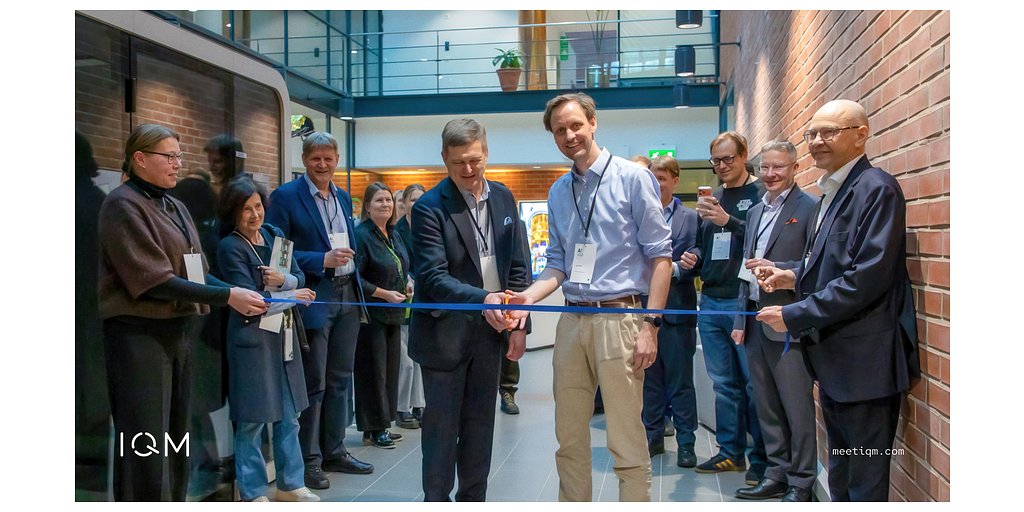
Finland Activates 20-Qubit Quantum Computer to Secure Global Tech Lead
ESPOO, Finland – March 11, 2026 – In a move that reinforces Finland's position at the vanguard of the global quantum race, IQM Quantum Computers has announced the successful launch of a new 20-qubit superconducting quantum computer. The system, named Aalto Q20, is now fully operational at Aalto University, marking the fourth such machine deployed by the company in its home country and a significant milestone for the nation’s burgeoning technology ecosystem.
This latest installation is more than just a technological achievement; it represents a critical piece of a national strategy designed to build a world-leading quantum industry. The deployment solidifies Finland’s reputation as a formidable player in deep-tech, providing its researchers and students with direct access to powerful tools that are still a rarity in most parts of the world.
Finland's Quantum Ascent: A National Strategy in Action
Finland’s rise as a quantum powerhouse is no accident. It is the result of decades of sustained investment in quantum science and a highly coordinated national strategy. A December 2025 study by the European Centre for International Political Economy (ECIPE) recognized the Greater Helsinki area as the world's second-leading quantum technology cluster, citing its mature ecosystem and intense collaboration between industry and academia.
This leadership is also reflected in intellectual property. According to data from the European Patent Office, Finland ranks fourth in Europe for quantum-related patent applications, with domestic firms like IQM and institutions such as Aalto University and the VTT Technical Research Centre of Finland being prolific contributors. This activity is backed by a clear government vision, outlined in the national Quantum Technology Strategy for 2025–2035, which aims to cultivate quantum technology into a major new industry for the nation.
IQM’s strategy of deploying on-premises systems aligns perfectly with this national goal. By enabling institutions to own and operate their own quantum computers, the model ensures that valuable data, intellectual property, and expertise remain within the local ecosystem. “When institutions like Aalto University own their quantum computers, it means their data, their IP, and their expertise stay theirs,” said Jan Goetz, CEO and Co-founder of IQM Quantum Computers. “That’s not a feature — that’s a strategic posture to enable world-class research and education. Aalto Q20 is Finland’s fourth proof point that IQM´s strategy to empower customers is a winning strategy.”
The Quantum Classroom: Forging a New Generation of Talent
Beyond national prestige and research capabilities, the Aalto Q20 serves a crucial function: addressing a looming talent shortage. A recent report from InstituteQ, Finland's national quantum institute, projects that the country will need to fill nearly 3,000 new quantum-related jobs by 2035 to maintain its competitive edge. The current educational pipeline is insufficient to meet this demand, creating an urgent need for advanced training programs.
The Aalto Q20 is a direct answer to this challenge. Aalto University plans to integrate the quantum computer directly into its curriculum, providing students in its quantum technology major with invaluable hands-on experience. This practical access is a significant differentiator for the university's program.
“Q20 allows Aalto to have its own computer for researchers to easily access and students in the quantum technology major will get to use it as part of their studies, which is rare even on a global scale,” explained Professor Tapio Ala-Nissilä of the Department of Applied Physics at Aalto University. This approach moves quantum education from the purely theoretical to the practical, preparing a workforce capable of building, programming, and applying quantum technologies.
This initiative is part of a broader, coordinated effort. InstituteQ, which houses the Finnish Quantum Flagship (FQF) project, is working to expand quantum education and training across the country. With dedicated Bachelor's and Master's degrees already in place and plans for dozens of new quantum doctorate positions, Finland is systematically building the human capital required to power its quantum future.
A Hybrid Future: Bridging Quantum with Supercomputing Power
The Aalto Q20’s impact will extend far beyond the university's campus, thanks to a pioneering integration with one of Europe’s most powerful supercomputers. In collaboration with CSC – IT Center for Science, Aalto University will connect the quantum computer to LUMI, a pre-exascale supercomputer located in Kajaani, Finland, and part of the EuroHPC Joint Undertaking (EuroHPC JU) network.
This integration will create a powerful hybrid quantum-classical computing platform. Such systems are believed to be key to unlocking quantum advantage for practical problems, allowing researchers to assign complex calculations to the quantum processor while leveraging the vast power of a classical supercomputer for other parts of the workflow. This hybrid approach is essential for tackling grand challenges in fields like materials science, drug discovery, and financial modeling.
The initiative is a cornerstone of a wider European strategy. The EuroHPC JU is actively deploying a portfolio of quantum computers across the continent, integrating them with its supercomputing centers to provide a federated, world-class infrastructure for European researchers and industries. IQM is also a key partner in this effort, supplying quantum systems for integration with other EuroHPC supercomputers, including Karolina in the Czech Republic. This interconnected network will give a broad community of users early access to cutting-edge quantum resources within a trusted European framework.
IQM's On-Premises Strategy and Market Validation
The Aalto Q20 deployment also highlights the commercial viability of IQM's unique market strategy. While many competitors focus on providing access through the cloud, IQM specializes in building and delivering full-stack, on-premises quantum computers. This has resonated with governments, research centers, and universities that prioritize data sovereignty and the ability to conduct deep hardware-level research.
With over 21 systems delivered to 13 customers, the company has demonstrated a proven track record of deploying scalable hardware. This success has been backed by significant financial confidence, with IQM having raised a total of $600 million in funding, including a landmark $320 million Series B round in 2025. The company’s explosive growth was further recognized when it ranked third in Deloitte's EMEA Technology Fast 500, boasting a revenue increase of over 22,000% since its founding in 2018.
The installation at Aalto University is therefore a powerful symbol of this convergence: a commercially successful company delivering on a national strategic vision, empowering a leading academic institution to train the next generation of innovators, and connecting it all to a pan-European network to push the boundaries of science.
Topics & Related
Quantum Computing
Technology
Related Company Pulse