
- FDA granted 510(k) clearance to PhenoMATRIX®, designating it as a Class II medical device.
- AI software automates analysis of bacterial cultures, handling common media types like blood-based, chocolate, and MacConkey agars.
- System pre-sorts plates, potentially allowing labs to bypass thousands of non-significant cultures daily.
Experts view this FDA clearance as a major milestone in AI-driven medical diagnostics, validating the technology's safety and effectiveness while emphasizing the importance of human-AI collaboration in clinical microbiology.
FDA Clears AI Software to Revolutionize US Microbiology Labs
MURRIETA, Calif. – February 17, 2026 – The landscape of clinical microbiology in the United States is set for a significant transformation following the FDA's decision to grant 510(k) clearance to PhenoMATRIX®, an advanced artificial intelligence software developed by Copan Group. The clearance designates the software as a Class II medical device, formally ushering in a new era of AI-powered automation for American laboratories.
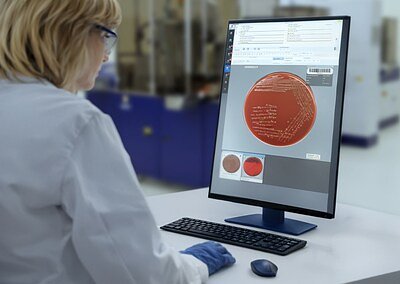
PhenoMATRIX® works in concert with Copan's established WASPLab® full laboratory automation system. It functions as an in vitro diagnostic tool that uses AI to automatically analyze and sort high-resolution digital images of bacterial cultures grown on agar plates. By applying a sophisticated combination of AI algorithms and laboratory-defined rules, the software assists in streamlining one of the most time-consuming and manual aspects of clinical microbiology, all while ensuring that trained professionals retain final oversight.
"This clearance represents a major milestone for Copan and microbiology laboratories in the United States," said Fabrizio Mazzocchi, CEO of Copan Diagnostics, in a statement. "PhenoMATRIX builds on years of scientific development and real-world data to support laboratories and the critical work they do in patient care."
A New Standard for Automated Analysis
The FDA's clearance establishes a broad intended use for PhenoMATRIX®, a crucial distinction that sets it apart from more limited, single-application algorithms. The software is now cleared for use with several of the most common culture media types found in labs, including blood-based, chocolate, and MacConkey agars, as well as CHROMagar orientation plates.
This broad scope allows the AI to perform both semi-quantitative and qualitative analysis across a wide range of common samples. Its core functions include detecting the presence of microbial growth, estimating the number of colonies, and differentiating bacterial isolates based on their visible, phenotypic characteristics like color and morphology. For a busy laboratory processing hundreds or thousands of plates daily, this capability promises a dramatic increase in efficiency.
While PhenoMATRIX® has been deployed in laboratories globally for years, this U.S. clearance formalizes its role as an assistive diagnostic tool. The workflow in the United States mandates that a trained microbiologist performs the final image assessment and makes the ultimate diagnostic decision. This model of human-AI collaboration is becoming a benchmark for the responsible integration of artificial intelligence in medicine, leveraging machine efficiency to handle high-volume, repetitive tasks while reserving expert human judgment for complex analysis and critical interpretation.
Navigating the Competitive and Regulatory Landscape
The FDA's green light for PhenoMATRIX® is not just a victory for Copan; it's a significant marker in the broader trend of AI integration in medical diagnostics. Securing a 510(k) clearance for a Class II AI device signifies that the technology has demonstrated substantial equivalence to existing, legally marketed devices, a rigorous process that validates its safety and effectiveness for its intended use.
This clearance positions Copan as a formidable player in the growing market for automated microbiology solutions. The field includes competitors like Clever Culture Systems, whose APAS® Independence instrument also uses AI for automated plate assessment and is distributed by Thermo Fisher Scientific. The increasing presence of such FDA-cleared AI systems indicates a clear market shift toward intelligent automation to address challenges like staffing shortages, rising testing volumes, and the demand for faster turnaround times.
Industry experts note that the integration of AI is expected to revolutionize laboratory workflows throughout 2026 and beyond. By automating the sorting of negative or non-significant cultures, systems like PhenoMATRIX® allow highly skilled technologists to bypass thousands of plates and focus their expertise where it is needed most: on the complex positive cultures that are critical for patient diagnosis and treatment. This efficiency can lead to significant operational cost savings and a tangible return on investment for labs that adopt the technology.
Empowering the Modern Laboratory Professional
Perhaps the most profound impact of PhenoMATRIX® will be on the daily work of laboratory professionals. Rather than replacing human experts, the technology acts as a powerful digital assistant, shouldering the burden of monotonous tasks and augmenting the capabilities of the microbiologist.
The system's ability to pre-sort and triage plates standardizes an often subjective process, ensuring consistency across different shifts and personnel. By presenting organized, pre-analyzed data, the AI empowers technicians to make faster, more informed decisions. This human-in-the-loop approach helps mitigate concerns about the "black box" nature of some AI, as the final diagnostic authority remains firmly in human hands.
However, the adoption of such advanced technology is not without challenges. Laboratories must invest in the necessary infrastructure, and there can be initial resistance from staff accustomed to traditional methods. Effective implementation requires comprehensive training to bridge any knowledge gaps and build trust in the AI's analytical capabilities. Furthermore, ensuring seamless integration with existing Laboratory Information Systems (LIS) is critical for maintaining data integrity and a smooth workflow.
"This achievement is the result of an extraordinary collaborative effort," noted Mario Savarese, CEO of Copan's automation division, Copan WASP. "Our Regulatory, R&D, Scientific Affairs, Quality, and Commercial teams worked tirelessly to support this submission. This clearance is a testament to their dedication and Copan's long-term vision."
That vision extends well into the future. Copan has publicly stated its commitment to pursuing further FDA submissions to expand PhenoMATRIX's capabilities to additional applications and plate types. This strategy aligns with broader healthcare trends, where AI is increasingly seen as an indispensable tool for enhancing diagnostic precision, predicting disease outbreaks, and enabling personalized medicine. As AI systems become more sophisticated and trusted, they hold the promise of not only improving laboratory efficiency but also fundamentally advancing the quality and speed of patient care.