
- $47M Series A Funding: Fathom Therapeutics secured $47 million in Series A financing to advance its drug design platform.
- 10,000x Faster Simulations: Microcosmos platform accelerates protein behavior simulations by a factor of 10,000 without sacrificing accuracy.
- 85% Undruggable Proteome: Up to 85% of the human proteome is considered undruggable by conventional methods, a challenge Fathom aims to address.
Experts view Fathom's quantum physics and AI-driven approach as a groundbreaking shift in drug discovery, with the potential to unlock previously untreatable diseases by modeling dynamic protein behavior in living cells.
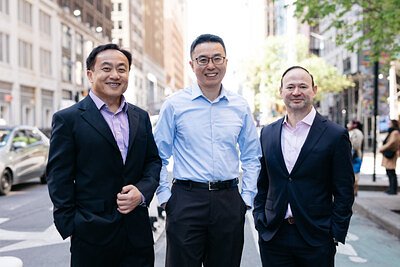
Fathom Nets $47M to Model Living Cells and Drug the 'Undruggable'
NEW YORK, NY – April 27, 2026 – Fathom Therapeutics, a drug design company aiming to solve one of biology's most complex challenges, has secured an oversubscribed $47 million Series A financing round to advance its novel approach of using quantum physics and artificial intelligence to create medicines for previously untreatable diseases.
The financing, led by storied venture capital firm Sutter Hill Ventures, marks a significant vote of confidence in the New York-based company, formerly known as Atommap Corp. The round saw participation from Chemistry, Alexandria Venture Investments, and Empire State Development's NY Ventures. The capital infusion will fuel the expansion of Fathom's unique drug design engine, which simulates the dynamic, real-time behavior of proteins inside living cells to unlock new therapeutic targets.
"Current drug discovery efforts are limited by reliance on static structures of isolated proteins," said Huafeng Xu, PhD, Co-Founder and CEO of Fathom Therapeutics, in a statement. "Microcosmos is a world model of drugs in living cells that surpasses these limitations by translating accurate quantum mechanical calculations to measurable cellular outcomes."
The Quantum Engine of Drug Discovery
At the heart of Fathom's strategy is Microcosmos, a proprietary computational platform that represents a fundamental shift from traditional drug discovery methods. For decades, scientists have largely relied on static, snapshot-like images of proteins to design drugs. This is akin to designing a key for a lock by only looking at a single photograph of it. Fathom argues that proteins are not static; they are constantly moving, twisting, and changing shape within the complex, crowded environment of a cell.
Microcosmos is designed to capture this dynamic reality. By integrating principles of quantum chemistry with proprietary AI algorithms, the platform simulates protein motion at atomic resolution. The company reports its algorithms can accelerate these complex simulations by a factor of 10,000 without sacrificing physical accuracy. This creates a high-fidelity "movie" of protein behavior, revealing transient pockets and surfaces that can be targeted by small molecule drugs—sites that are invisible in static models.
The potential of this approach has already been demonstrated. Fathom's discovery team used Microcosmos to tackle a notoriously "undruggable" target, a class of proteins that lack the well-defined binding pockets required for conventional drug design. Within just six weeks, the platform generated novel, potent, and highly selective drug candidates. These molecules, which are a type of protein degrader, are now being optimized for clinical advancement to address what the company describes as a major unmet medical need.
"We started Fathom to build a flywheel for new small molecule medicines that previously seemed impossible," Dr. Xu added. The company's founding team, which includes Chief Technology Officer Yujie Wu, PhD, and Chief Computational Scientist Jesus Izaguirre, PhD, are pioneers in the field, with roots in developing the Anton supercomputer and some of the industry's most widely used software for predicting protein-drug interactions at firms like Schrödinger and Roivant Discovery.
Backing a New Frontier in Medicine
The substantial Series A round is not just a financial milestone but a powerful endorsement from investors with a deep history of backing disruptive technologies. Lead investor Sutter Hill Ventures, founded in 1962, has a formidable track record that includes foundational investments in tech giants like NVIDIA and Snowflake, as well as biotech innovators such as GRAIL and Forty Seven.
"We backed Huafeng because he wanted to rethink how machines understand molecules, combining the best of physics and machine learning to actually move the frontier in computational drug design," stated Keith Loebner, Managing Director at Sutter Hill Ventures. "He and the world-class team he's assembled have demonstrated that their approach not only works, but works better than we imagined. We're proud to lead this round, turning Fathom's field-defining molecular design capability into new medicines for patients."
This sentiment is echoed by other investors who see Fathom tackling a challenge that could redefine pharmaceutical R&D. The AI-driven drug discovery market is projected to grow exponentially, with some analysts forecasting it to exceed $100 billion by the early 2030s. Companies that can successfully drug intractable targets stand to capture a significant portion of this value.
"Fathom stood out to us as a company tackling one of the most ambitious and technically difficult challenges in biotech — already showing the real ability to translate computational results into molecules with promising therapeutic profiles," said Ethan Kurzweil, Co-Founder and Managing Partner at Chemistry. "We're excited to back Fathom as they work to build medicines that would be impossible to create any other way."
Assembling a Powerhouse Team
Alongside the financing, Fathom has fortified its leadership and advisory ranks with seasoned industry veterans. Mandana Honu, PhD, joins as Chief Business Officer, bringing extensive experience in company building, business development, and scientific strategy from roles at Resilience, Kaleidoscope Bio, and as a strategic advisor to Sutter Hill Ventures.
The board of directors is strengthened by the addition of Diala Ezzeddine, PhD, a biotech entrepreneur with over two decades of experience scaling innovative drug discovery companies like X-Chem Pharmaceuticals and Magnet Biomedicine.
Furthermore, Fathom has established a high-caliber Scientific Advisory Board (SAB) to guide its pipeline development. The board includes Ian Taylor, PhD, the former Chief Scientific Officer of Arvinas, a pioneer in the protein degradation field highly relevant to Fathom's work. He is joined by Dimitris Agrafiotis, PhD, a leader in digital and computational strategy from his time as CIO at Novartis and Chief Digital Officer at Generate Biomedicines, and Bruce Zetter, PhD, a distinguished Professor of Cancer Biology at Harvard University.
"I welcome this extraordinary team of scientific and business leaders," Dr. Xu commented, noting their expertise will "accelerate the process of taking each idea to regulatory approval." This combined leadership, which has collectively brought 19 drugs to the clinic and seven to FDA approval, provides a deep well of experience to navigate the path from computational design to patient-ready therapies.
Targeting the Untreatable
The ultimate promise of Fathom's technology lies in its potential to deliver therapies for diseases that have long eluded medical science. It is estimated that up to 85% of the human proteome is considered "undruggable" by conventional small molecules. These proteins often play critical roles in diseases like cancer, neurodegeneration, and rare genetic disorders, but their smooth, featureless surfaces make them difficult targets for drugs to bind to.
By modeling protein dynamics, Fathom aims to create drugs that can modulate these targets through novel mechanisms, such as inducing degradation or stabilizing a particular protein conformation. This opens up a vast, unexplored landscape for therapeutic intervention. The company's focus on high-impact diseases, an active internal pipeline, and multiple discovery partnerships suggests a multi-pronged strategy to translate its platform's power into tangible health outcomes.
With its new funding, Fathom plans to aggressively scale its "lab-in-the-loop" capabilities, which tightly integrate computational predictions with experimental validation to create a rapid learning cycle. The company will also expand its internal discovery programs while continuing to advance its lead program, which has already entered animal efficacy studies, moving one step closer to making the once-impossible a clinical reality.