
- 600,000+ DJI agricultural drones in use globally, reducing 51 million tons of carbon emissions and saving 410 million tons of water.
- Precision drone technology cuts chemical use by up to 35% and boosts farm efficiency by treating 30-40 acres/hour vs. 15-20 acres/hour for traditional equipment.
Experts agree that agricultural drones are now essential tools for sustainable farming, delivering proven environmental and efficiency gains, though regulatory and cost barriers remain challenges for widespread adoption.
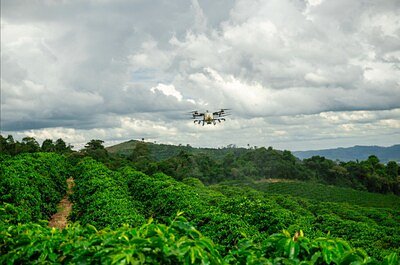
Farming's Drone Revolution: A New Era of Sustainable Agriculture
RIBEIRÃO PRETO, BRAZIL – April 29, 2026 – A quiet revolution is unfolding across the world's farmlands, not with plows, but with propellers. Agricultural drones, once a niche technology, have firmly established themselves as essential equipment, fundamentally reshaping modern farming. At the heart of this transformation is DJI Agriculture, which today unveiled a report at the Agrishow 2026 conference detailing the staggering environmental and efficiency gains driven by its technology.
According to the company's fifth annual Agricultural Drone Industry Insight Report, the global adoption of over 600,000 DJI agricultural drones has led to a cumulative reduction of 51 million tons in carbon emissions and saved approximately 410 million tons of water. These figures, representing the work of over 600,000 trained operators in more than 100 countries, paint a vivid picture of a maturing industry where technology is delivering on its promise of a more sustainable future.
A Green Revolution from Above
The environmental impact outlined in the report is profound. The 410 million tons of water saved is equivalent to the annual drinking water needs of 740 million people, while the 51-million-ton cut in carbon emissions is comparable to the annual carbon absorption capacity of 240 million trees. These savings are not accidental; they are the direct result of the precision that drone technology brings to agriculture.
Unlike traditional ground-based machinery that often blankets entire fields with water, pesticides, or fertilizers, drones enable hyper-targeted application. Equipped with advanced sensors and GPS, they can spot-spray weed patches, apply nutrients only where needed, and monitor crop health on a plant-by-plant basis. This precision dramatically reduces the volume of chemicals used—by as much as 35% in some cases, according to the report—which in turn minimizes chemical runoff into surrounding ecosystems. Furthermore, by replacing heavy, fossil-fuel-burning tractors for many spraying tasks, drones reduce soil compaction and lower the overall carbon footprint of farm operations.
"Agricultural drones are no longer a novelty – they are essential farm equipment worldwide," said Yuan Zhang, Head of Global Sales at DJI Agriculture, during the announcement. "In Brazil, DJI Drones are now widely applied on the country's major crops, including coffee, soybeans, corn, sugarcane, and forage grass."
The View from the Field: Efficiency, ROI, and Hurdles
For farmers, the appeal of drones extends beyond environmental stewardship to significant operational advantages. An agricultural drone can treat 30 to 40 acres per hour, a substantial increase over the 15 to 20 acres typically covered by traditional ground equipment. They can operate in challenging terrain, on wet ground, and under canopies where tractors cannot go, maximizing the workable area of a farm.
However, the path to adoption is not without its challenges. The primary barrier for many remains the high initial investment. A professional agricultural drone system, complete with batteries, chargers, and specialized software, represents a significant capital expenditure. Yet, the economics are becoming increasingly favorable. Independent studies suggest that for a farm spraying at least 980 acres annually, owning a drone becomes more cost-effective than hiring a custom application service. For custom operators themselves, the break-even point is around 3,900 acres applied per year.
Beyond cost, the technology demands a new set of skills. Effectively operating a drone for agricultural purposes requires expertise in flight planning, data analysis, and regulatory compliance. This has created a burgeoning need for robust training and support systems to ensure the technology is used safely and effectively.
Navigating a Complex Regulatory Sky
As drones become more prevalent, governments worldwide are scrambling to adapt their regulatory frameworks. The landscape is a complex patchwork, with some countries moving faster than others to facilitate adoption. The DJI report highlights positive developments in Brazil, where the National Civil Aviation Agency (ANAC) has established "standard scenarios" for recurring agricultural operations, and in Canada, where regulatory amendments have simplified rules for agricultural drones.
In other key agricultural markets, the path is more intricate. In the United States, an operator requires not only a general remote pilot license (Part 107) but also an agricultural aircraft operator certificate (Part 137) and often state-specific chemical applicator licenses. The process can be cumbersome, especially for drones weighing over 55 pounds, which require a separate exemption.
Similarly, Europe has been cautious, with a general prohibition on the aerial application of pesticides, though member states like Hungary and Poland are beginning to carve out legal pathways for drone spraying under strict conditions. In major agricultural economies like India and Australia, a multi-layered system of aviation authority certifications and state-level chemical handling permits creates a high bar for entry. This global regulatory fragmentation remains a significant hurdle to the seamless, worldwide integration of drone technology in farming.
Building an Ecosystem for a High-Tech Harvest
Recognizing these challenges, industry leaders are investing heavily in building the infrastructure necessary to support widespread adoption. DJI's strategy extends far beyond hardware sales, encompassing a global network of over 3,500 service and repair centers and more than 7,000 certified instructors. This ecosystem is designed to lower the barrier to entry by providing farmers with the training, maintenance, and support needed to integrate drones into their operations successfully.
While DJI holds a commanding market position, it is not the only player. Companies like Yamaha, a pioneer with its unmanned helicopters, and Parrot, with its focus on crop mapping and scouting drones, contribute to a competitive and innovative market. This competition drives technological advancement, leading to drones with greater payload capacity, longer flight times, and more sophisticated sensor arrays.
As the industry continues its rapid expansion, projected to grow at a compound annual rate of 25% through 2030, the focus is shifting. The conversation is no longer about if drones have a place in agriculture, but how to best leverage their capabilities. The combination of advancing technology, evolving policy, and a growing support infrastructure is cementing the drone's role not as a futuristic novelty, but as an indispensable tool for a productive, profitable, and sustainable global food system.