
- 2.5 million patient encounters and 170,000 surgeries reported in 2025
- 95% of cataract surgery patients achieved 20/40 vision or better
- 4.85/5 Google rating and Net Promoter Score (NPS) of +89 for patient satisfaction
Experts would likely conclude that EyeCare Partners' integrated model demonstrates strong clinical outcomes and high patient satisfaction, though some claims require further independent verification to fully assess its impact on broader healthcare quality.
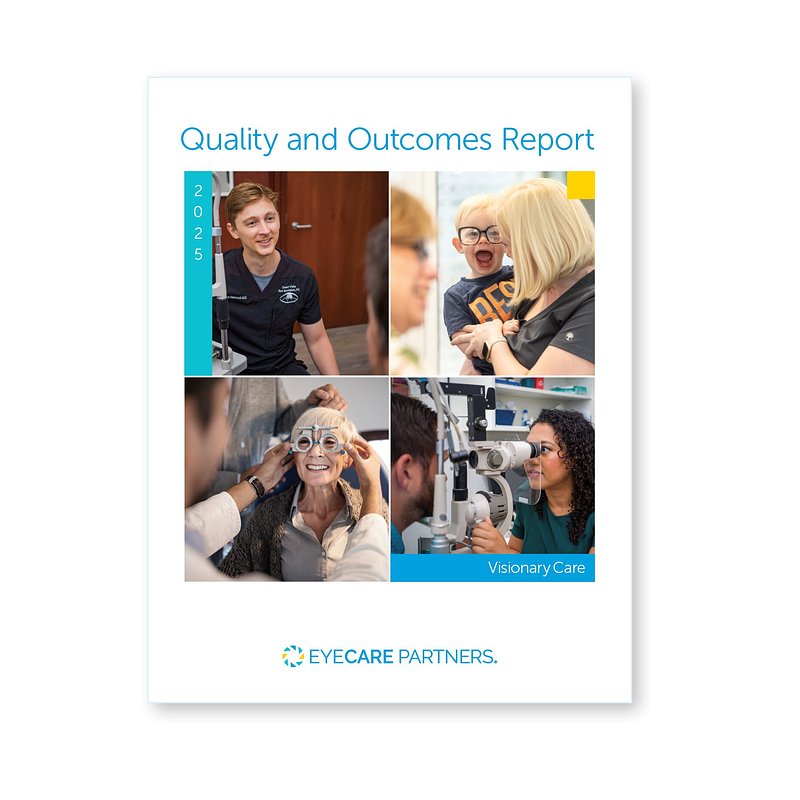
EyeCare Partners' Report Card: A New Vision for U.S. Healthcare?
ST. LOUIS, MO – March 03, 2026 – EyeCare Partners (ECP), the nation’s largest integrated eye care provider, has released its 2025 Quality and Outcomes Report, painting a picture of clinical success and operational scale. The report, detailing over 2.5 million patient encounters and 170,000 surgeries, touts results that it claims outperform national benchmarks and showcases exceptionally high patient satisfaction. As private equity continues to reshape the American healthcare landscape, ECP's report offers a high-profile case study on the performance of a consolidated, doctor-led model, prompting a closer look at its claims and what they signify for the future of specialized medicine.
A Vision for Integrated Care
At the heart of the report is the success of ECP's integrated model, which combines optometry and ophthalmology under one vast corporate umbrella spanning nearly 700 locations in 18 states. The company reported completing over 1.4 million optometry exams while also managing complex surgical cases, positioning itself as a provider for a patient's entire "lifetime of care."
The report’s figures are substantial. Beyond the sheer volume of patients, ECP highlights a 65% network efficiency, reflecting stronger coordination between its optometrists and ophthalmologists for patient referrals. This continuity of care is a cornerstone of the integrated model's promise.
“Our 2025 Quality and Outcomes Report demonstrates what is possible when care remains doctor-led and data-informed at national scale,” said Dr. Antonio Capone, Jr., Chief Clinical Officer, in the company's press release. The sentiment was echoed by CEO Chris Throckmorton, who credited the outcomes to the "high quality of our clinically integrated, doctor-led model." This model, according to the company, is the engine driving its performance, blending the autonomy of physician leadership with the resources of a national network.
Scrutinizing the Benchmarks
EyeCare Partners' report is filled with impressive metrics, but how do they stand up to external scrutiny? The headline claim that over 95% of its cataract surgery patients achieved 20/40 vision or better—a key standard for activities like driving—appears robust. Independent studies and data from ophthalmological organizations suggest that successful outcomes for uncomplicated cataract surgeries typically fall in the 94% to 95% range. ECP’s performance places it at the upper end of this established benchmark, lending credibility to its claims of clinical excellence in this high-volume procedure.
Other claims, however, are more difficult to verify against a single national standard. The report states that complication rates for cataract, retina, and glaucoma procedures remained "well below national averages." While plausible, a definitive, publicly accessible national database that aggregates all such complications for direct comparison is elusive. The data is often fragmented across different studies, regions, and healthcare systems, making such broad claims challenging to independently validate.
Similarly, the report highlights that over 70% of its glaucoma patients achieved stable or reduced intraocular pressure over a 12-month period. While this indicates proactive management of a chronic condition, a specific national benchmark for this metric is not clearly established in public guidelines, illustrating the difficulty in comparing corporate performance data with broader public health statistics.
The Consolidation Wave in Eye Care
ECP's growth and its data-driven report do not exist in a vacuum. They are emblematic of a powerful trend reshaping American healthcare: consolidation fueled by private equity. The eye care sector has been a particularly hot market for investment, driven by an aging U.S. population requiring more vision services and a historically fragmented market of independent practices. EyeCare Partners itself was acquired by the Swiss firm Partners Group in a multi-billion-dollar deal, making it one of the largest players in this new landscape.
This wave of consolidation promises efficiencies of scale, greater access to capital for technology and facilities, and the kind of data aggregation seen in ECP's report. However, it also raises questions about physician autonomy, potential increases in cost, and the impact on smaller, independent practices that may struggle to compete with national giants. While ECP champions its "doctor-led" model, with nearly 100 doctors serving on its Medical Executive Board, the inherent tension between corporate objectives and clinical independence remains a central theme in the broader healthcare industry debate.
The Patient Perspective: A Tale of Two Experiences
According to EyeCare Partners, its patients are overwhelmingly satisfied. The company reports an average Google rating of 4.85 out of 5 stars for its ophthalmology practices and an impressive Net Promoter Score (NPS) of +89, a metric that gauges customer loyalty. These figures suggest a patient experience that is among the best in any service industry.
However, a look at independent platforms reveals a more complex picture. While many patients undoubtedly have excellent experiences, public forums and the Better Business Bureau website feature a number of complaints against the company. These grievances often center on administrative issues rather than clinical outcomes, citing problems with billing, post-operative communication, and scheduling difficulties.
This dichotomy is common for large healthcare systems. While the clinical care may be excellent, the administrative machinery required to manage millions of patients can sometimes lead to friction and frustration. The high scores reported by ECP likely reflect the successful clinical encounters, while the negative reviews highlight the operational challenges of delivering a seamless experience at such a massive scale.
Innovation as the North Star
Looking forward, EyeCare Partners is betting heavily on data and research to maintain its edge. The EyeCare Partners Innovation Center (EPIC) is a key part of this strategy, transforming clinical data into what the company calls "actionable insights." In 2025, EPIC supported 195 active clinical trials with approximately 1,000 patient participants, placing the company at the forefront of ophthalmological research.
This focus on innovation, combined with its "doctor-led" governance structure, is ECP's answer to the challenge of scaling quality care. By investing in research and empowering physicians to inform clinical standards, the organization aims to prove that a large, integrated network can not only be efficient but also a driver of medical advancement. As ECP continues to grow, its ability to balance corporate scale with clinical excellence and a consistently positive patient experience will be closely watched by patients, practitioners, and investors alike.