
- $25 million in strategic acquisitions by Bruker Corporation for advanced research technology
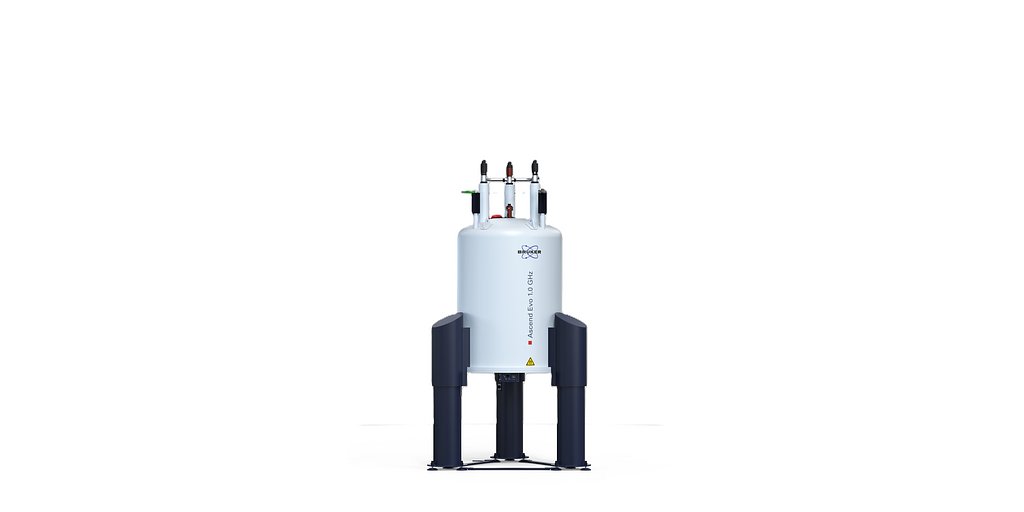
- 1 GHz NMR system acquired by IECB, one of the most powerful in the world
- Three elite institutions equipped: ENS-PSL (France), IECB (France), and MPI-FKF (Germany)
Experts agree that these investments in cutting-edge research infrastructure will significantly enhance Europe's ability to drive innovation in energy, medicine, and materials science, securing its competitive edge in global scientific advancements.
Europe's Research Power-Up: Bruker Tech Fuels Future Innovation
ETTLINGEN, Germany – December 10, 2025 – A series of strategic acquisitions totaling approximately $25 million has sent a clear signal about the future of European scientific research. Bruker Corporation, a leading manufacturer of high-performance scientific instruments, has secured orders from three of the continent's most prestigious research institutions, equipping them with next-generation magnetic resonance technology poised to accelerate discoveries in energy, medicine, and materials science.
These are not merely equipment sales; they represent a significant investment in the foundational infrastructure that drives innovation. The deals with France's École Normale Supérieure (ENS-PSL) and Institut Européen de Chimie et Biologie (IECB), alongside Germany's Max Planck Institute for Solid-State Research (MPI-FKF), underscore a coordinated push to maintain Europe's competitive edge in solving some of the world's most complex challenges.
Fortifying a Scientific Superpower
The choice of institutions highlights the strategic nature of these placements. ENS-PSL in Paris, part of the globally recognized Université PSL, is a powerhouse of fundamental research. MPI-FKF in Stuttgart belongs to the venerable Max Planck Society, an organization synonymous with Nobel-laureate-level breakthroughs in chemistry and physics. And IECB in Bordeaux stands as a unique incubator for interdisciplinary projects at the crossroads of chemistry and biology. The acquisition of cutting-edge tools by these centers is a testament to their continued pursuit of scientific excellence.
This investment is enabled by a multi-layered funding strategy, weaving together resources from regional, national, and pan-European bodies. The purchase of a flagship 1 GHz Nuclear Magnetic Resonance (NMR) system by IECB, for example, was supported by a consortium including the Région Nouvelle Aquitaine, the European Regional Development Fund (FEDER), and national research agencies CNRS and Inserm. This collaborative funding model demonstrates a broad consensus on the importance of equipping top-tier scientists with world-class infrastructure. It ensures that European research hubs not only retain top talent but also attract a new generation of innovators.
Professor Antoine Loquet, Scientific Director of the Bordeaux NMR platform, emphasized this vision of accessibility and collaboration. “With the new 1 GHz NMR system, we will support both experienced NMR scientists and those scientific and medical researchers that are new to NMR, making advanced NMR research in structural biology and materials science more accessible,” he stated. This approach aims to break down silos, fostering the kind of interdisciplinary work essential for progress in fields like neuroscience and cancer biology.
Accelerating Breakthroughs in Energy and Medicine
The true impact of this investment will be measured in the discoveries these instruments make possible. Each system is tailored to address specific, high-stakes research frontiers. At the Max Planck Institute for Solid-State Research, a new suite of solid-state NMR and Electron Paramagnetic Resonance (EPR) spectrometers is aimed squarely at the global race for better batteries.
These tools will allow scientists to conduct in operando studies—observing the complex chemical processes inside a battery as they happen. This capability is critical for understanding ion transport, material degradation, and the formation of performance-limiting interfaces. Professor Raphaële Clément, Head of the Electrochemical Materials Department at MPI-FKF, noted the significance of the upgrade. “With enhanced sensitivity and resolution, we will be able to study a broader range of chemistries and discover materials and processes for higher energy densities and longer‑lasting batteries.” This research is fundamental to the evolution of electric vehicles, grid-scale storage, and portable electronics.
Meanwhile, in France, the focus is on the intricate machinery of life itself. At ENS-PSL, a novel NMR relaxometry system will work alongside a powerful 900 MHz spectrometer to investigate molecular dynamics. As Dr. Fabien Ferrage, Research Director at CNRS, explained, the goal is to combine high-field and low-field NMR to gain deeper insights into the behavior of proteins and nucleic acids. Understanding how these molecules move, flex, and interact is a cornerstone of modern drug discovery and biotechnology, providing clues to disease mechanisms and pathways for new therapies.
This mission is amplified at IECB in Bordeaux, where the new 1 GHz NMR system—one of the most powerful in the world—will serve as a regional flagship for advanced disease biology research, pushing the boundaries of what can be seen at the atomic level.
A Strategic Win in a High-Stakes Market
For Bruker, these orders represent more than just a $25 million entry in its backlog, with revenue expected over 2026 and 2027. They are a powerful affirmation of the company's dominance in the highly specialized market for ultra-high-field analytical instruments. Securing contracts for 1 GHz systems and other high-performance platforms, like the second 1.2 GHz NMR system recently accepted at the University of Birmingham, cements its position as the technology leader and preferred partner for elite research.
In the analytical instruments industry, such placements are a form of strategic validation. The rigorous evaluation processes of institutions like Max Planck and ENS-PSL serve as a global benchmark for quality and performance. These long-term partnerships provide invaluable feedback for future product development and create a halo effect, influencing purchasing decisions across the broader scientific community.
The deals reinforce Bruker's strategy of aligning its most advanced products with high-growth research sectors. By embedding its technology at the heart of the world's leading energy, materials, and biomedical research programs, the company ensures its own growth is tied to the pace of scientific discovery itself. These systems are not commodities; they are foundational investments in the infrastructure that will produce the next wave of scientific and industrial evolution.