
- 28% reduction in household electricity bills observed in similar Dutch VPP programs (2023).
- 150,000 users served by Frank Energy with 100% green electricity.
- 3 countries (Netherlands, Belgium, Luxembourg) initially covered by the partnership.
Experts view this partnership as a critical step in modernizing Europe's energy infrastructure, enabling residential solar and battery systems to actively stabilize the grid while generating income for homeowners, aligning with broader EU renewable energy goals.
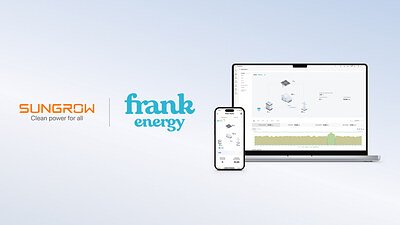
Europe's Home Energy Revolution: Sungrow and Frank Energy Power VPPs
HEFEI, China – April 27, 2026 – A groundbreaking partnership between Sungrow's iSolarCloud platform and European energy provider Frank Energy is set to transform residential solar and battery owners into active participants in the continent's energy market. The collaboration will create a new smart dispatch ecosystem, allowing homeowners in the Netherlands, Belgium, and Luxembourg to generate income from their energy assets by connecting them to a Virtual Power Plant (VPP).
This strategic alliance leverages Frank Energy's dynamic pricing models and iSolarCloud's advanced technology to aggregate distributed energy resources, effectively creating a large, coordinated power source that can help stabilize the grid and accelerate the transition to renewable energy.
Unlocking the Value in Your Home Battery
For years, residential solar panels and battery storage systems have primarily served to lower a household's electricity bill by providing self-generated power. This new initiative fundamentally changes that dynamic, turning passive assets into active revenue streams. The core of the partnership is the Virtual Power Plant, a system that digitally connects and controls hundreds or thousands of individual home batteries.
Through this network, Frank Energy, which serves over 150,000 users with 100% green electricity, can send automated signals to the connected batteries via the iSolarCloud platform. Based on real-time market prices, the system will automatically charge batteries when electricity is cheap and abundant—typically during sunny or windy days—and sell that stored energy back to the grid when prices are high during peak demand. This "buy low, sell high" strategy not only generates direct income for the homeowner but also provides crucial flexibility to the grid.
This model is already showing significant promise. Independent analysis of similar residential VPP programs in the Netherlands indicated they could reduce household electricity bills by as much as 28% in 2023. By participating in this new ecosystem, consumers evolve into "prosumers," actively contributing to and benefiting from the energy market. Their home batteries will no longer just be for backup power; they become flexible, value-generating tools that can also earn compensation for providing ancillary services, such as helping to balance grid frequency during moments of stress.
The Virtual Grid Revolutionizes Europe's Energy Future
The partnership's significance extends far beyond individual household savings. It represents a critical step in modernizing Europe's energy infrastructure to accommodate a future dominated by renewables. As nations increase their reliance on intermittent sources like solar and wind, grid operators face the immense challenge of maintaining a constant, stable supply of electricity. VPPs offer a powerful solution.
By aggregating a vast network of small, distributed resources, VPPs can provide the same grid-stabilizing services as a traditional gas-fired peaker plant, but with greater speed, lower emissions, and at a distributed level. This decentralization enhances grid resilience, making the system less vulnerable to failures at large, centralized power stations. The collaboration between Sungrow and Frank Energy is a prime example of how the private sector is driving this transition, aligning with broader European Union policies.
Initiatives like the EU's Clean Energy Package and the Electricity Balancing Guideline are actively promoting market access for distributed energy resources and creating standardized rules that lower entry barriers for VPPs. However, significant hurdles remain. Regulatory frameworks still vary considerably between member states, creating a fragmented landscape that can slow widespread adoption. Furthermore, ensuring technical interoperability between diverse hardware and software platforms is a persistent challenge that this partnership aims to solve through an open, API-driven approach.
A Blueprint for a Collaborative Energy Ecosystem
The technical backbone of this collaboration is Sungrow's iSolarCloud Developer Platform, an open system designed for rapid and secure integration. Instead of building a closed, proprietary system, Sungrow has created a platform that uses Application Programming Interfaces (APIs) to allow third-party applications, like Frank Energy's VPP software, to securely communicate with Sungrow's hardware.
This ecosystem-friendly approach significantly reduces development costs and integration time, allowing partners to connect without altering their underlying systems. The platform's security is reinforced by its compliance with both the international industrial information security standard IEC62443 and the EU's stringent General Data Protection Regulation (GDPR), ensuring user data and device control are protected.
"The partnership with Frank Energy is a crucial step for us to participate in and accept dispatch from European VPP companies," said Sean Xu, Head of iSolarCloud at Sungrow. "We are not merely responding to dispatch commands; we are tightly integrating our dispatch strategies with dynamic pricing models across European markets, making every kilowatt-hour smarter. The direct value this brings is tangible economic returns for our users—helping households with storage charging equipment recover their investments faster and maximize their energy asset returns."
This open-platform strategy positions Sungrow not just as a hardware manufacturer, but as a central enabler of the new energy economy, capable of quickly adapting its services to different regional markets and partners across the globe.
Navigating a Competitive and Dynamic Market
While innovative, the Sungrow-Frank Energy partnership enters a competitive European VPP market. Major industrial players like Siemens, Schneider Electric, and ABB are heavily invested in smart grid technologies, while specialized energy service providers such as Sonnen and Octopus Energy are already operating successful residential VPPs and dynamic tariff models in various European countries. These companies are also vying to capture the growing market of energy prosumers.
The success of these initiatives often hinges on navigating the complex and sometimes inconsistent regulatory environments across Europe. Frank Energy's established presence and expertise in the Benelux market, combined with Sungrow's globally recognized technology and open platform, create a powerful synergy to address these local market conditions effectively.
As the European Commission's Renovation Wave Strategy aims to equip millions of buildings with smart meters, solar panels, and home batteries by 2030, the potential market for VPPs is set for exponential growth. Sungrow's commitment to open collaboration and building a global VPP ecosystem signals a clear strategy to remain at the forefront of this transformation, working with local partners to deliver profitable and efficient smart energy solutions that contribute to a worldwide energy transition.