
- 8.5 GWh: The partnership aims to integrate 8.5 GWh of sodium-ion batteries into ESS’s portfolio.
- Non-flammable: Alsym’s sodium-ion batteries are inherently non-flammable, eliminating thermal runaway risks.
- Supply chain resilience: Sodium-ion batteries use earth-abundant materials like sodium and manganese, reducing geopolitical risks.
Experts would likely conclude that this partnership represents a significant step toward diversifying the energy storage market with safer, more sustainable, and geopolitically resilient non-lithium alternatives.
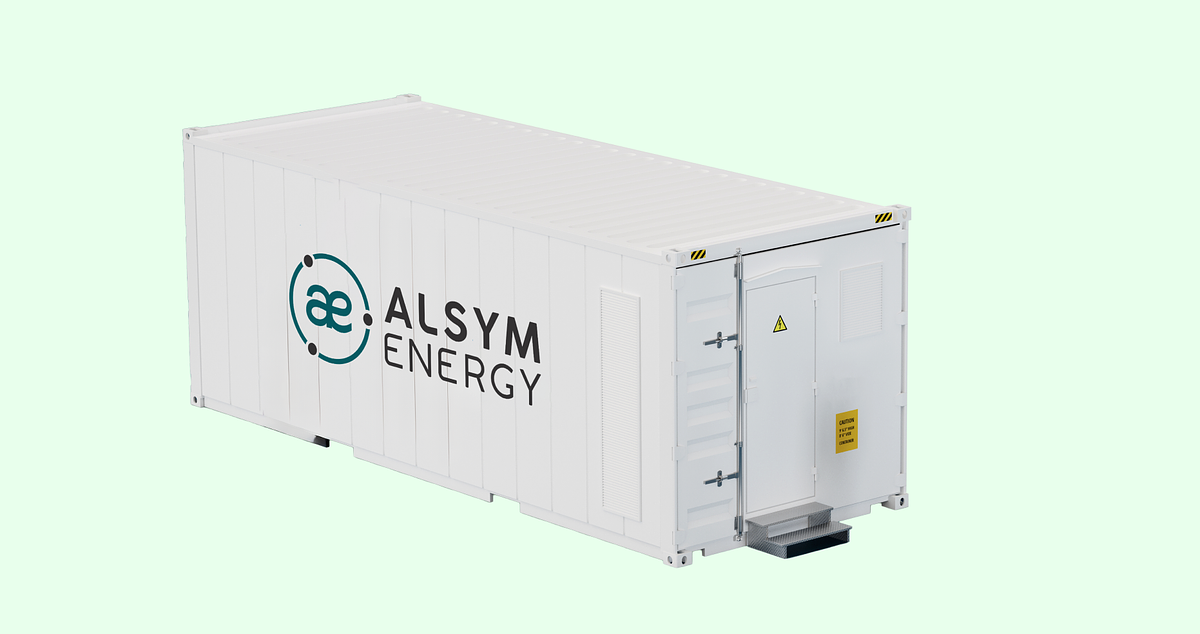
ESS and Alsym Forge Non-Lithium Alliance to Challenge Battery Market
WILSONVILLE, Ore. & MALDEN, Mass. – May 01, 2026 – In a strategic move poised to disrupt the energy storage sector, ESS Tech, Inc. has announced a partnership with Alsym Energy to integrate 8.5 GWh of next-generation sodium-ion batteries into its portfolio. The letter of intent signals ESS’s aggressive entry into the short- and medium-duration storage market, a segment historically dominated by lithium-ion technology, and marks a significant step towards a safer, more sustainable energy grid.
This collaboration combines ESS’s established expertise in long-duration iron flow batteries with Alsym’s pioneering non-flammable sodium-ion cells. By doing so, ESS is positioning itself as one of the first full-spectrum, non-lithium energy storage solution providers, capable of meeting a wide array of customer needs from a single, trusted platform.
A Strategic Pivot Beyond a Niche
For years, ESS has been a leader in the long-duration energy storage (LDES) space with its iron flow technology, engineered for applications requiring 8 to 24 hours of energy. This technology, which uses abundant materials like iron, salt, and water, is ideal for shifting large amounts of renewable energy across a full day. However, the new partnership with Alsym propels the company into the much larger short- and medium-duration market, directly competing with lithium-ion in applications like grid frequency regulation, peak shaving, and firming renewables over a few hours.
“Sodium-ion and iron flow are complementary technologies,” said Drew Buckley, Chief Executive Officer of ESS. “Alsym's sodium-ion Na-Series is an ideal solution for ESS’s short- and medium-duration applications where high power, fast cycling, and rapid response are paramount. ESS's existing Energy Base® iron flow platform is engineered for the 8–24 hour long-duration segment... Together, the two chemistries form a unified, non-lithium platform that enables ESS to meet customers' full storage needs from a single trusted provider.”
This dual-chemistry approach allows ESS to offer optimized solutions across the entire “duration curve.” A utility, for example, could deploy a hybrid system featuring Alsym’s fast-responding sodium-ion batteries for grid stability alongside ESS’s iron flow batteries for overnight energy supply, all sourced and integrated by one company.
The Sodium-Ion Advantage: Safety and Stability
At the heart of this partnership is Alsym’s breakthrough battery chemistry, which addresses some of the most significant drawbacks of lithium-ion technology. Alsym's Na-Series batteries are inherently non-flammable and thermally stable, virtually eliminating the risk of thermal runaway—a dangerous chain reaction that can lead to fires and explosions in lithium-ion systems.
This inherent safety has profound economic implications. By removing the fire risk, Alsym’s technology dramatically reduces the need for complex and costly fire suppression and HVAC systems. This not only lowers the upfront capital expenditure but also the total cost of ownership over the battery’s lifetime. The batteries also boast a wide operating temperature range, from -40°C to 60°C, allowing them to be deployed in harsh climates without performance degradation or additional thermal management infrastructure.
Randall Selesky, Chief Commercial Officer at ESS, emphasized the significance of this technological leap. “This partnership represents a major milestone in our strategy to become a full-spectrum, non-lithium solutions provider,” he stated. “By combining Alsym’s high performance, non-flammable sodium‑ion technology with ESS’ systems expertise... we are giving customers a clear pathway beyond lithium‑ion — without compromising performance or economics.”
De-Risking the Global Supply Chain
Beyond the safety benefits, the ESS-Alsym alliance strategically tackles the volatile and geopolitically fraught supply chain of the battery industry. Lithium-ion batteries rely on critical minerals like lithium, cobalt, and nickel, which are concentrated in a few countries, subject to price swings, and often associated with environmental and ethical concerns.
In contrast, Alsym’s sodium-ion chemistry utilizes earth-abundant materials like sodium and manganese. Sodium is one of the most common elements on Earth, readily sourced from salt deposits and seawater. This abundance not only ensures cost stability but also enhances supply chain resilience. Crucially, Alsym states its materials are sourced from non-foreign entities of concern (non-FEOC), aligning with Western efforts, such as the U.S. Inflation Reduction Act (IRA), to build secure, domestic energy supply chains.
ESS’s iron flow technology shares this advantage, relying on globally abundant iron. The combined platform therefore offers customers a future-proof energy storage solution, insulated from the geopolitical risks and price volatility that plague the lithium market.
AI Accelerates the Battery Revolution
The speed at which Alsym has developed its innovative chemistry is a story in itself. The company leverages a proprietary, physics-informed AI platform that dramatically accelerates the battery development process. Where traditional R&D relies on slow, trial-and-error experimentation, Alsym’s AI can model and predict the performance of new material combinations, shortening the time-to-market for new chemistries from years to months.
Mukesh Chatter, CEO of Alsym Energy, commented on the synergy. “ESS is a leading innovator in stationary storage, and we are very pleased to be partnering with them,” he said. “As demand grows, it is increasingly clear that the industry needs solutions beyond lithium-ion to meet the speed and scale projections. Together, we are enabling a better path forward for energy storage.”
With this combined sodium-ion and iron-flow platform, ESS is now uniquely positioned to support a diverse range of customers—from utilities and independent power producers to data centers and commercial facilities—seeking flexible, American-made, and fundamentally safer energy storage solutions for a decarbonized future.