
- Real-time MRI scans: I-Genius allows surgeons to acquire multiple high-quality MRI scans in minutes during surgery, enabling real-time adjustments.
- Open MRI system: The helium-free, open magnet design reduces installation complexity and cost, making it more accessible for hospitals.
- FDA pending: The system is awaiting FDA clearance for use in U.S. operating rooms.
Experts agree that Esaote's I-Genius iMRI system has the potential to revolutionize brain tumor surgery by providing real-time, high-precision imaging, which could lead to more accurate and safer tumor resections, ultimately improving patient outcomes.
Esaote's I-Genius Aims to Revolutionize Brain Tumor Surgery
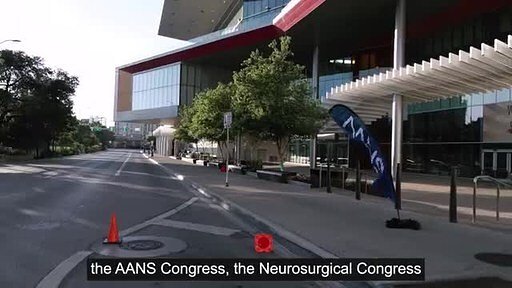
SAN ANTONIO, TX – May 04, 2026 – A new medical imaging system that promises to give neurosurgeons real-time, high-precision vision during complex brain tumor operations is one step closer to American operating rooms. Italian medical technology leader Esaote recently showcased its I-Genius intraoperative MRI (iMRI) system at the American Association of Neurological Surgeons (AANS) Annual Meeting, signaling a major push into the U.S. market for a technology poised to redefine surgical accuracy.
The system, currently pending FDA clearance, is designed to tackle one of the most persistent challenges in neuro-oncology: the complete and safe removal of gliomas, a common and aggressive type of brain tumor. By integrating an open MRI scanner directly into the surgical workflow, I-Genius allows surgeons to see what they are doing with unprecedented clarity, potentially transforming patient outcomes.
A Paradigm Shift in Surgical Precision
For decades, neurosurgeons have faced a critical limitation when removing brain tumors. The brain can shift and deform during surgery—a phenomenon known as brain shift—rendering pre-operative images and navigation systems less accurate as the procedure progresses. This forces surgeons to rely heavily on experience and feel to distinguish cancerous tissue from healthy, functioning brain tissue, a task made incredibly difficult by the infiltrative nature of gliomas.
Esaote's I-Genius introduces a fundamentally different approach. It is an open MRI system specifically optimized for the operating room. Unlike traditional MRI setups that require moving a patient to a separate imaging suite—a complex and time-consuming process—I-Genius allows the patient to remain on the same surgical table throughout the procedure. Surgeons can pause, acquire multiple high-quality MRI scans in minutes, and then continue with the operation, all without disrupting the sterile field or repositioning the patient.
This capability shifts the very foundation of the surgery. As Dr. Roberto Herrera, Chief of Neurosurgery at Clinica Adventista Belgrano in Buenos Aires, explained, the technology moves the procedure away from estimation and toward objective evidence. "For decades, glioma surgery has been performed without real–time visualization of the tumor, forcing surgeons to rely on experience and indirect tools rather than true intraoperative evidence," said Dr. Herrera. "Intraoperative MRI systems such as i–Genius change this paradigm by providing multiple MRI acquisitions directly in the operating room... This shifts surgery from estimation to objective measurement, making tumor resection more accurate, safer, and potentially more complete."
By providing this real-time feedback loop, surgeons can immediately verify if they have removed the entire visible tumor, identify any residual cancerous tissue, and make more confident decisions to maximize tumor resection while preserving critical brain functions.
Navigating a Competitive Market
Esaote is entering a competitive but rapidly evolving U.S. market for intraoperative imaging. Established players like IMRIS Imaging, with its ceiling-mounted high-field iMRI systems, and Medtronic, with its PoleStar surgical MRI, already have a foothold. Additionally, industry giants like Siemens Healthineers and GE Healthcare offer high-field scanners that can be integrated into specialized hybrid operating rooms.
However, Esaote is positioning I-Genius not just as an alternative, but as a more accessible and flexible solution. Many existing iMRI systems are large, closed-magnet devices that require extensive and costly infrastructure renovations, including significant radiofrequency shielding and structural reinforcement. In contrast, I-Genius is built around an open, permanent magnet that is helium-free and has lower power consumption. This design philosophy aims to reduce the complexity and cost of installation, potentially opening the door for iMRI adoption in a wider range of hospitals, not just the largest, best-funded academic centers.
The system's "all in one room" concept, which streamlines the workflow and eliminates patient transport, is a key part of its value proposition. By reducing intraoperative complexity and potentially shortening overall procedure times, Esaote argues that I-Genius can enhance operating room efficiency and provide significant value, making it a strategic choice for hospital administrators focused on both clinical excellence and financial sustainability.
The Path to the Modern Operating Room
Before I-Genius can be adopted in U.S. hospitals, it must clear several significant hurdles, the first of which is regulatory approval. The system is currently listed as "FDA pending," and while Esaote has a successful track record of gaining clearance for other MRI systems in the U.S., the timeline remains a critical variable. Industry observers note that similar systems from competitors have successfully navigated the FDA's 510(k) clearance pathway, suggesting a viable route for I-Genius.
Beyond regulatory approval lies the challenge of hospital adoption, which involves both infrastructure and reimbursement. While Esaote emphasizes the system's simplified installation requirements, integrating any iMRI system necessitates a dedicated operating room with MRI-compatible anesthesia machines, surgical tools, and patient monitors, along with extensive staff training. Esaote's design aims to minimize these burdens, but they remain a significant consideration for any institution.
The reimbursement landscape presents another layer of complexity. Currently, there are no single, specific billing codes for intraoperative MRI procedures. Instead, hospitals bill for the primary neurosurgical procedure and may use add-on codes for image guidance. Payers, including Medicare and private insurers, will require robust clinical data demonstrating that the technology leads to better patient outcomes and is cost-effective. The ability of I-Genius to facilitate more complete resections, potentially reducing the need for costly re-operations or subsequent treatments, will be a crucial part of this value-based argument.
Redefining Hope for Brain Tumor Patients
The technological advancements and market strategies ultimately converge on a single, vital point: improving the lives of patients. For individuals diagnosed with a glioma, the extent of tumor removal is one of the most important prognostic factors. Incomplete resection is directly linked to earlier tumor recurrence and poorer overall survival.
The promise of I-Genius and similar iMRI technologies is the ability to achieve maximal safe resection—removing as much of the tumor as possible without harming adjacent healthy tissue responsible for speech, motor control, and other critical neurological functions. By giving surgeons an intraoperative map, the technology empowers them to navigate this delicate balance with far greater precision.
For patients and their families, this translates into more than just a technical improvement. It offers the tangible hope of a longer and better quality of life, with a reduced risk of recurrence and a greater chance of preserving the functions that define who they are. As this technology becomes more refined and accessible, it has the potential to elevate the standard of care, making what is currently a cutting-edge procedure a routine part of brain tumor treatment for patients everywhere.